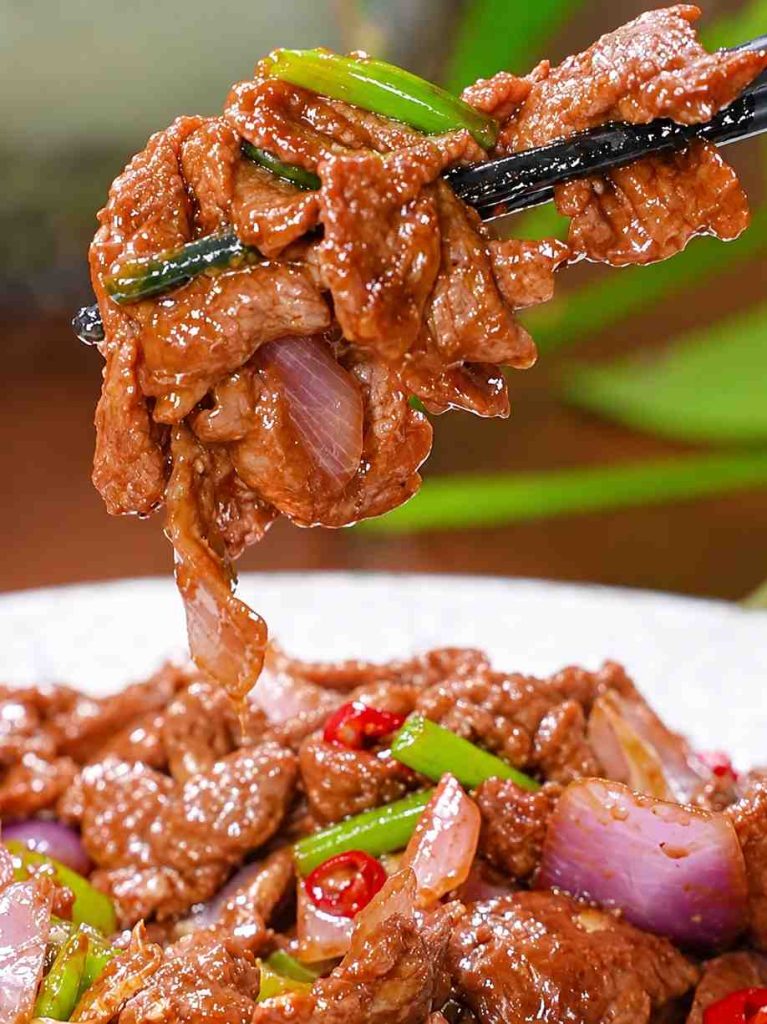
Chinese Long Beans with Pork Belly (Stir-Fried Chinese Long Beans with Pork Belly) is a comforting Chinese home-style dish built around two simple ingredients: fresh long beans and savory pork belly. There is no need for a complicated sauce, blanching, or deep-frying. Instead, the pork belly is slowly cooked until it releases its flavorful fat. The long beans are added directly to the pan, stir-fried, and then simmered with soy sauce and a little water until tender. The result is a dish with tender-crisp beans, rich pork flavor, and a delicious savory sauce.
The secret to this recipe is not just the seasoning. It is knowing how to cook the beans thoroughly while keeping their shape intact. Unlike traditional dry-fried green beans, this stir-fry uses a combination of direct frying and covered simmering. It is also a practical method for home cooks who want a flavorful Chinese vegetable dish without using large amounts of oil.
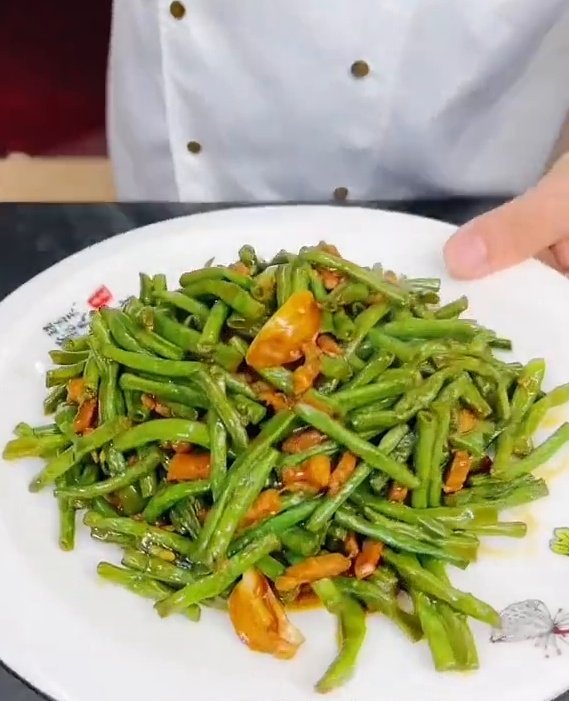
Stir-Fried Chinese Long Beans with Pork Belly (豆角炒五花肉, Dòujiǎo Chǎo Wǔhuāròu)
Ingredients
Equipment
Method
- Wash the Chinese long beans thoroughly under running water. Trim both ends, drain and pat dry. Cut into approximately 3-4 cm pieces.
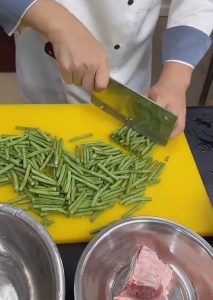
- Slice the pork belly into thin strips. Peel and thinly slice the ginger. Peel and roughly crush or chop the garlic. Set aside the star anise.
- Heat a wok over medium-high heat. Add 5 ml neutral cooking oil and swirl to coat the cooking surface.
- Add the sliced pork belly in an even layer. Let it cook undisturbed for 30-45 seconds, then stir-fry over medium heat for 3-4 minutes until the fat renders and the edges become lightly golden.
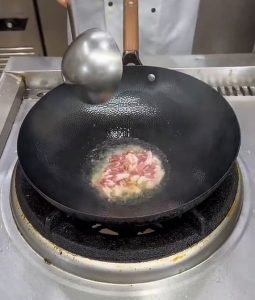
- Reduce the heat to medium-low. Add the ginger, garlic and star anise to the pork and rendered fat.
- Stir-fry for approximately 30-45 seconds until fragrant. Avoid overheating the garlic.
- Increase the heat to medium-high. Add the prepared long beans and stir-fry for 2-3 minutes, turning frequently so they are coated with the pork fat and aromatics.
- Add the soy sauce, sugar, white pepper and chicken bouillon powder. Stir-fry for another 30-45 seconds to distribute the seasonings.
- Taste the mixture and add up to 1 g salt if needed.
- Pour in 180 ml hot water and stir briefly. Cover the wok and bring the liquid to a steady boil over medium-high heat.
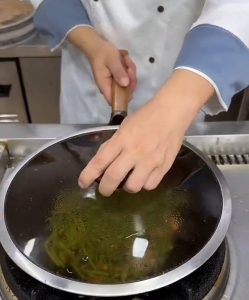
- Reduce the heat as needed to maintain a steady simmer. Cook covered for at least 10 minutes, stirring once to distribute the heat evenly.
- Check the beans for doneness. They must be thoroughly cooked and tender, without a raw or firm bean texture.
- If the liquid evaporates before the beans are fully cooked, add another 30-60 ml hot water, cover and continue simmering until done.
- Remove the lid and increase the heat to medium-high. Stir-fry for approximately 1-3 minutes to reduce excess liquid and coat the beans with the remaining savory sauce.
- Check that the beans are completely cooked and the pork is fully cooked. Adjust the seasoning if necessary.
- Remove the star anise if desired. Transfer to a serving plate and serve hot with steamed rice.
Notes
The Pork Belly Builds the Flavor of This Dish
The flavor foundation of this dish comes from the pork belly. As it cooks, the fat gradually renders and creates a fragrant cooking oil. The long beans are then stir-fried in this flavorful fat, allowing them to absorb some of the pork’s richness without requiring much additional oil.
I recommend choosing pork belly with a good balance of fat and lean meat. Lean pork can also be used, but it releases less fat during cooking, which means the finished dish will have a lighter flavor.
Fresh ginger, garlic, and star anise also play important roles.
- Ginger adds a gentle warmth and helps balance the richness of the pork.
- Garlic releases a wonderful aroma when cooked in hot oil, complementing the fresh flavor of the beans.
- Star anise contributes a subtle, warm spice aroma. Only a small amount is needed so that it does not overpower the other ingredients.
Together, these aromatics create the characteristic flavor of this dish. The beans retain their natural vegetable flavor while taking on the savory richness of the pork and spices.
If you prefer a slower, more hands-off way to cook the same cut, try our rice cooker red-braised pork belly.
Why You Don’t Need to Blanch or Deep-Fry the Long Beans
Many cooks prefer to blanch green beans before stir-frying them. Others deep-fry them briefly to soften the exterior and create a slightly wrinkled texture. Both techniques work well in other Chinese bean dishes, but neither is necessary for this recipe.
For a version that blanches the beans before stir-frying, see our stir-fried yardlong beans with garlic and red bell pepper.
Once the long beans have been cut into shorter pieces, they can go directly into the wok. Stir-frying helps evaporate surface moisture and allows the beans to come into contact with the rendered pork fat.
The more important step comes afterward: simmering.
Long beans should not be considered fully cooked simply because they have been stir-fried for a few minutes. Adding water and covering the wok creates a moist cooking environment that helps heat penetrate the beans and soften them evenly.
This process also gives the soy sauce and pork juices more time to coat the beans and develop their flavor.
The resulting texture is slightly different from traditional dry-fried green beans:
- Dry-fried green beans are generally cooked to develop a more dehydrated, slightly wrinkled exterior.
- This recipe combines stir-frying with covered simmering, producing tender beans with a more pronounced savory flavor.
You do not need a deep fryer or complicated equipment. A regular wok or deep skillet with a lid is enough.
Soy Sauce Does More Than Add Color
Soy sauce is one of the most important seasonings in this recipe.
For cooks who are new to Chinese cooking, Light Soy Sauce is a good option. It provides the main salty, savory flavor and helps bring the pork and vegetables together.
Dark Soy Sauce is generally darker in color and is mainly used to give dishes a deeper appearance. Since this recipe does not require a particularly dark sauce, there is no need to use a large amount of it.
A few other seasonings are worth paying attention to.
Use salt sparingly. Soy sauce already contains salt, so taste the dish before adding extra seasoning.
A little sugar helps balance the savory flavor. The purpose is not to make the dish sweet, but to soften the saltiness of the soy sauce and create a more rounded taste.
White pepper adds a gentle warmth. A small amount is enough. Too much can overpower the natural flavors of the beans and pork.
Chicken bouillon powder can also be added to enhance the savory taste, although it is entirely optional.
Cook the Beans Thoroughly, Not Just Until They Look Green
Although this recipe does not require blanching, that does not mean the beans can be lightly cooked and served while still firm or underdone.
Green beans and other beans can contain naturally occurring lectins. Eating them raw or insufficiently cooked may cause gastrointestinal discomfort. Thorough cooking is therefore an important food safety requirement.
For this reason, the covered simmering stage should never be skipped. Keep the liquid at a steady boil and cook the beans in the covered wok for at least 10 minutes. The exact time may vary depending on the thickness and quantity of the beans and the type of cookware used.
Rather than judging doneness by color alone, look for these signs:
- The beans have softened noticeably and no longer feel tough or fibrous.
- The inside of the beans is fully cooked.
- There is no raw bean taste.
- The pork belly is also completely cooked through.
If the water evaporates before the beans become tender, add a little more hot water and continue cooking with the lid on.
Bright green color alone does not guarantee that the beans are fully cooked. Proper doneness is much more important.
Where to Buy Chinese Long Beans Outside China
The main vegetable used in this recipe is Chinese long beans, also known as yardlong beans.
They are long, slender green pods that are generally much longer and thinner than the green beans commonly sold in Western supermarkets. You can often find them in Asian grocery stores and some international food markets.
When shopping, look for beans that:
- Have a naturally green color and smooth skin.
- Feel firm rather than soft or limp.
- Have a relatively consistent thickness so they cook evenly.
If Chinese long beans are unavailable, regular green beans or French beans can be used instead.
However, their texture is not exactly the same. Regular green beans are usually shorter and thicker, so you may need to adjust the cooking time according to their size. Make sure they are thoroughly cooked before serving.
If pork belly is difficult to find, thinly sliced pork shoulder is another option. Keep in mind that leaner cuts release less fat, so the finished dish will have a lighter pork flavor. You can compensate by slightly increasing the amount of cooking oil.
What to Serve with Chinese Long Beans and Pork Belly
The savory flavor of this dish makes steamed rice its natural companion.
The sauce, made from soy sauce, rendered pork fat, and the juices released during cooking, coats the rice beautifully. You do not need to prepare an elaborate additional sauce.
For a more balanced meal, serve it with lightly seasoned vegetables, steamed eggs, or a simple vegetable soup.
The goal of this recipe is not to use as many seasonings as possible. It is to let the pork belly develop its aroma first, then allow the long beans to absorb the pork fat and savory soy sauce as they cook.
Once you understand the balance between stir-frying and simmering, you can make a satisfying Chinese home-style dish with tender, fully cooked beans, rich pork flavor, and a sauce that is especially delicious with steamed rice.