Red-braised pork belly is a home-style dish made by braising pork belly with soy sauce, sugar, and spices. I like using an electric rice cooker to make red-braised pork belly because, once the preparation is complete, I do not need to stand by the stove throughout the cooking process. This makes cooking much more convenient. For another traditional pork-belly dish, try our homemade Dongpo pork recipe.
When I make this dish, I first cut the pork belly into evenly sized pieces and soak them in salt and Huadiao wine. Huadiao wine is a type of Chinese yellow rice wine commonly used in meat dishes. It adds an alcoholic aroma and helps reduce the raw smell of pork. Next, I place the pork in cold water and bring it to a boil to blanch it. Then I rinse the pork with warm water. Finally, I add scallions, ginger, spices, fermented soybean paste, rock sugar, and beer. I cover the rice cooker and let the pork braise until it is ready to serve.
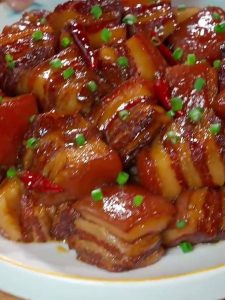
The main characteristics of this red-braised pork belly are its clearly defined layers of fat and lean meat, soft pork skin, and dark-colored sauce. The beer adds a malty aroma to the braising liquid, while the fermented soybean paste provides a savory flavor from fermented soybeans. Using an electric rice cooker reduces the amount of hands-on work required during cooking. If you prefer a stir-fried pork dish, see our twice-cooked pork recipe.
In my opinion, there are 5 important details to pay attention to when making this red-braised pork belly without caramelizing sugar.
First, try to cut the pork belly into evenly sized pieces. If the pieces vary greatly in size, the smaller pieces may become tender while the larger pieces remain firm.
Second, rinse the pork to remove the foam from its surface after blanching. Do not pour the blanching liquid and foam directly into the rice cooker. Doing so may affect the appearance and flavor of the sauce.
Third, fermented soybean paste already contains salt, and both light and dark soy sauce add more saltiness to the dish. Therefore, I use a total of 8 grams of salt: 5 grams for soaking the pork and 3 grams for braising. There is no need to add extra salt without considering the salt content of the other seasonings.
Fourth, the amount of beer affects the total volume of braising liquid. I recommend using 500 milliliters of beer. If only 330-milliliter cans are available locally, you can use 330 milliliters of beer and 170 milliliters of water instead. The malty aroma will be slightly less pronounced.
Fifth, if you use a regular heavy-bottomed pot instead of an electric rice cooker, you need to check the liquid more frequently. A regular pot may lose liquid more quickly through evaporation, so you should not follow the rice cooker instructions exactly.
For me, the main advantages of this electric rice cooker red-braised pork belly recipe are its clear steps and easy-to-measure seasonings. As long as I clean and prepare the pork properly and control the braising time, I can make red-braised pork belly at home with a rich soybean aroma, a flavorful sauce, and tender meat.
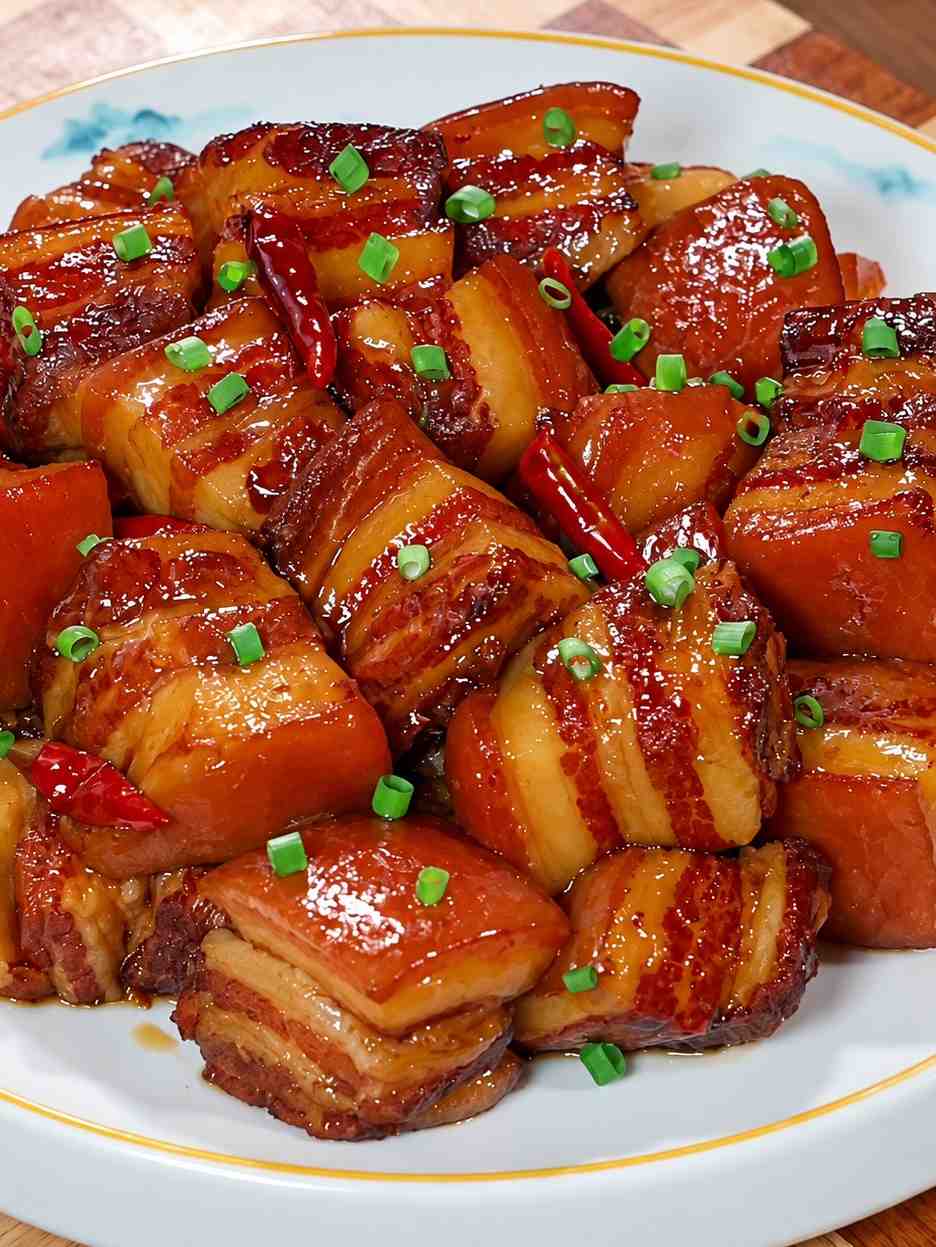
Electric Rice Cooker Red-Braised Pork Belly
Ingredients
Equipment
Method
- Cut 1000 g of pork belly into cubes measuring approximately 4 cm on each side. Keep the pieces similar in size to help them become tender at a similar rate.
- Place the pork in a large bowl. Add 5 g of salt and 30 ml of Huadiao wine.
- Mix by hand for approximately 1 minute so that the salt and wine come into contact with all the pork pieces.
- Let the pork soak for 10 minutes. Huadiao wine is a type of Chinese yellow rice wine that adds aroma and helps reduce the pork's raw odor.

- Transfer the soaked pork belly and all the Huadiao wine remaining in the bowl to a wide pot.
- Add 2500 ml of cold water. The water should cover the pork by approximately 3 cm. If the pot is wide and the water level is too low, add 200 ml of cold water at a time until the pork is fully submerged.
- Gradually heat the water. Once it reaches a boil, continue boiling for 5 minutes.
- Use a slotted skimmer to remove the foam from the surface, then lift the pork out of the pot. Blanching means briefly heating food in water before removing it. For meat, this helps release blood and some surface impurities.
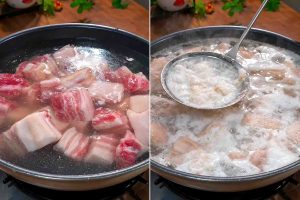
- Remove the blanched pork from the pot and rinse the surface with 1000 ml of warm water at approximately 40°C to remove any remaining foam.
- After rinsing, allow the pork to drain for approximately 3 minutes.
- Do not rinse the pork with ice-cold water. Once the pork has been rinsed, it is ready for seasoning and braising.
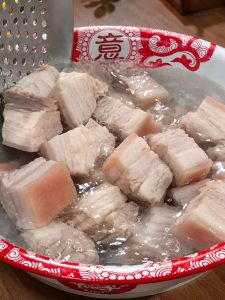
- Place the rinsed and drained pork belly in the inner pot of the electric rice cooker.
- Add 20 g of scallion sections, 20 g of sliced ginger, 2 g of star anise, 4 g of Chinese cinnamon bark, 1 g of bay leaves, and 3 g of dried chili peppers.
- Add the remaining 3 g of salt and 3 g of chicken bouillon powder.
- Pour in 30 ml of light soy sauce and 15 ml of dark soy sauce.
- Add 30 g of fermented soybean paste and 30 g of rock sugar.
- Finally, pour in 500 ml of beer.
- Use a spoon to mix the fermented soybean paste with the beer and soy sauces so that the seasonings are distributed among the pork pieces.
- This recipe does not require caramelizing sugar in advance or pan-frying the pork until golden brown. Add the seasonings directly to the rice cooker.
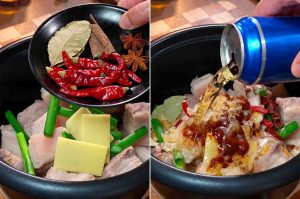
- Close the rice cooker lid and press the rice cooking button. Cook for approximately 60 minutes initially.
- When the cooking program finishes, open the lid and check the pork.
- If a chopstick can easily pass through the skin and fatty layers, the pork is relatively tender.
- If the pork is still firm and liquid remains at the bottom of the pot, cook for another 15 minutes.
- If the liquid has evaporated but the pork is still firm, add 100 ml of hot water and continue cooking for another 15 minutes.
- Under normal conditions, no additional water is needed during braising. Rice cooker programs vary by model and capacity, so judge doneness by the tenderness of the pork rather than relying only on a fixed cooking time.
- When cooking is complete, check whether the pork has reached the desired tenderness. If the skin is soft and a chopstick can easily pass through the meat, the pork is ready to serve.
- Finely chop the remaining 10 g of scallions and sprinkle them over the red-braised pork belly.
- The sauce should coat the pork pieces. There is no need to continue cooking for a long time just to thicken the sauce.
- Serve the red-braised pork belly with rice.