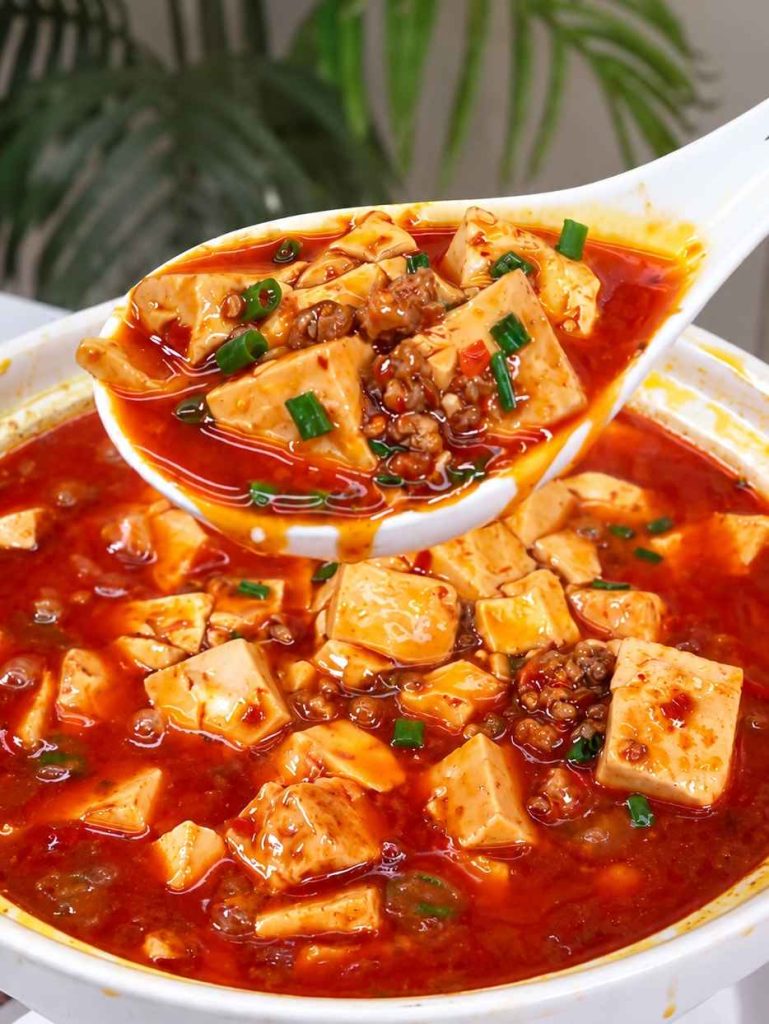
Dongpo pork is a Chinese braised pork dish made primarily with pork belly.
Pork belly comes from the underside of the pig and usually contains alternating layers of fat and lean meat. After a long period of braising, the fat becomes soft and the lean meat absorbs the sauce. For another classic Sichuan pork dish, try our twice-cooked pork recipe.
When I make Dongpo pork at home, I prefer to steam the whole piece of pork belly first. I then cut it into cubes and braise the pieces with soy sauce, rock sugar, beer, and spices. Steaming helps soften the meat before braising, allowing the pork cubes to absorb the seasonings gradually.
This homemade Dongpo pork recipe uses 1000 g of pork belly and serves approximately 4–6 people. The total preparation and cooking time is about 2 hours and 35 minutes, including preparation, steaming, braising, sauce reduction, and a short resting period. If you prefer a rice-cooker method for pork belly, see our red-braised pork belly recipe.
There is one special step in my version of the recipe. I place 2 pieces of orange peel on top of the pork while steaming it. The orange peel adds a mild citrus aroma. Orange peel is not required in every Dongpo pork recipe. It is an optional variation in this homemade version.
Three Important Points for Making Dongpo Pork
There are 3 things I pay attention to when preparing this homemade Dongpo pork.
First, the pork cubes should hold their shape. Steaming the pork before cutting it makes it easier to cut the meat into neat pieces. After cutting the pork into cubes, I make shallow cross-shaped cuts in the skin of each piece.
Second, the sauce needs a balance of saltiness, sweetness, and spice aromas. Light soy sauce is mainly used to add savory saltiness. Dark soy sauce is usually darker in color and is mainly used to deepen the color of the meat. Rock sugar adds sweetness, while oyster sauce adds savory depth.
Third, the sauce needs to be reduced after braising. Reducing the sauce means removing the lid and allowing excess water to evaporate, making the liquid thicker. A thicker sauce coats the pork more easily.
Other Dongpo pork recipes also use pork belly, scallions, ginger, soy sauce, and sugar. These ingredients are commonly combined with long, slow cooking to soften the meat. However, the type of cooking liquid, seasoning proportions, and cooking times can vary between recipes. This article uses a method designed for a home kitchen: steam the pork first, then braise it.
What Should the Finished Dongpo Pork Look Like?
The surface of the finished pork should have a glossy, reddish-brown color. The sauce should cling to the pork rather than run off immediately like water.
The skin and fatty layers should be soft, and the lean meat should be easy to bite through. If the pork is still noticeably tough, it usually means that the braising time was insufficient or that the heat was too high, causing the liquid to evaporate too quickly.
I also pay close attention to the shape of the pork cubes. Dongpo pork should be tender, but the pieces should not fall apart completely when picked up with chopsticks. The size of the cubes, the degree of steaming, and the braising temperature all affect the final result.
It is important to remember that pork belly with different proportions of fat and lean meat will produce different levels of richness. A rich sauce does not automatically mean that the pork will be less greasy. The final texture and mouthfeel also depend on the fat content of the pork itself.
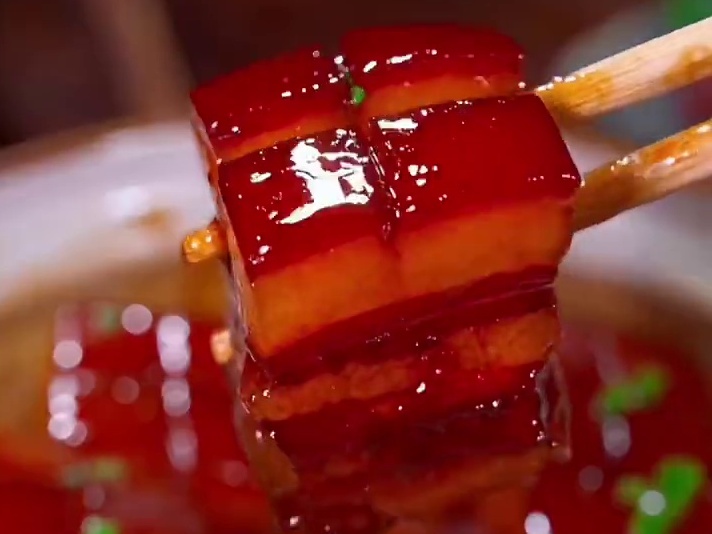
Homemade Dongpo Pork
Ingredients
Equipment
Method
- Rinse 1000 g of skin-on pork belly and pat the surface dry with paper towels.
- Place the whole piece of pork belly on a steaming rack. Put 2 pieces of orange peel, each approximately 5 × 5 cm, on top of the pork.
- Pour 1500 ml of water for steaming into a deep pot. Bring the water to a boil, place the rack inside the pot, and cover with a lid. Keep the water boiling and steam the pork for 50 minutes.
- After 50 minutes, insert chopsticks into the thickest part of the pork. If the chopsticks slide in easily, the pork is soft enough to cut. If you still feel significant resistance, steam for another 10 minutes and check again.
- Make sure the water in the bottom of the pot does not boil away completely. If the water level becomes too low, add 100 ml of boiling water.
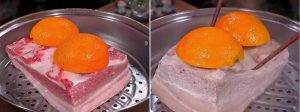
- After steaming, turn off the heat and let the pork rest for 5 minutes. Use kitchen tongs to remove the pork, avoiding direct contact with the hot meat.
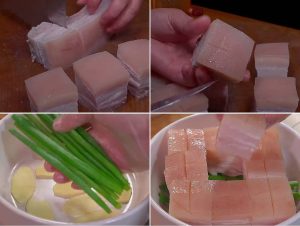
- Cut the pork into cubes approximately 4 × 4 cm. Try to keep the pieces similar in size.
- If the pieces have skin, score the skin of each piece with cross-shaped cuts approximately 3–5 mm deep. Do not cut all the way through the meat.
- Cut 80 g of scallions into long sections and slice 30 g of fresh ginger thinly.
- Line the bottom of a heavy-bottomed pot approximately 24 cm in diameter with the scallion sections and ginger slices. Arrange the pork cubes neatly on top.
- Place 15 g of white sugar and 30 ml of the water reserved for braising in a small saucepan.
- Heat over medium-low heat for approximately 3–5 minutes. Once the sugar has dissolved and the liquid turns amber, immediately remove the saucepan from the heat.
- Do not allow the syrup to become dark brown or start smoking, as this can produce a pronounced burnt and bitter taste.
- Slowly add 50 ml of hot water after removing the saucepan from the heat. Be careful, as the hot sugar syrup may splatter. Stir until the syrup is dissolved.
- A total of 80 ml of water is used to make the caramelized sugar syrup. The remaining 1420 ml of water is reserved for braising.
- Pour the prepared caramelized sugar syrup into the braising pot.
- Add 40 g of rock sugar, 4 g of star anise, 1 g of bay leaves, 2 g of dried red chilies, 60 ml of light soy sauce, 20 ml of dark soy sauce, 15 ml of oyster sauce, and 2 g of salt.
- Pour in 330 ml of beer and the remaining 1420 ml of water.
- Gently shake the pot to distribute the seasonings evenly. Avoid stirring the pork vigorously.
- The liquid should reach the top of the pork. If there is not enough liquid, add 100 ml of hot water at a time, up to an additional 300 ml.
- Bring the liquid to a boil over medium-high heat. Once continuous bubbles appear, reduce the heat to low and cover the pot.
- Braise over low heat for 60 minutes. The liquid should maintain a gentle simmer rather than a vigorous boil.
- Check the liquid level during braising. If the liquid has decreased significantly, add 100 ml of hot water and continue cooking.
- After 60 minutes, check the pork with chopsticks. They should slide into the meat relatively easily. The pork should be tender while retaining its basic shape.
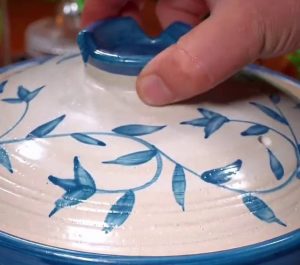
- Use kitchen tongs to remove the pork cubes one by one and place them temporarily on a heatproof plate.
- Remove the lid and increase the heat to medium-high. Let the sauce continue boiling for 15 minutes.
- Watch the sauce as the water evaporates. It will gradually thicken and develop a deeper color. When you lift some sauce with a spoon, it should coat the back of the spoon in a continuous layer, indicating that it has thickened.
- Return the pork to the pot and cook for another 5 minutes. During this time, spoon the sauce over the pork cubes.
- Finely chop the remaining 20 g of scallions and sprinkle them over the pork before serving.
Notes
- Check the pork after steaming for 50 minutes. If chopsticks do not slide in easily, steam for another 10 minutes.
- When making the caramelized sugar syrup, remove it from the heat as soon as it turns amber. Add hot water slowly to prevent splattering.
- Maintain a gentle simmer during braising to prevent the pork cubes from breaking apart due to vigorous boiling.
- If the pot is wide, the liquid may not reach the top of the pork. Add 100 ml of hot water at a time, up to an additional 300 ml, and allow more time for the sauce to reduce.
- Light soy sauce primarily adds savory saltiness, while dark soy sauce primarily deepens the color. Regular soy sauce can replace either one, but reduce the salt to 1 g if the substitute is particularly salty.
- Orange peel adds a mild citrus aroma and can be omitted. Beer can be replaced with non-alcoholic beer. Using water or unsalted meat stock will reduce the malty aroma.
- Removing the pork while reducing the sauce helps prevent the meat from breaking apart. Return the pork to the pot and heat for another 5 minutes once the sauce has thickened.
- Refrigerate cooked pork promptly and aim to eat it within 3 days. To reheat, add 30 ml of water, cover the pot, and heat over low heat for 10–15 minutes, until the center of the pork is thoroughly heated.
Frequently Asked Questions
Why steam the pork before braising it instead of braising it directly?
In this recipe, I steam the whole piece of pork belly first, cut it into cubes, and then braise the cubes. Steaming first helps soften the meat and makes it easier to cut the pork into neat, even pieces afterward.
Other Dongpo pork recipes may blanch the pork first or braise it directly. Blanching means briefly placing an ingredient in boiling water and then removing it. This helps remove some of the scum and impurities. Different preparation methods produce different cooking results, so no single method needs to be treated as the only correct approach.
Is orange peel necessary?
No. In this recipe, orange peel is mainly used to add a citrus aroma. If you do not like citrus flavors, you can leave it out.
If you use orange peel, wash it thoroughly and avoid any peel with visible signs of spoilage or mold. Orange peel does not replace proper cleaning and does not guarantee that the pork will be less greasy.
Why add beer?
Beer adds a malty aroma and makes the sauce more flavorful. When beer is braised with soy sauce, rock sugar, and spices, it creates a different flavor from a sauce made with water alone.
If you prefer not to use an alcoholic beverage, you can replace the beer with the same amount of non-alcoholic beer. Water or unsalted meat stock can also be used, but the finished dish will have less of the malty aroma that beer provides.
Why reduce the sauce after braising?
During braising, the pork needs enough liquid to cook evenly. If a large amount of liquid remains at the end of cooking, the sauce may be too thin.
Removing the pork before reducing the sauce allows excess liquid to evaporate. It also helps prevent the pork pieces from breaking apart during vigorous boiling. Once the sauce reaches the desired consistency, return the pork to the pot and heat it briefly.
Can I use a regular pot if I do not have a cast-iron pot?
Yes. A heavy-bottomed stainless steel pot or another heavy-bottomed pot with a lid works well.
A thin-bottomed pot may distribute heat less evenly. Use lower heat and watch for food sticking to the bottom. If the liquid evaporates too quickly, add 100 ml of hot water at a time.
How to Store and Reheat Dongpo Pork
If you have leftovers, place the Dongpo pork and its sauce in a clean, covered food storage container. Do not leave cooked pork at room temperature for an extended period.
Once the food is no longer visibly steaming, refrigerate it promptly. I recommend eating it within 3 days. If you need to store it for longer, divide it into smaller portions and freeze them.
To reheat the pork, place the meat and sauce in a small pot and add 30 ml of water. Cover the pot and heat over low heat for 10–15 minutes, until the center of the pork is thoroughly heated. If the sauce is still too thick, add another 15 ml of water at a time.
This homemade Dongpo pork takes some time to prepare, but the steps are straightforward. Steam the pork first, cut it into cubes, braise it with seasonings, and then reduce the sauce. This method produces pork belly with a deep color, a tender texture, and a rich sauce.