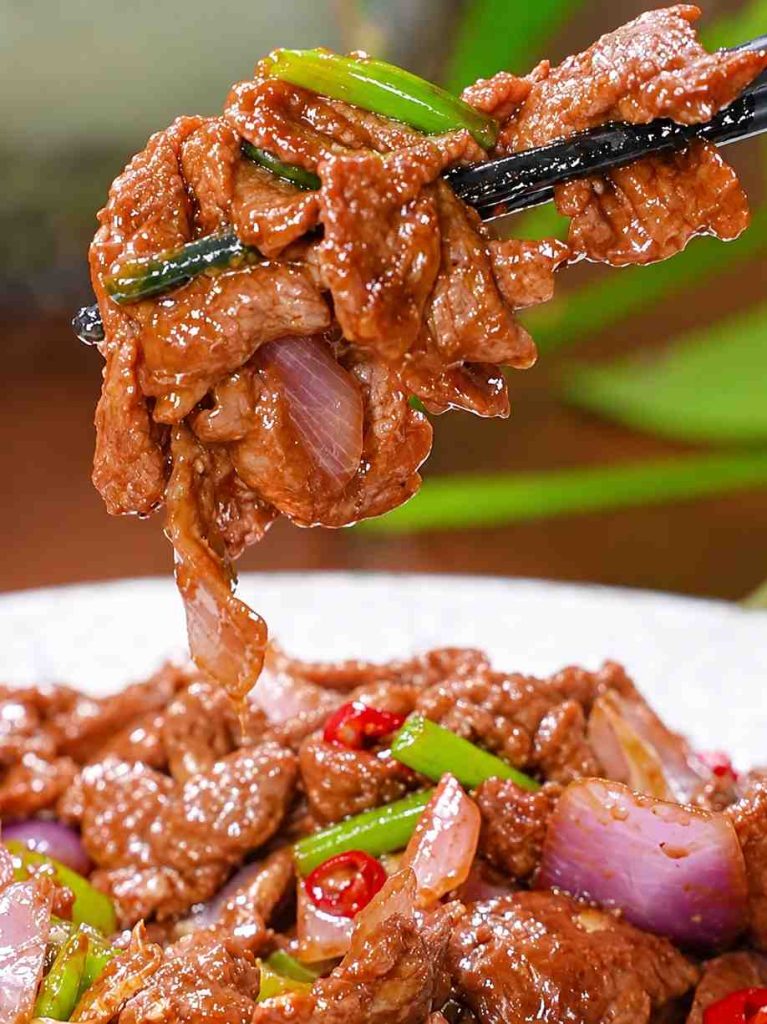
Twice-Cooked Pork is a classic Sichuan dish. Its name comes from the cooking process: first, a whole piece of pork is boiled until tender, then sliced into thin strips and returned to the wok to be stir-fried. During this second heating, the pork releases its own fat, and the surface of the slices gradually turns golden brown.
I like to use pork belly with the skin on for Twice-Cooked Pork. Pork belly consists of lean meat and fat, so when stir-fried, it develops a rich meaty aroma while retaining a tender texture. This article shares a recipe for Twice-Cooked Pork with Garlic Chives, seasoned with doubanjiang, fermented black soybeans, dried chili peppers, and garlic chives—a fairly home-style dish. If you like pork belly dishes, see our homemade Dongpo pork recipe.
Doubanjiang is a salty and spicy paste made from chili peppers and fermented fava beans, which adds a reddish hue and a rich, fermented aroma. Fermented black soybeans are black soybeans that have been fermented and salt-cured; they have a salty taste and a strong fermented aroma. These two seasonings define the main flavors of this dish.
This recipe serves 2–3 people. I’ve organized the ingredient weights, seasoning amounts, and cooking times into a ready-to-use format. For a more hands-off version, try our rice cooker red-braised pork belly recipe.
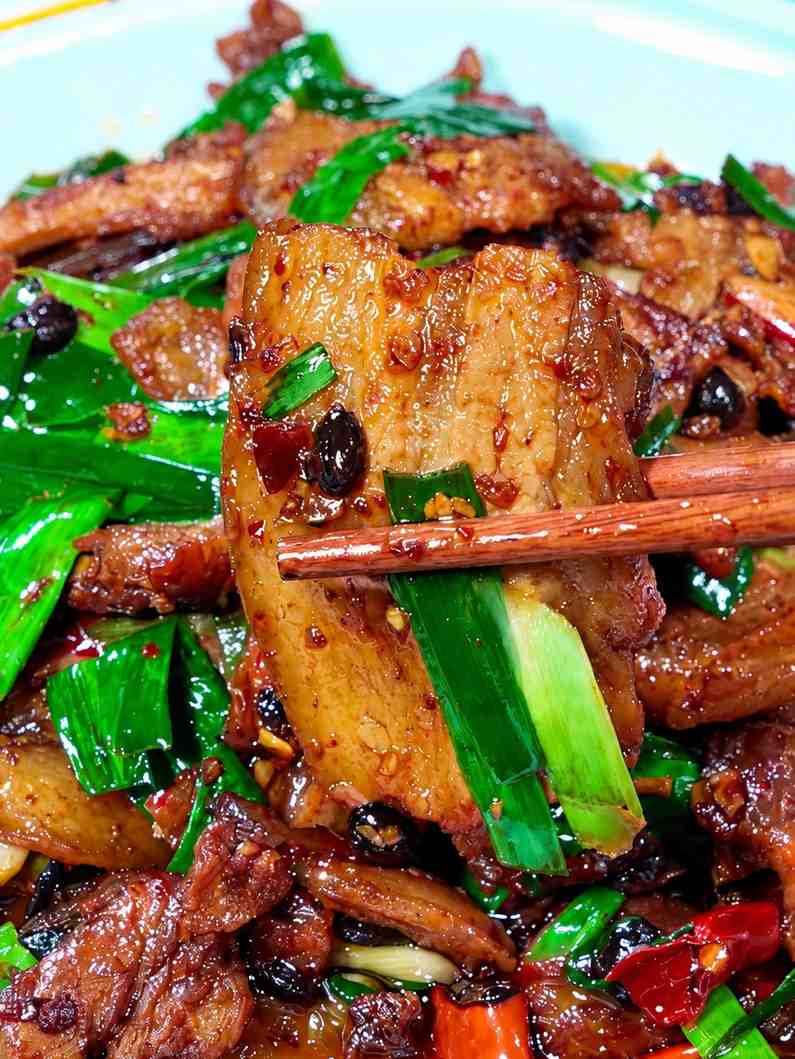
Homestyle Twice-Cooked Pork
Ingredients
Equipment
Method
- Wash 500 grams of pork belly with the skin on, then pat the surface dry with paper towels.
- Use a kitchen blowtorch to sear the pork skin evenly until brown spots appear on the surface. If you don’t have a blowtorch, place the pork skin skin-side down in a dry, hot skillet, hold the meat in place with long-handled tongs, and sear it slowly for about 3–5 minutes. Do not press down on the meat with your hands while it’s in the hot skillet.
- Soak the pork skin in warm water for 5 minutes, scrape off the yellow and charred parts from the surface with a knife, and then rinse it thoroughly with clean water.
- Place the pork belly in a soup pot with a capacity of at least 3 liters, then add 2,000–2,500 milliliters of water, 30 grams of scallions, and 10 grams of ginger. The water level should be about 2 centimeters above the meat.
- Bring the water to a boil over high heat, skim off any foam, then reduce the heat to low, cover, and simmer for 25–30 minutes.
- Use chopsticks to check the thickest part of the meat. If the chopsticks can pierce through the meat, it means the pork is fully cooked. If using a food thermometer, check to see if the internal temperature of the meat has reached 70 degrees Celsius. If the meat is still firm, continue cooking for an additional 5 minutes and check again.
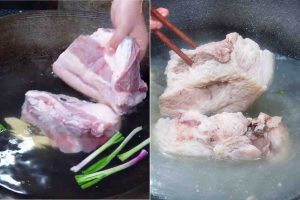
- Remove the cooked pork belly from the water, place it on a clean plate, and let it rest for 5 minutes to allow most of the steam to escape.
- Place the pork in the refrigerator for 20 minutes to firm up the surface of the meat. If you don't have enough space in the refrigerator, soak it in cold water for 10 minutes and then pat it dry.
- Slice the cooled pork belly into thin slices 2–3 millimeters thick, trying to keep the slices as uniform in thickness as possible.
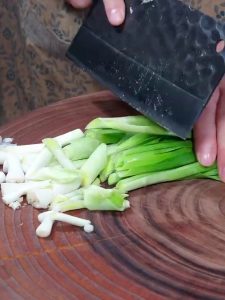
- Wash 150 grams of garlic chives and cut them into pieces about 4 centimeters long. Separate the white stems from the green leaves.
- Slice the remaining 10 grams of ginger into thin slices or mince it, and mince 15 grams of garlic.
- Cut 5 grams of dried red chili peppers into small pieces, and chop 15 grams of fermented black beans into small pieces.
- Measure out 20 grams of doubanjiang, 10 milliliters of light soy sauce, 4 grams of white sugar, and 1 gram of MSG, respectively.
- Preheat a thick-bottomed skillet with a diameter of at least 28 centimeters for about 2 minutes over medium heat.
- Spread the pork belly slices evenly in the pan, trying not to let them overlap, and stir-fry for 4–6 minutes, turning them constantly so they cook evenly.
- When the meat slices turn slightly golden brown, some of the edges begin to curl, and the fat has rendered out, remove the meat slices from the pan. If the pan isn’t large enough to hold all the meat slices at once, cook them in two batches, 4–6 minutes per batch.
- Leave about 15 milliliters of lard in the pot. If there is less than 15 milliliters of rendered lard, add 5 milliliters of cooking oil.
- Reduce the heat to medium-low, add 5 grams of dried red chili peppers, the remaining 10 grams of ginger, and 15 grams of garlic, and stir-fry for 20–30 seconds.
- Add 20 grams of doubanjiang and 15 grams of douchi, and continue stir-frying for 45–60 seconds, until the oil turns red and you can smell the distinct aroma of the sauce.
- Keep the heat at medium-low to prevent the doubanjiang and garlic from burning and developing a bitter taste.
- Place the white stems of the garlic chives in the pan and stir-fry for 30 seconds.
- Add the stir-fried pork belly slices, 4 grams of sugar, and 10 milliliters of light soy sauce, then turn the heat to medium-high and continue stir-frying for 1–2 minutes.
- Make sure the meat slices are thoroughly coated with the bean paste and fermented black beans so that the seasonings are evenly distributed over the surface of the meat.
- Do not add any extra salt to this dish. If you use 15 grams of bottled black bean and garlic paste instead of fermented black beans, reduce the light soy sauce to 5 milliliters.
- Add the green leaves of the garlic chives and 1 gram of MSG.
- Turn the heat to medium-high and stir-fry for 30–45 seconds, until the green leaves begin to soften but still retain their green color.
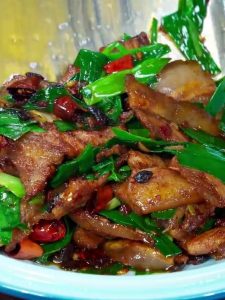
- Immediately after turning off the heat, transfer the twice-cooked pork to a serving plate.
Notes
A Few Details I Pay Attention to When Making Twice-Cooked Pork
First, the pork must be boiled first, then sliced and stir-fried.
This dish requires two rounds of cooking. The first boiling ensures the meat is thoroughly cooked through, while the second stir-frying releases fat and enhances the aroma. Each step serves a different purpose.
Second, don’t let the pork slices stay in the pan for too long.
The purpose of stir-frying is to render some of the fat and give the pork slices a golden-brown color. The slices will later be tossed with the sauce. If they’re stir-fried until too dry too early, the final texture may end up being tough.
Third, the doubanjiang and fermented black beans must be stir-fried until fully fragrant.
Doubanjiang primarily provides spiciness, saltiness, and red oil. Fermented black beans add a fermented aroma. Stir-frying the seasonings first before adding the meat slices allows the meat to absorb the flavors evenly.
Fourth, do not add the white stems and green leaves of the garlic chives to the pan at the same time.
The white stems are thicker and need to be cooked longer. The green leaves cook much faster, so they should be added last.
Fifth, when using substitute seasonings, you’ll need to adjust the saltiness accordingly.
The salt content of doubanjiang, fermented black beans, and bottled black bean garlic paste may vary. If you’ve already used a seasoning with a higher salt content, you should reduce the amount of light soy sauce rather than adding more salt.
This is the method I use when making twice-cooked pork at home. For those trying to make twice-cooked pork at home for the first time, it’s easier to control the final flavor by first boiling the pork until cooked through, slicing it thinly, and then stir-frying and seasoning it in the correct order.