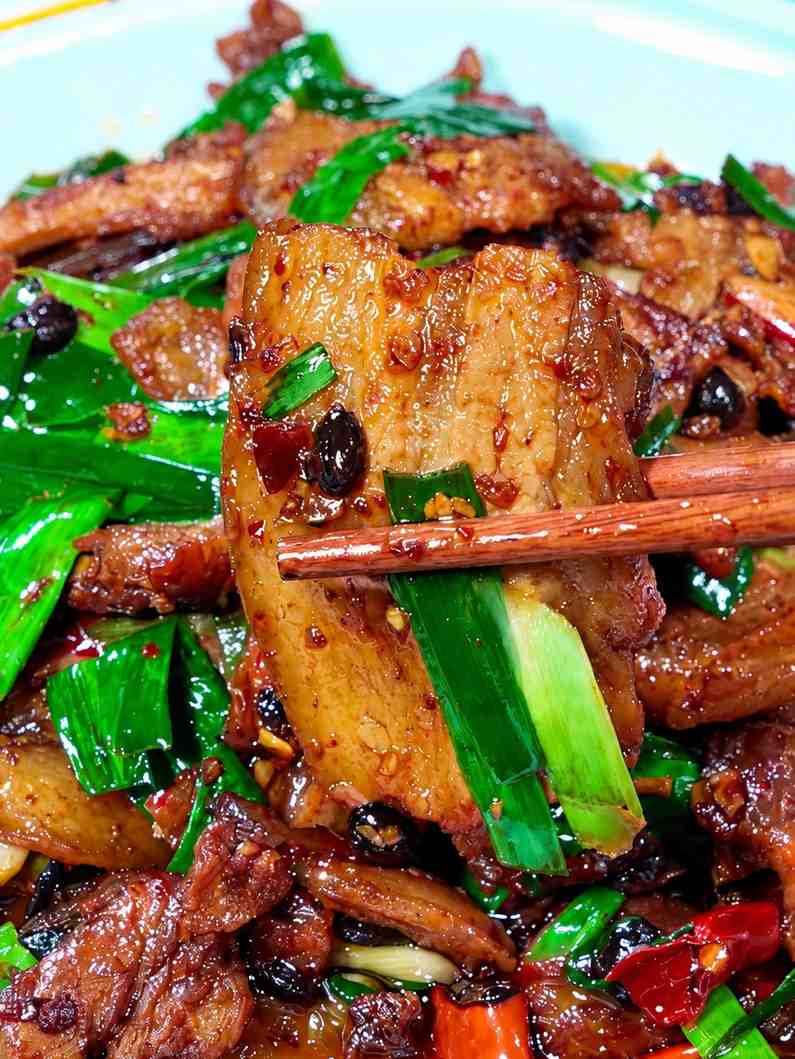
Ingredients
Equipment
Method
Step 1: Scald the pork skin and clean the surface
- Wash 500 grams of pork belly with the skin on, then pat the surface dry with paper towels.
- Use a kitchen blowtorch to sear the pork skin evenly until brown spots appear on the surface. If you don’t have a blowtorch, place the pork skin skin-side down in a dry, hot skillet, hold the meat in place with long-handled tongs, and sear it slowly for about 3–5 minutes. Do not press down on the meat with your hands while it’s in the hot skillet.
- Soak the pork skin in warm water for 5 minutes, scrape off the yellow and charred parts from the surface with a knife, and then rinse it thoroughly with clean water.
Step 2: Cook the pork belly
- Place the pork belly in a soup pot with a capacity of at least 3 liters, then add 2,000–2,500 milliliters of water, 30 grams of scallions, and 10 grams of ginger. The water level should be about 2 centimeters above the meat.
- Bring the water to a boil over high heat, skim off any foam, then reduce the heat to low, cover, and simmer for 25–30 minutes.
- Use chopsticks to check the thickest part of the meat. If the chopsticks can pierce through the meat, it means the pork is fully cooked. If using a food thermometer, check to see if the internal temperature of the meat has reached 70 degrees Celsius. If the meat is still firm, continue cooking for an additional 5 minutes and check again.
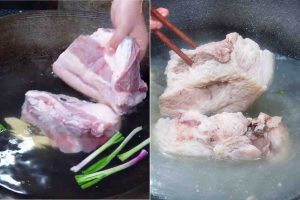
Step 3: Let the pork cool, then slice it
- Remove the cooked pork belly from the water, place it on a clean plate, and let it rest for 5 minutes to allow most of the steam to escape.
- Place the pork in the refrigerator for 20 minutes to firm up the surface of the meat. If you don't have enough space in the refrigerator, soak it in cold water for 10 minutes and then pat it dry.
- Slice the cooled pork belly into thin slices 2–3 millimeters thick, trying to keep the slices as uniform in thickness as possible.
Step 4: Prepare the garlic chives and seasonings
- Wash 150 grams of garlic chives and cut them into pieces about 4 centimeters long. Separate the white stems from the green leaves.
- Slice the remaining 10 grams of ginger into thin slices or mince it, and mince 15 grams of garlic.
- Cut 5 grams of dried red chili peppers into small pieces, and chop 15 grams of fermented black beans into small pieces.
- Measure out 20 grams of doubanjiang, 10 milliliters of light soy sauce, 4 grams of white sugar, and 1 gram of MSG, respectively.
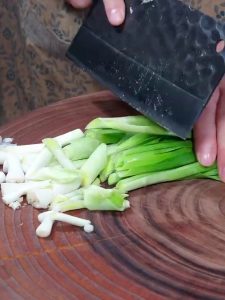
Step 5: Sauté the pork belly
- Preheat a thick-bottomed skillet with a diameter of at least 28 centimeters for about 2 minutes over medium heat.
- Spread the pork belly slices evenly in the pan, trying not to let them overlap, and stir-fry for 4–6 minutes, turning them constantly so they cook evenly.
- When the meat slices turn slightly golden brown, some of the edges begin to curl, and the fat has rendered out, remove the meat slices from the pan. If the pan isn’t large enough to hold all the meat slices at once, cook them in two batches, 4–6 minutes per batch.
- Leave about 15 milliliters of lard in the pot. If there is less than 15 milliliters of rendered lard, add 5 milliliters of cooking oil.
Step 6: Sauté the doubanjiang and fermented black beans until fragrant
- Reduce the heat to medium-low, add 5 grams of dried red chili peppers, the remaining 10 grams of ginger, and 15 grams of garlic, and stir-fry for 20–30 seconds.
- Add 20 grams of doubanjiang and 15 grams of douchi, and continue stir-frying for 45–60 seconds, until the oil turns red and you can smell the distinct aroma of the sauce.
- Keep the heat at medium-low to prevent the doubanjiang and garlic from burning and developing a bitter taste.
Step 7: First, stir-fry the stems of the garlic chives, then add the sliced meat.
- Place the white stems of the garlic chives in the pan and stir-fry for 30 seconds.
- Add the stir-fried pork belly slices, 4 grams of sugar, and 10 milliliters of light soy sauce, then turn the heat to medium-high and continue stir-frying for 1–2 minutes.
- Make sure the meat slices are thoroughly coated with the bean paste and fermented black beans so that the seasonings are evenly distributed over the surface of the meat.
- Do not add any extra salt to this dish. If you use 15 grams of bottled black bean and garlic paste instead of fermented black beans, reduce the light soy sauce to 5 milliliters.
Step 8: Add the garlic chive leaves and remove from heat
- Add the green leaves of the garlic chives and 1 gram of MSG.
- Turn the heat to medium-high and stir-fry for 30–45 seconds, until the green leaves begin to soften but still retain their green color.
- Immediately after turning off the heat, transfer the twice-cooked pork to a serving plate.
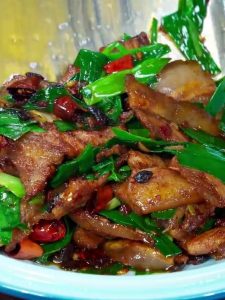
Notes
Serves: 2–3 people.
Preparing the pork skin: Use long-handled tongs to hold the meat in place while blanching; do not press the pork against the hot pan with your hands. Scrape off the charred layer before cooking the meat.
Thickness of Meat Slices: Cut into thin slices 2–3 millimeters thick to ensure even stir-frying. Stir-fry until the slices are lightly golden and the edges curl slightly; do not cook until they are completely dry and hard.
Seasoning: Both doubanjiang and douchi contain salt, so no additional salt is needed in the main recipe. If using bottled black bean and garlic paste, reduce the light soy sauce to 5 milliliters.When using a substitute mixture of Korean gochujang and Japanese red miso, omit the 4 grams of white sugar and reduce the additional dried red chili peppers to 2 grams.
Equipment Substitute: If you don’t have a Chinese wok, use a heavy-bottomed skillet with a diameter of at least 28 cm. If the pan is smaller, stir-fry in batches to avoid the meat slices overlapping.
Ingredient substitutions: Garlic chives can be substituted with 100 grams of Chinese chives and 50 grams of green onions; fermented black beans can be substituted with 15 grams of bottled black bean garlic paste, though the flavor and texture will differ. There is no exact substitute for doubanjiang (fermented bean paste); it is recommended to purchase it online.
Time: 20 minutes prep time, 50 minutes cooking time, 20 minutes cooling time; total time: 90 minutes. The actual cooking time for the pork should be adjusted based on the thickness of the meat and how well-done it is.