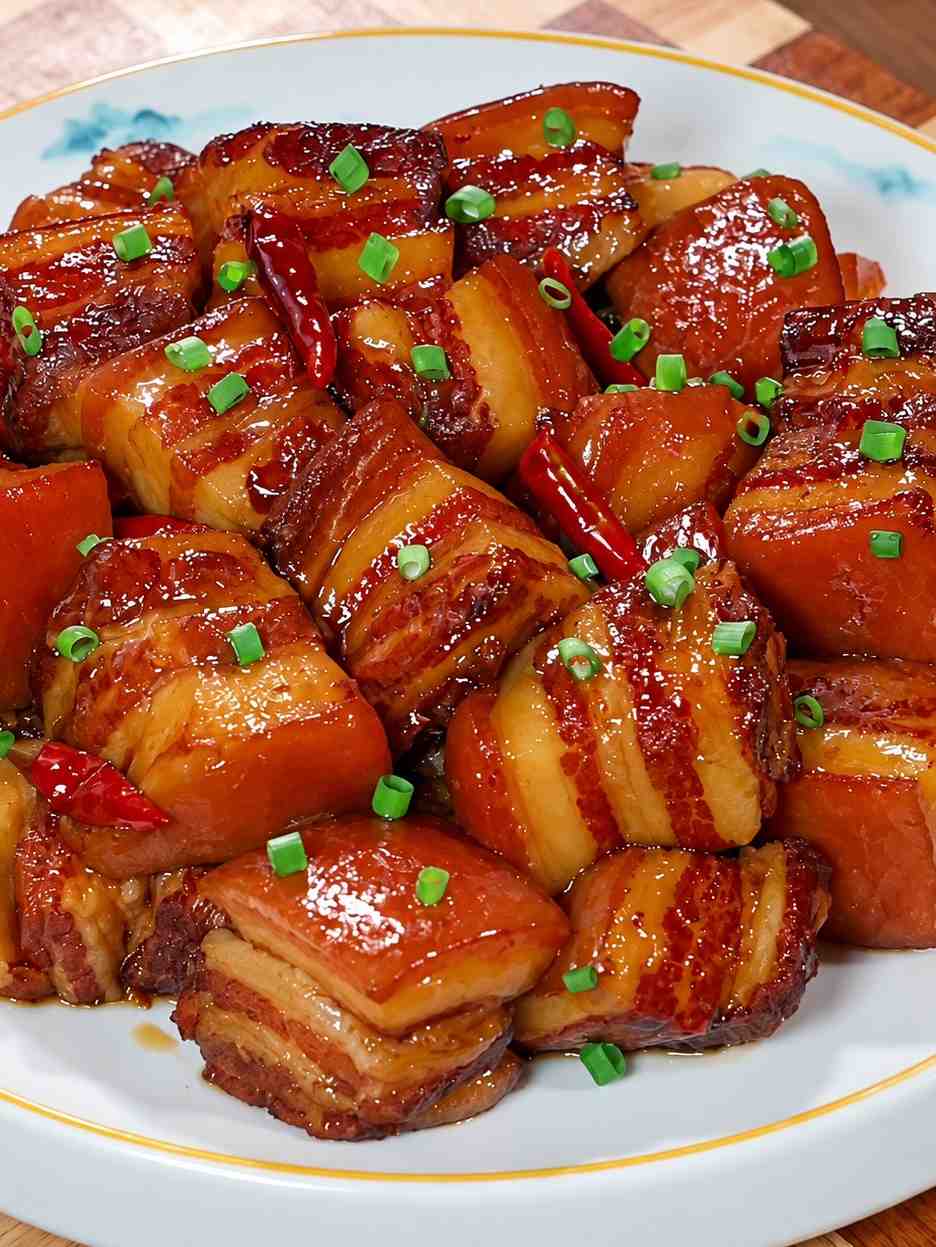
Ingredients
Equipment
Method
Step 1: Cut and Soak the Pork Belly
- Cut 1000 g of pork belly into cubes measuring approximately 4 cm on each side. Keep the pieces similar in size to help them become tender at a similar rate.
- Place the pork in a large bowl. Add 5 g of salt and 30 ml of Huadiao wine.
- Mix by hand for approximately 1 minute so that the salt and wine come into contact with all the pork pieces.
- Let the pork soak for 10 minutes. Huadiao wine is a type of Chinese yellow rice wine that adds aroma and helps reduce the pork's raw odor.

Step 2: Blanch the Pork in Cold Water
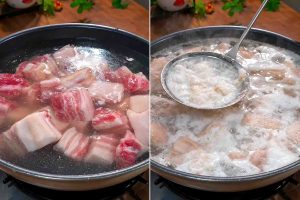
- Transfer the soaked pork belly and all the Huadiao wine remaining in the bowl to a wide pot.
- Add 2500 ml of cold water. The water should cover the pork by approximately 3 cm. If the pot is wide and the water level is too low, add 200 ml of cold water at a time until the pork is fully submerged.
- Gradually heat the water. Once it reaches a boil, continue boiling for 5 minutes.
- Use a slotted skimmer to remove the foam from the surface, then lift the pork out of the pot. Blanching means briefly heating food in water before removing it. For meat, this helps release blood and some surface impurities.
Step 3: Rinse the Pork with Warm Water
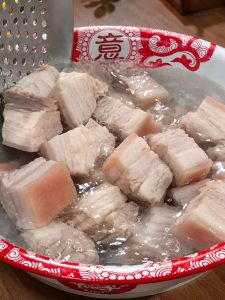
- Remove the blanched pork from the pot and rinse the surface with 1000 ml of warm water at approximately 40°C to remove any remaining foam.
- After rinsing, allow the pork to drain for approximately 3 minutes.
- Do not rinse the pork with ice-cold water. Once the pork has been rinsed, it is ready for seasoning and braising.
Step 4: Add the Pork and Seasonings to the Rice Cooker
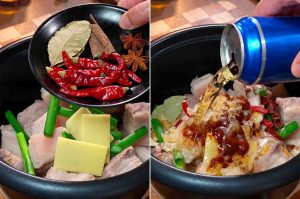
- Place the rinsed and drained pork belly in the inner pot of the electric rice cooker.
- Add 20 g of scallion sections, 20 g of sliced ginger, 2 g of star anise, 4 g of Chinese cinnamon bark, 1 g of bay leaves, and 3 g of dried chili peppers.
- Add the remaining 3 g of salt and 3 g of chicken bouillon powder.
- Pour in 30 ml of light soy sauce and 15 ml of dark soy sauce.
- Add 30 g of fermented soybean paste and 30 g of rock sugar.
- Finally, pour in 500 ml of beer.
- Use a spoon to mix the fermented soybean paste with the beer and soy sauces so that the seasonings are distributed among the pork pieces.
- This recipe does not require caramelizing sugar in advance or pan-frying the pork until golden brown. Add the seasonings directly to the rice cooker.
Step 5: Cover and Use the Rice Cooking Program
- Close the rice cooker lid and press the rice cooking button. Cook for approximately 60 minutes initially.
- When the cooking program finishes, open the lid and check the pork.
- If a chopstick can easily pass through the skin and fatty layers, the pork is relatively tender.
- If the pork is still firm and liquid remains at the bottom of the pot, cook for another 15 minutes.
- If the liquid has evaporated but the pork is still firm, add 100 ml of hot water and continue cooking for another 15 minutes.
- Under normal conditions, no additional water is needed during braising. Rice cooker programs vary by model and capacity, so judge doneness by the tenderness of the pork rather than relying only on a fixed cooking time.
Step 6: Check Doneness and Serve
- When cooking is complete, check whether the pork has reached the desired tenderness. If the skin is soft and a chopstick can easily pass through the meat, the pork is ready to serve.
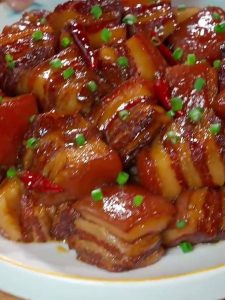
- Finely chop the remaining 10 g of scallions and sprinkle them over the red-braised pork belly.
- The sauce should coat the pork pieces. There is no need to continue cooking for a long time just to thicken the sauce.
- Serve the red-braised pork belly with rice.
Notes
Ingredient Substitutions: Huadiao wine can be replaced with 30 ml of dry sherry or sake. Star anise can be replaced with 1 g of fennel seeds. Fermented soybean paste can be replaced with 25 g of miso paste. Rock sugar can be replaced with 25 g of granulated white sugar. Chicken bouillon powder can be replaced with 3 g of chicken stock seasoning powder. These substitutions will change the aroma, sweetness, or saltiness of the finished dish.
About the Soy Sauces: Light soy sauce is used mainly for seasoning, while dark soy sauce is used mainly to deepen the color. They serve different purposes and should not be exchanged in equal amounts without adjusting the recipe.
About the Beer: The main recipe uses 500 ml of beer. If only 330 ml cans are available, use 330 ml of beer and 170 ml of water instead. The malty aroma will be less pronounced.
Equipment Substitution: If you do not have an electric rice cooker, use a heavy-bottomed pot or cast-iron pot with a tight-fitting lid. Braise over low heat for 90–120 minutes and check the liquid every 20 minutes. If the liquid becomes insufficient, add 100 ml of hot water at a time.
Cooking Time: Rice cooker programs vary by model and capacity. Check the pork after approximately 60 minutes. If the pork is still firm, cook for another 15 minutes and check again.
Doneness: A chopstick should pass easily through the skin and fatty layers. Food safety requirements and the tenderness desired for red-braised pork are not the same. Consider both safe cooking and the texture of the meat.
Salt: This recipe uses 8 g of salt in addition to light soy sauce, dark soy sauce, fermented soybean paste, and chicken bouillon powder. Avoid adding extra salt without tasting the dish, as the finished pork may become too salty.