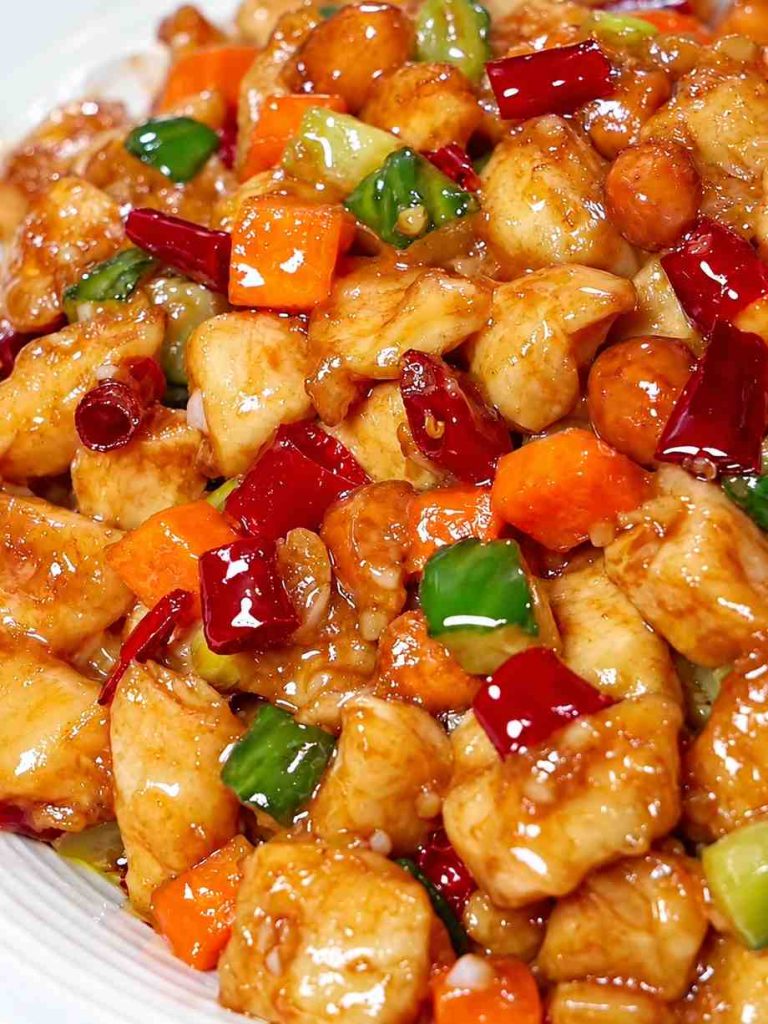
A delicious plate of Kung Pao Chicken starts with more than tender chicken and crunchy peanuts. The real secret is a well-balanced Kung Pao Chicken Sauce that brings together savory, sweet, tangy, and mildly spicy flavors.
A good Kung Pao sauce should have enough depth to complement the chicken without overpowering it. As it cooks, the sauce reduces into a glossy coating that clings to each piece of chicken.
Dried chilies, Sichuan peppercorns, garlic, and ginger create the bold aroma of this classic Chinese stir-fry.
In this guide, I’ll explain the ingredients in Kung Pao Chicken Sauce. I’ll also show you how to use it in a full homemade Kung Pao Chicken recipe. If you want a home-style version with chicken breast, carrots, and cucumber, check our Kung Pao Chicken recipe.
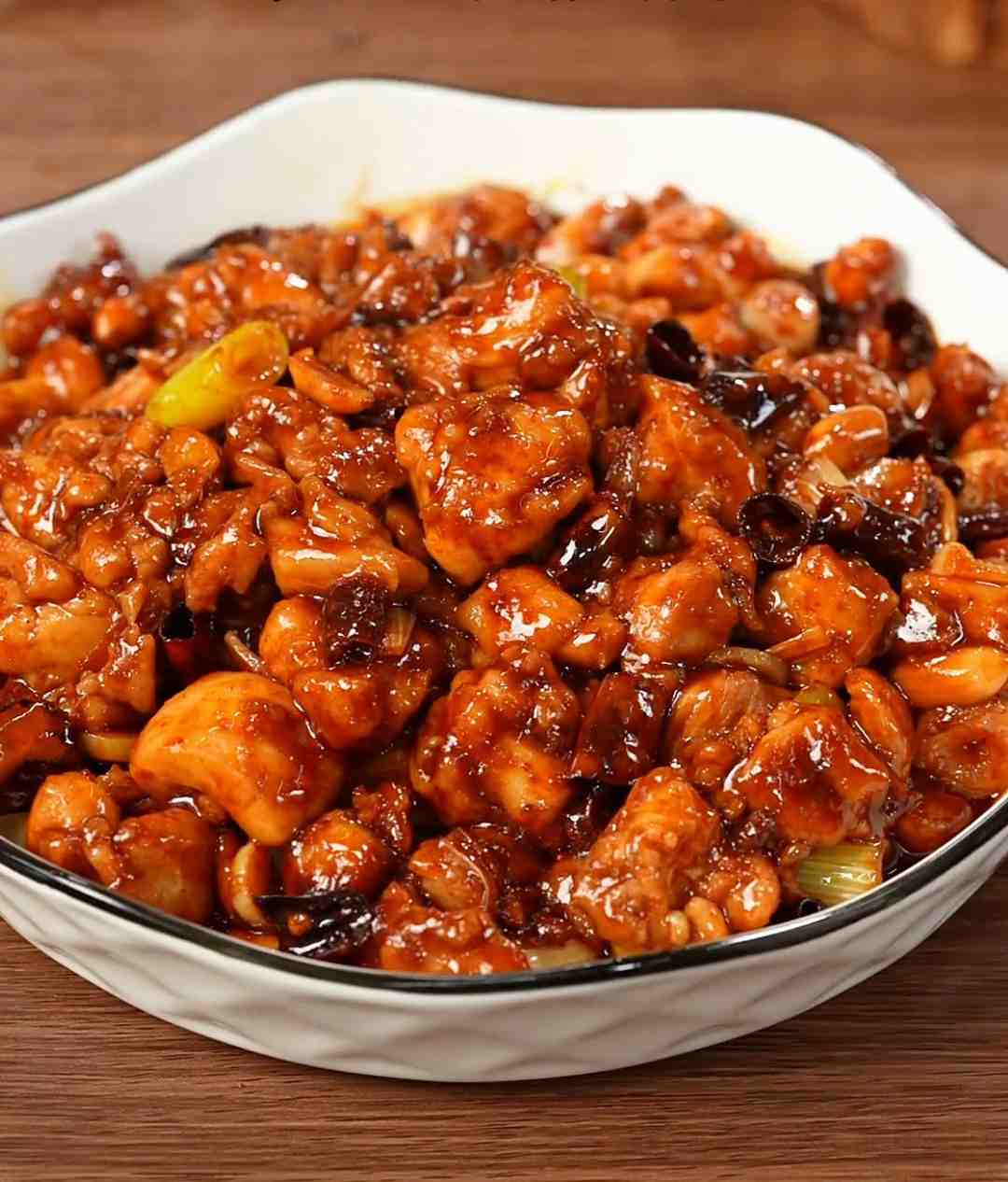
Kung Pao Chicken (Gong Bao Ji Ding)
Ingredients
Equipment
Method
- Lightly crush 1 scallion and 10 g of fresh ginger. Place them in 125 ml of water and let steep for about 10 minutes. Strain and measure out 100 ml for the chicken marinade and 25 ml for the sauce.
- Cut the boneless chicken thighs into evenly sized 1.5–2 cm cubes. Mix 1 tablespoon of cornstarch with 15 ml of water to prepare the chicken slurry.
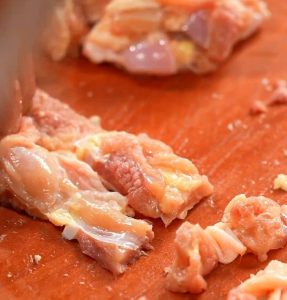
- Place the chicken in a mixing bowl. Gradually add the 100 ml of scallion-ginger water, tossing as you go so the meat can absorb the liquid.
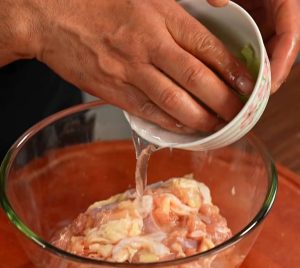
- Add the salt, Huadiao wine, light soy sauce, and sugar. Mix thoroughly until the seasonings are evenly distributed.
- Add the cornstarch slurry and toss until the chicken is lightly coated. Remove any excess liquid from the bottom of the bowl, then drizzle with 1 tablespoon of cooking oil and mix again. Cover and refrigerate for 30 minutes.
- In a small bowl, combine the Huadiao wine, light soy sauce, sugar, rice vinegar, 25 ml of scallion-ginger water, and dark soy sauce. Follow the 1:2:3:4:5 ratio for the five main sauce ingredients.
- Finely chop the scallion whites, ginger, and garlic. Add them to the sauce and let them infuse briefly.
- Mix 1 teaspoon of cornstarch with 15 ml of water to make a separate slurry for thickening the sauce. Stir it again before adding it to the sauce mixture.
- Cut the dried red chilies into small sections and prepare the Sichuan peppercorns. If using plain roasted peanuts, lightly toast them in a little oil until fragrant.
- Heat a wok over medium heat. Add the neutral cooking oil and sesame oil. Add the Sichuan peppercorns and cook until fragrant, then add the dried chilies and stir-fry until they turn reddish-brown. Be careful not to burn them.
- Increase the heat to high and add the marinated chicken. Stir-fry rapidly for about 30 seconds, then continue cooking until the chicken is cooked through.
- Stir the prepared sauce and cornstarch mixture thoroughly, then pour it into the wok. Toss quickly over high heat until the sauce evenly coats the chicken.
- Once the sauce thickens and becomes glossy, add the chili powder if desired. Add the scallion greens and roasted peanuts, then toss everything together.
- Finish with a drizzle of chili oil. Give everything a final toss and serve immediately.
Notes
What Does Kung Pao Chicken Sauce Taste Like?
Kung Pao Chicken Sauce is known for its balance of savory, sweet, sour, and spicy flavors. Unlike a heavily sweetened stir-fry sauce, a well-made Kung Pao sauce should have several layers of flavor that work together.
The soy sauce provides a savory foundation, while vinegar adds brightness and sugar softens the acidity. Chinese cooking wine contributes depth, and the aromatic ingredients give the finished dish its characteristic fragrance.
There is also an important difference between chili heat and Sichuan peppercorns. Dried red chilies bring warmth and a roasted aroma, while Sichuan peppercorns create a distinctive tingling, slightly numbing sensation known as mala.
This combination of chili heat and numbing spice is also found in other Sichuan dishes. If you enjoy these flavors, try our homemade Mapo Tofu recipe.
The finished sauce should be glossy and relatively light rather than excessively thick. It needs to coat the chicken evenly while allowing the peanuts, scallions, and other ingredients to retain their own textures.
What Makes a Good Kung Pao Chicken Sauce?
The secret is understanding what each ingredient contributes. Instead of relying on one strong seasoning, the sauce develops its flavor through several complementary ingredients.
Light Soy Sauce for Savory Depth
Light soy sauce is the main source of saltiness and umami in Kung Pao Chicken Sauce.
It seasons the chicken and helps balance the sweetness of the sugar. It also gives the sauce its basic savory character without making it excessively dark.
For American home kitchens, regular or reduced-sodium soy sauce can work. If you use reduced-sodium soy sauce, adjust the additional salt in the chicken marinade accordingly.
Huadiao Wine for a Richer Aroma
Huadiao wine is a traditional Chinese yellow rice wine commonly used in cooking.
It adds a gentle fermented aroma and helps round out the flavor of the sauce. When combined with soy sauce and vinegar, it creates a more complex seasoning than using soy sauce alone.
If Huadiao wine is difficult to find, Shaoxing cooking wine is a suitable alternative. Dry sherry can also work in a pinch, although the resulting flavor will be slightly different.
Rice Vinegar for Brightness
Vinegar is essential because it prevents the sauce from tasting too sweet or heavy.
This version uses Chinese rice vinegar, which provides a relatively clean, bright acidity. You can also experiment with Chinkiang black vinegar, which has a deeper and more distinctive flavor.
However, these vinegars are not identical. Black vinegar gives the sauce a richer, more rounded character, while rice vinegar keeps the sourness lighter.
For a first attempt, I recommend following the rice vinegar version before experimenting with substitutions.
Sugar to Balance the Acidity
Sugar does more than make the sauce sweet.
It balances the sharpness of the vinegar and brings the savory ingredients together. The goal is not to make a sugary glaze but to create a harmonious sweet-and-sour flavor.
If your vinegar is particularly strong, a small adjustment in sweetness can make the sauce taste more balanced.
Scallion-Ginger Water for Fragrance
One interesting feature of this version is the use of scallion-ginger water.
Rather than relying entirely on plain water, this ingredient adds a subtle aromatic quality while keeping the sauce fluid enough to distribute throughout the chicken.
A little dark soy sauce helps deepen the final color, while cornstarch slurry gives the sauce enough body to cling to the ingredients.
The original flavor balance follows a memorable 1:2:3:4:5 sequence for the five main liquid and seasoning components. It is a useful starting point for understanding how the different flavors work together.
Why You Should Prepare the Sauce Before Stir-Frying
Kung Pao Chicken is a quick stir-fried dish. Once the wok becomes hot, the cooking process moves quickly.
Trying to measure individual seasonings while the chicken is already cooking can result in uneven seasoning or overcooked meat.
Preparing the sauce beforehand makes the cooking process much easier.
There is another useful technique: allowing the chopped scallions, ginger, and garlic to sit briefly in the prepared sauce. This helps distribute their fragrance throughout the seasoning mixture.
The dried chilies and Sichuan peppercorns should be handled separately. They are best introduced into the hot oil first so their aromas can develop before the chicken is added.
For anyone who enjoys making aromatic Chinese condiments from scratch, our Chinese chili oil recipe explains how to infuse cooking oil with dried chilies, sesame seeds, peanuts, and fragrant spices.
One important detail is to stir the sauce again immediately before pouring it into the wok. Cornstarch naturally settles at the bottom, and an unstirred sauce may not thicken evenly.
How to Get Tender Chicken and a Glossy Sauce
Even a perfectly balanced sauce cannot save chicken that has become dry or overcooked. The texture of the chicken is just as important as the seasoning.
1. Let the Chicken Absorb Moisture
Boneless chicken thighs are particularly suitable for this version because they have a naturally juicy texture.
Cut the meat into evenly sized pieces. During marination, gradually work the scallion-ginger water into the chicken rather than pouring everything in at once.
The idea is to let the meat absorb moisture before adding the starch coating.
This technique is related to the Chinese cooking method known as velveting, which uses starch and moisture to help protect meat during high-heat cooking.
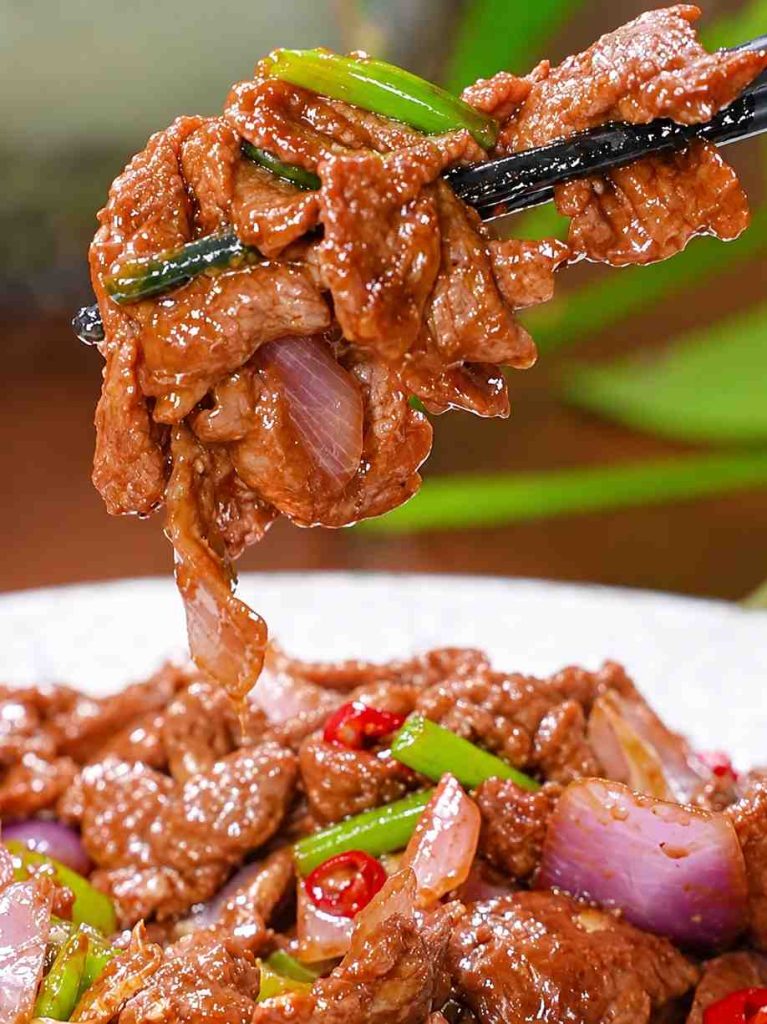
A similar approach is used in our Chinese stir-fried beef with onions, where egg white and cornstarch help reduce moisture loss and keep the beef tender during stir-frying.
After coating the chicken, remove excess starch liquid and finish with a little cooking oil. Refrigerating the chicken for about 30 minutes allows the seasoning to settle into the meat.
2. Develop the Chili and Peppercorn Aroma First
The fragrance of Kung Pao Chicken comes partly from the way its spices are cooked.
Start by allowing the Sichuan peppercorns to release their aroma in hot oil. Add the dried chilies and cook until they develop a reddish-brown color.
Avoid burning them. Overcooked chilies can become bitter and overpower the other ingredients.
Once the aromatic oil is ready, the chicken can be added and quickly stir-fried over high heat.
3. Add the Sauce at the Right Moment
The sauce should be added when the chicken is nearly cooked through.
Pour it into the wok and toss quickly so that the seasoning reaches all sides of the chicken.
As the liquid heats up, the starch helps it thicken. Watch for the moment when the sauce becomes glossy and lightly coats the chicken.
You do not want a large pool of watery liquid at the bottom of the wok, nor do you want a thick, sticky layer that hides the flavor of the other ingredients.
Add the scallions and roasted peanuts toward the end. This helps preserve their fragrance and crunch.
Ingredient Substitutions for American Home Kitchens
You do not need a professional Chinese kitchen to make good Kung Pao Chicken. Most of the ingredients are available at Asian grocery stores, and several have practical alternatives.
Chinese ingredient | What to look for | Possible alternative
Huadiao wine | Chinese yellow cooking wine | Shaoxing wine or dry sherry
Light soy sauce | Light soy sauce | Regular soy sauce
Dark soy sauce | Dark soy sauce | Use a small amount of regular soy sauce. The color will differ.
Rice vinegar | Chinese rice vinegar | Regular unseasoned rice vinegar
Sichuan peppercorns | Red Sichuan peppercorns | Omit if unavailable. The numbing aroma will be missing.
Dried red chilies | Chinese dried red chilies | Dried árbol chilies. Adjust for heat.
Cornstarch | Cornstarch | Standard US supermarket cornstarch
Roasted peanuts | Unsalted roasted peanuts | Cashews. The traditional peanut flavor will change.
I would prioritize finding good soy sauce, Chinese cooking wine, and Sichuan peppercorns. These ingredients contribute significantly to the characteristic flavor.
If you cannot find every ingredient, it is better to make a few thoughtful substitutions than to add several unrelated sauces that change the overall taste.
Common Kung Pao Chicken Sauce Problems
Why Is My Kung Pao Sauce Too Watery?
This can happen when the chicken releases too much moisture or the sauce has not reduced sufficiently.
Make sure excess liquid is removed from the marinated chicken and that the cornstarch slurry is mixed thoroughly before use.
Allow the sauce to bubble briefly over high heat until it lightly coats the chicken.
Why Is My Sauce Too Thick or Sticky?
Too much cornstarch can make the sauce resemble a thick paste.
Add a small splash of water and toss over the heat until the consistency becomes lighter.
Remember that the goal is a glossy coating, not a heavy layer of starch.
Why Does My Kung Pao Chicken Taste Too Sour?
The vinegar may be overpowering the soy sauce and sugar.
Adjust the sweetness gradually rather than adding a large amount of sugar at once. A balanced sauce should have noticeable acidity without leaving an excessively sharp aftertaste.
Why Is My Chicken Dry?
Overcooking is one of the most common reasons.
Cut the chicken into evenly sized pieces, allow it to absorb moisture during marination, and avoid leaving it in the wok longer than necessary.
The chicken should be completely cooked through while remaining juicy.
What Can You Serve with Kung Pao Chicken?
Steamed white rice is the natural companion to Kung Pao Chicken.
The rice absorbs the savory, slightly sweet sauce and balances the flavors of the dried chilies and Sichuan peppercorns.
You can also serve it with simple stir-fried vegetables, steamed broccoli, or a refreshing cucumber salad.
For a refreshing contrast to the savory sauce, try our Chinese smashed cucumber salad with garlic and Sichuan peppercorn oil. Its crisp texture and aromatic dressing make it a lovely addition to a Chinese-style meal.
If you enjoy the flavor of Kung Pao Chicken Sauce, the same general flavor profile can also work with shrimp, tofu, and vegetables. Adjust the sweetness and cooking time according to the ingredients you use.
The most important thing is to avoid treating the sauce as an overpowering coating. Its purpose is to bring all the ingredients together while allowing each one to contribute its own flavor and texture.
A good homemade Kung Pao Chicken Sauce should leave you with tender chicken, a glossy finish, fragrant spices, and crunchy peanuts in every bite.