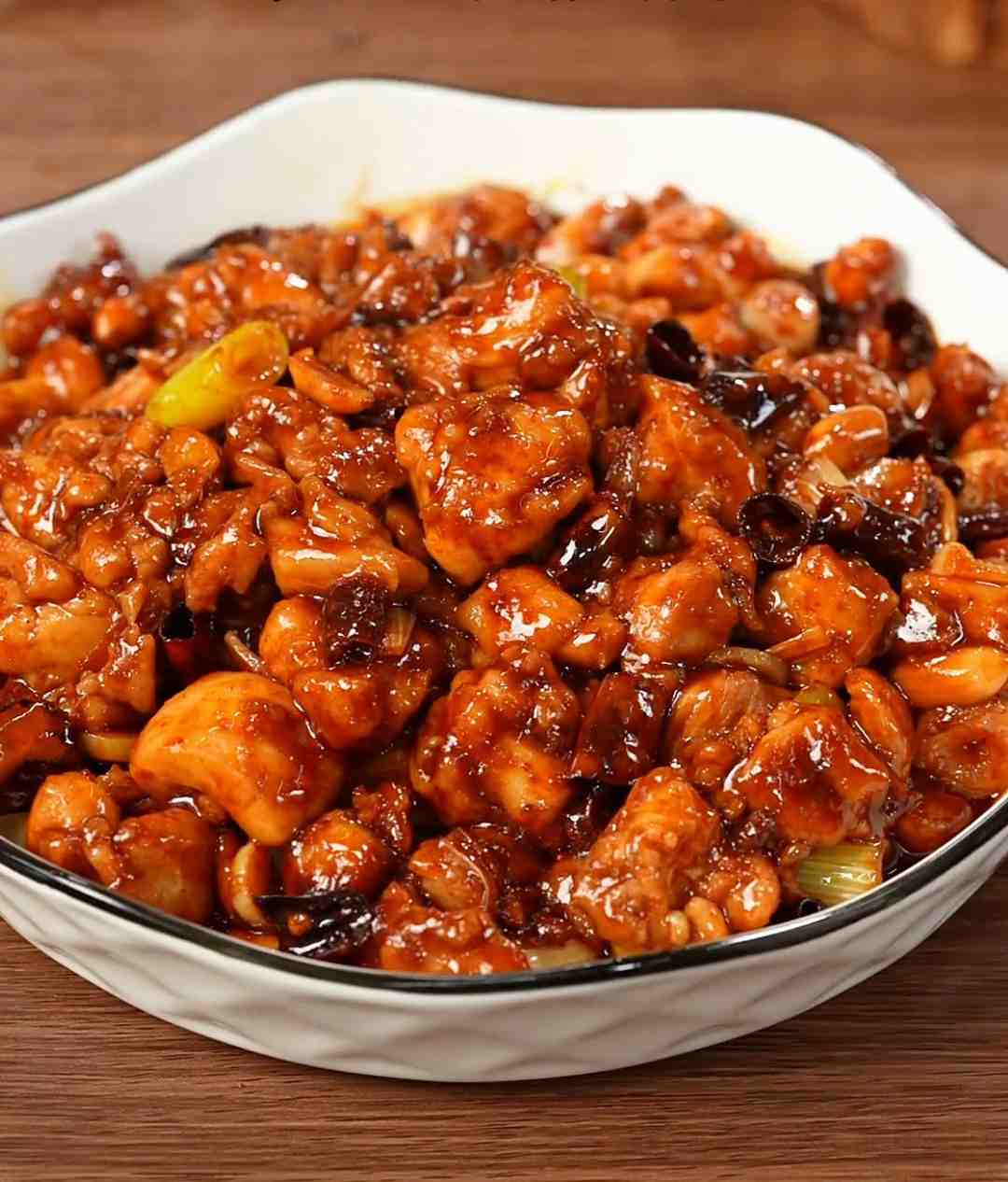
Ingredients
Equipment
Method
Prepare the Scallion-Ginger Water and Chicken
- Lightly crush 1 scallion and 10 g of fresh ginger. Place them in 125 ml of water and let steep for about 10 minutes. Strain and measure out 100 ml for the chicken marinade and 25 ml for the sauce.
- Cut the boneless chicken thighs into evenly sized 1.5–2 cm cubes. Mix 1 tablespoon of cornstarch with 15 ml of water to prepare the chicken slurry.
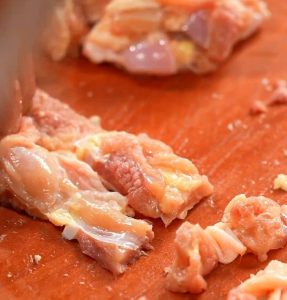
- Place the chicken in a mixing bowl. Gradually add the 100 ml of scallion-ginger water, tossing as you go so the meat can absorb the liquid.
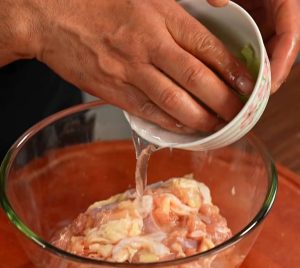
- Add the salt, Huadiao wine, light soy sauce, and sugar. Mix thoroughly until the seasonings are evenly distributed.
- Add the cornstarch slurry and toss until the chicken is lightly coated. Remove any excess liquid from the bottom of the bowl, then drizzle with 1 tablespoon of cooking oil and mix again. Cover and refrigerate for 30 minutes.
Prepare the Kung Pao Chicken Sauce
- In a small bowl, combine the Huadiao wine, light soy sauce, sugar, rice vinegar, 25 ml of scallion-ginger water, and dark soy sauce. Follow the 1:2:3:4:5 ratio for the five main sauce ingredients.
- Finely chop the scallion whites, ginger, and garlic. Add them to the sauce and let them infuse briefly.
- Mix 1 teaspoon of cornstarch with 15 ml of water to make a separate slurry for thickening the sauce. Stir it again before adding it to the sauce mixture.
Stir-Fry the Kung Pao Chicken
- Cut the dried red chilies into small sections and prepare the Sichuan peppercorns. If using plain roasted peanuts, lightly toast them in a little oil until fragrant.
- Heat a wok over medium heat. Add the neutral cooking oil and sesame oil. Add the Sichuan peppercorns and cook until fragrant, then add the dried chilies and stir-fry until they turn reddish-brown. Be careful not to burn them.
- Increase the heat to high and add the marinated chicken. Stir-fry rapidly for about 30 seconds, then continue cooking until the chicken is cooked through.
- Stir the prepared sauce and cornstarch mixture thoroughly, then pour it into the wok. Toss quickly over high heat until the sauce evenly coats the chicken.
- Once the sauce thickens and becomes glossy, add the chili powder if desired. Add the scallion greens and roasted peanuts, then toss everything together.
- Finish with a drizzle of chili oil. Give everything a final toss and serve immediately.
Notes
Kung Pao Sauce Ratio: Use a 1:2:3:4:5 ratio of Huadiao wine, light soy sauce, sugar, rice vinegar, and scallion-ginger water. For convenience, use 1 teaspoon (5 ml) as one part. Scale all five ingredients proportionally when making a larger batch.
How to Keep the Chicken Tender: Gradually work the scallion-ginger water into the chicken before adding the cornstarch slurry. Remove excess slurry and finish with a little cooking oil. If the chicken cannot absorb all the liquid, do not force it to do so.
How to Get a Glossy Sauce: Cornstarch settles quickly, so stir the sauce thoroughly before pouring it into the wok. Cook just until it lightly coats the chicken. Avoid reducing it into a thick, sticky paste.
Ingredient Substitutions: Shaoxing wine can replace Huadiao wine, while dry sherry can be used as an alternative. Chinese rice vinegar can be substituted with regular unseasoned rice vinegar. Chinkiang black vinegar can also be used, although it creates a deeper flavor. If Sichuan peppercorns are unavailable, you can omit them, but the characteristic numbing aroma will be missing.
Serving Tip: Add the roasted peanuts and scallion greens near the end of cooking to preserve their texture and fragrance. Serve the Kung Pao Chicken hot with steamed white rice.