Ingredients
Equipment
Method
Prepare the chili base
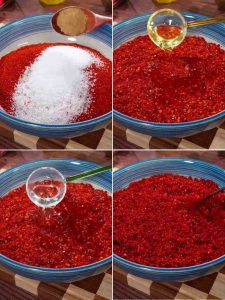
- Place 250 grams of coarse chili powder and 200 grams of fine chili powder in a large, dry, heat-resistant bowl.
- Add 10 grams of white sugar, 10 grams of salt, and 5 grams of five-spice powder, then stir thoroughly until well combined.
- Add 15 milliliters of cooking oil and 15 milliliters of high-proof baijiu, then stir again until there are no noticeable clumps of chili powder.
Roasting Chopped Peanuts
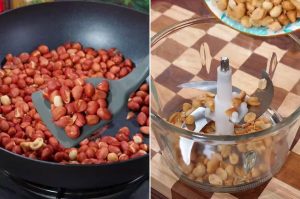
- Place 100 grams of raw peanuts in a dry pan without adding any cooking oil.
- Continue stir-frying over low heat until the peanuts develop light brown spots and give off the aroma of toasted nuts.
- Remove the peanuts and let them cool completely, then rub off the skins.
- Use a food processor to briefly pulse the peanuts, leaving them in small pieces—do not grind them into a powder.
Making Spiced Oil
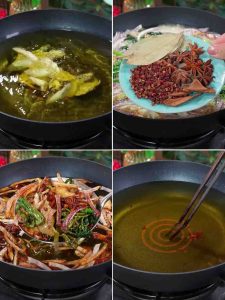
- Pour 1,350 milliliters of neutral cooking oil into a heavy-bottomed pot and heat over medium-low heat until it reaches approximately 150 degrees Celsius.
- Add 100 grams of diced onion, 50 grams of scallion segments, 30 grams of ginger slices, and 30 grams of cilantro, then heat slowly over medium-low heat.
- When the edges of the onions begin to turn golden brown, add 10 grams of cinnamon bark, 10 grams of star anise, 3 grams of bay leaves, and 10 grams of Sichuan peppercorns.
- Continue cooking over medium-low heat until the scallions, onions, and spices turn noticeably golden and release their aroma.
- Use a metal slotted spoon to remove all the spices and vegetable bits, to prevent them from continuing to cook and turning black, which would make them taste bitter.
Adjust the oiling temperature
- First, turn off the heat and use a kitchen thermometer to check the temperature of the spiced oil.
- Maintain the target temperature during oiling at approximately 170 to 180 degrees Celsius.
- If the oil temperature exceeds 180 degrees Celsius, wait for it to cool down before adding more oil. Do not directly convert the traditional measurement of "nine-tenths hot" to 270 degrees Celsius.
First Oil Change
- Scoop out a small amount of hot oil from the pan and slowly pour it into the chili powder, stirring constantly with a heat-resistant spoon.
- Make sure the hot oil comes into even contact with the chili powder; avoid pouring the hot oil all in one spot.
- Once the vigorous bubbling subsides, add 15 grams of white sesame seeds and stir until well mixed.
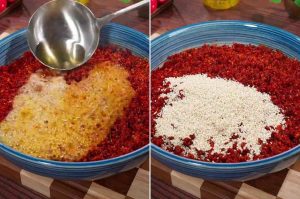
Second Oil Application
- Once the bubbling has noticeably subsided in the first round, continue adding the hot oil in batches while stirring constantly.
- Add the cooled crushed peanuts and stir thoroughly so that the peanut pieces are evenly distributed throughout the chili oil.
- Examine the color and aroma of the chili powder to ensure there are no charred particles or a noticeable burnt smell.
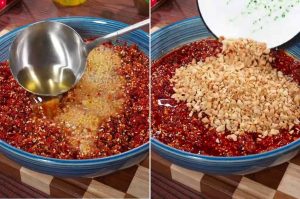
Third Oil Drizzling and Seasoning
- Pour the remaining hot oil into the chili powder in batches, stirring constantly.
- Once the bubbles have gradually subsided, add 5 milliliters of white vinegar and stir again until well mixed.
- Taste a small amount of the finished product to check the saltiness, acidity, and spiciness.
Cooling and Storage
- Wait for the chili oil to cool completely.
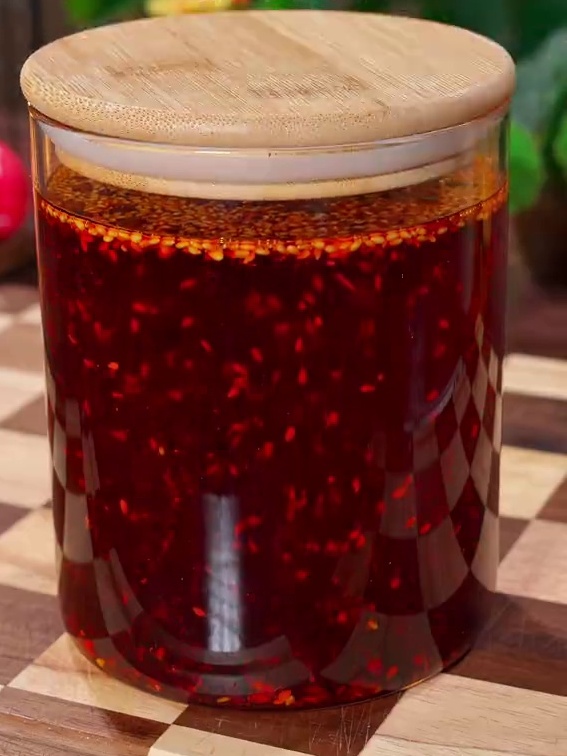
- Transfer the chili oil to a clean, dry glass storage jar.
- Refrigerate immediately and use within 4 days.
- Use a clean, dry spoon each time you take some out to prevent moisture from entering the storage container.
Notes
Oil temperature: About 150 degrees Celsius when simmering the spices; about 170 to 180 degrees Celsius when adding oil in batches. Use a kitchen thermometer to measure the temperature, and do not heat the oil to the point where it smokes continuously.
Preventing Burning and Bitterness: Remove the spices promptly once they turn yellow and release their aroma. When pouring the oil, add it in three batches while stirring continuously.
Substitutions: If Chinese chili powder is unavailable, you may use crushed dried chili peppers or Korean chili powder, though the color, heat level, and aroma may differ. Sichuan peppercorns cannot be fully substituted with black pepper. If cilantro is unavailable, you may omit it or use a small amount of celery leaves, but the aroma will change.
Allergy Notice: This recipe contains peanuts and sesame seeds. If you are allergic to these ingredients, omit them and take care to avoid cross-contamination.
Safety and Storage: This recipe contains fresh onions, scallions, ginger, and cilantro. Refrigerate immediately after the dish has cooled completely, and use within 4 days. Do not store at room temperature for extended periods, and do not rely solely on smell or appearance to determine if the food is safe to eat.
Preparation Tips: This recipe makes a large batch. If making it for the first time, you may halve all ingredient quantities proportionally. Check the oil temperature before pouring it over the ingredients each time, and ensure the container holding the chili powder is stable.