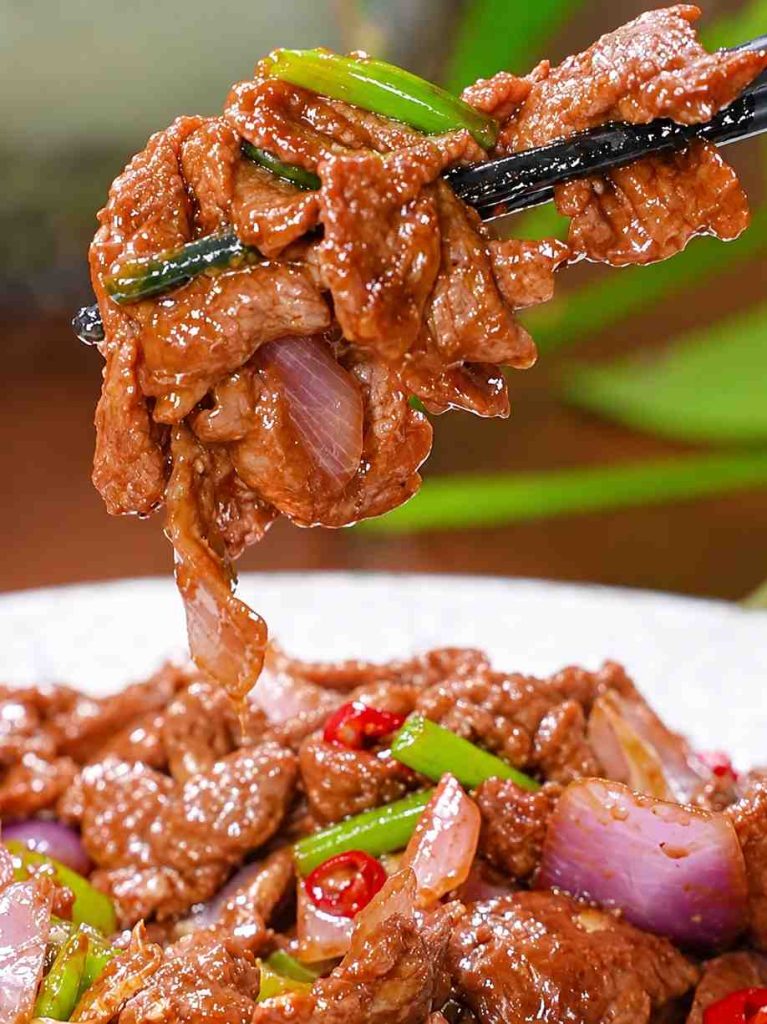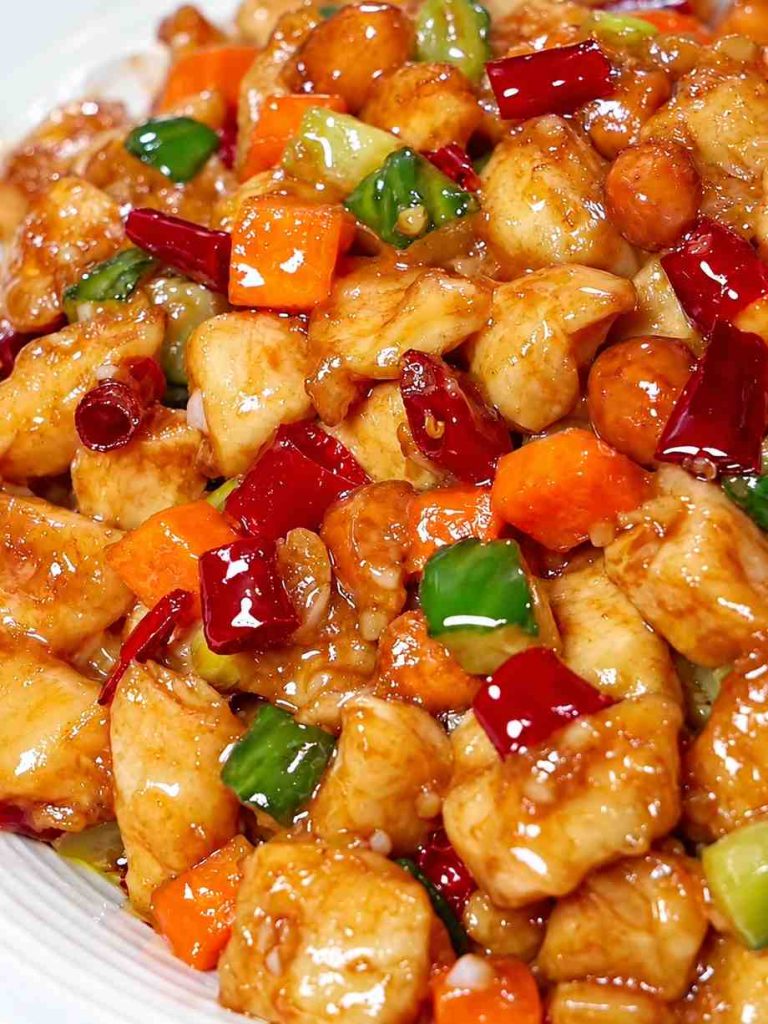
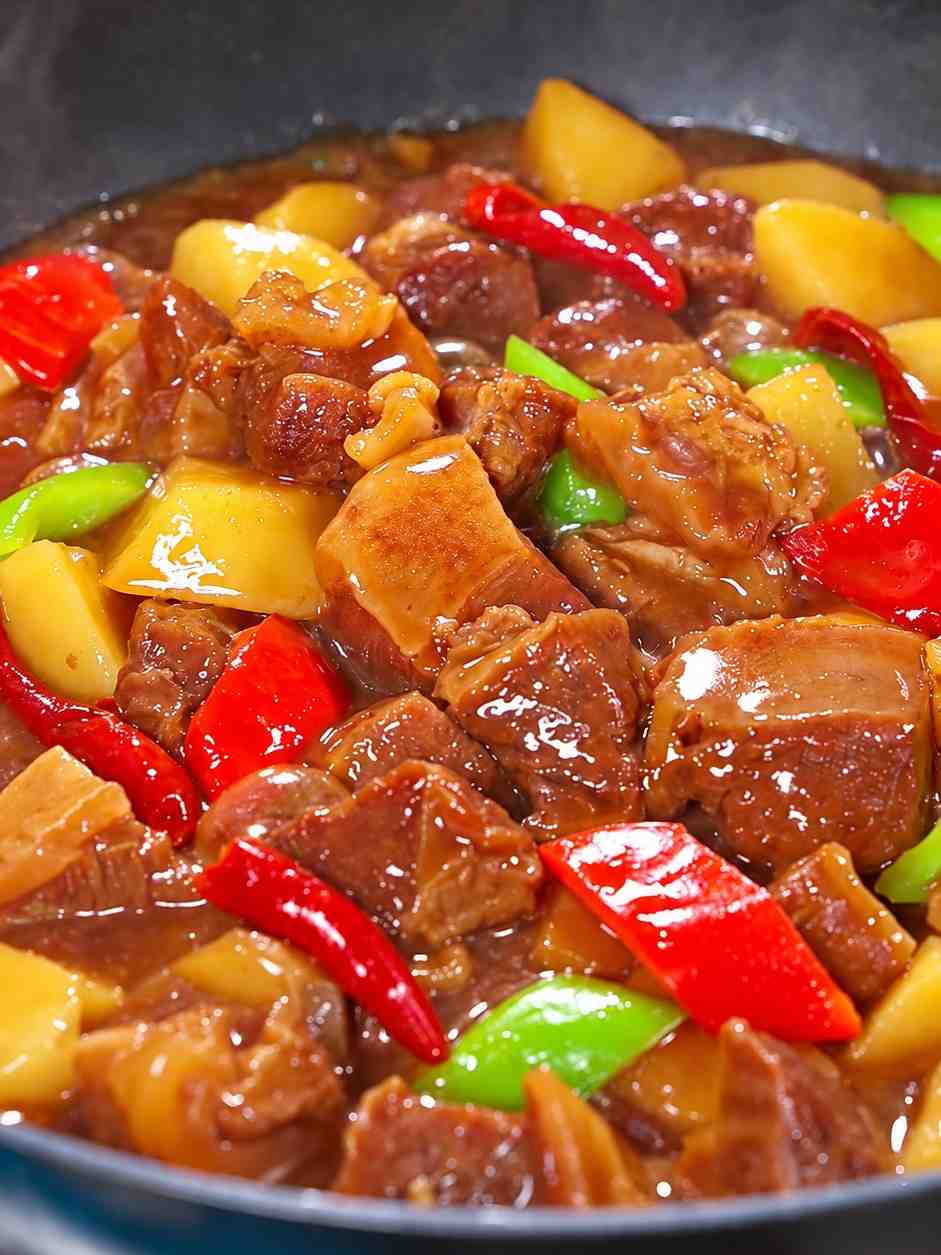
When making braised beef with potatoes, I prefer to use beef brisket with a small amount of fat and connective tissue. Beef brisket needs to be simmered for a relatively long time to become tender. I add the potatoes only after the beef has softened. This allows the potatoes to absorb the beef broth while helping them keep their shape instead of falling apart. For a quicker beef dish, try our Chinese stir-fried beef with onions.
The main steps in this recipe are soaking the beef, blanching it, browning it in a pan, simmering it with spices, and finally adding the potatoes and green and red bell peppers. Blanching means briefly heating the meat in water, skimming off the foam that forms on the surface, and then removing the meat from the water. This step helps remove surface impurities and some of the unpleasant odor from the beef.
The key to this braised beef with potatoes recipe is to let the beef become fully tender before allowing the potatoes to absorb the broth. By controlling the heat and adjusting the cooking time according to the actual tenderness of the beef, you can make a homemade stew with tender meat and a rich, flavorful sauce. For another aromatic main dish, see our homemade cumin lamb recipe.
I have prepared the following ingredient quantities for 4 servings. The total time is approximately 145 minutes, including 20 minutes for ingredient preparation, 30 minutes for soaking the beef in the refrigerator, and about 95 minutes for cooking. If the beef is tougher or the pieces are larger, you may need to extend the simmering time.
Braised Beef with Potatoes
Ingredients
Equipment
Method
- Cut 1000 g of beef brisket into approximately 4 cm cubes. Keep the pieces as uniform in size as possible.
- Peel 600 g of potatoes and cut them into approximately 2.5 cm chunks.
- Cut 30 g of scallions into approximately 5 cm lengths and slice 25 g of fresh ginger.
- Remove the seeds from 75 g of green bell pepper and 75 g of red bell pepper, then cut both into approximately 3 cm pieces.
- Measure out 4 g of star anise, 5 g of Chinese cinnamon bark, 0.5 g of bay leaves, 4 g of dried red chilies, and 10 g of dried hawthorn slices.
- Add 1500 ml of cold water and 10 g of salt to a large bowl. Stir until most of the salt has dissolved.
- Add the beef brisket and make sure the pieces are as fully submerged as possible.
- Cover the container and refrigerate for 30 minutes. Keep the refrigerator temperature at 4°C or below.
- After soaking, discard the salted water and do not reuse it. To reduce splashing and the spread of raw meat juices, do not rinse the raw beef under running water. Transfer it directly to the cold water for blanching.
- Add 2500 ml of cold water to a deep pot with a capacity of at least 4 liters. Add the beef.
- Add 30 g of scallions, 25 g of ginger, and 20 ml of baijiu.
- Heat over medium-high heat until the water boils. Continue boiling for 3 minutes, using a slotted spoon or ladle to remove the foam from the surface.
- Remove the beef and discard the blanching water.
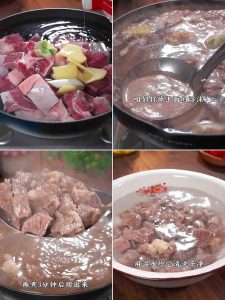
- Briefly rinse the blanched beef with warm water to remove any remaining foam. Keep the water flow gentle to avoid splashing.
- Place the beef in a colander to drain. If the surfaces are still noticeably wet, gently pat them dry with paper towels to reduce oil splattering during browning.
- Dry the pot and add 30 ml of cooking oil. Heat over medium heat to approximately 160–180°C. The oil should flow smoothly and show slight ripples, but it must not smoke.
- Divide the beef into two batches and use 15 ml of oil for each batch. Avoid overcrowding the pot.
- Stir-fry each batch for approximately 3–4 minutes, until light brown spots appear on the surface of the beef.
- Once both batches are browned, return all the beef to the same pot.
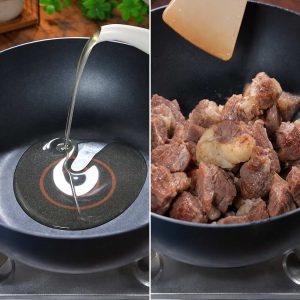
- Add 4 g of star anise, 5 g of Chinese cinnamon bark, 0.5 g of bay leaves, 4 g of dried red chilies, and 10 g of dried hawthorn slices. Stir-fry with the beef for approximately 1 minute.
- Pour in 1800 ml of boiling water. Check the liquid level. If the water does not come close to or cover the beef, add reserved boiling water in 100 ml increments, using no more than 300 ml during simmering.
- Bring the liquid back to a boil over high heat. Reduce the heat to low and cover the pot. Maintain a gentle simmer at approximately 90–96°C and cook for 60 minutes.
- After 60 minutes, check the beef with chopsticks. Add the potatoes only when the chopsticks can enter the beef relatively easily and the meat has begun to soften.
- If the beef is still firm, continue simmering and check again every 15 minutes. If the liquid is evaporating quickly before the beef becomes tender, add 100 ml of reserved boiling water at a time.
- If using a pressure cooker, add the ingredients and boiling water according to the appliance instructions. Once the cooker reaches pressure, cook for approximately 20 minutes, then release the pressure safely according to the manufacturer's instructions and check the tenderness.
- Once the beef is tender, add 600 g of potatoes.
- Add 6 g of salt, 3 g of chicken bouillon powder, 1 g of ground white pepper, 30 ml of light soy sauce, 10 ml of dark soy sauce, and 15 ml of oyster sauce.
- Gently stir so the beef and potatoes are evenly coated with the liquid. Cover the pot and simmer over low heat for another 10 minutes.
- Check the potatoes with chopsticks. If the chopsticks can pass through the center of a potato piece, the potatoes are cooked. If they are still firm, cook for another 3 minutes before checking again.
- If regular soy sauce is used instead of dark soy sauce and the soy sauce is particularly salty, start with 3 g of seasoning salt and add more at the end if necessary. Do not exceed 6 g of seasoning salt in total.
- Once the potatoes are tender, add 75 g of green bell pepper and 75 g of red bell pepper.
- Stir gently and cook for another 2 minutes, until the bell peppers are heated through but still retain their shape.
- If there is too much liquid, uncover the pot and simmer for another 2–3 minutes to evaporate some of the water.
- If there is too little liquid, add the reserved 50 ml of boiling water and stir gently.
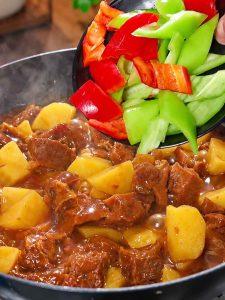
- To serve with rice, prepare 600 g of cooked rice and divide it into 4 portions of 150 g each. Place the braised beef and potatoes over the rice, then spoon the sauce over the top.
- To serve with noodles, cook 300 g of dried noodles according to the package instructions and drain them. Divide the noodles into 4 portions, each corresponding to 75 g of dried noodles, then add the beef, potatoes, and sauce.
- Rice and noodles are optional serving accompaniments. Neither needs to be added to the pot containing the beef stew.
Notes
- Keep the beef refrigerated at 4°C or below while soaking. Do not leave raw beef at room temperature for an extended period.
- Discard the soaking water after use. Avoid splashing raw meat juices during handling, and promptly clean knives, cutting boards, and surfaces that have come into contact with raw beef.
- The amount of fat and connective tissue in the beef brisket affects how quickly it becomes tender. Check the beef after 60 minutes of simmering and add another 15 minutes at a time if necessary.
- Star anise, Chinese cinnamon bark, bay leaves, dried red chilies, and dried hawthorn slices may be available at Asian grocery stores or through online retailers. Substituting the spices will change the aroma, but the beef can still become tender without them.
- Light soy sauce mainly adds saltiness and savory flavor, while dark soy sauce mainly deepens the color. Both contain salt. When substituting regular soy sauce, account for differences in saltiness between brands.
- Divide leftovers into containers and refrigerate them within 2 hours of cooking. Reheat thoroughly before serving again.