Chinese Cumin Lamb Recipe (Fragrant Stir-Fried Lamb)

Rate this post

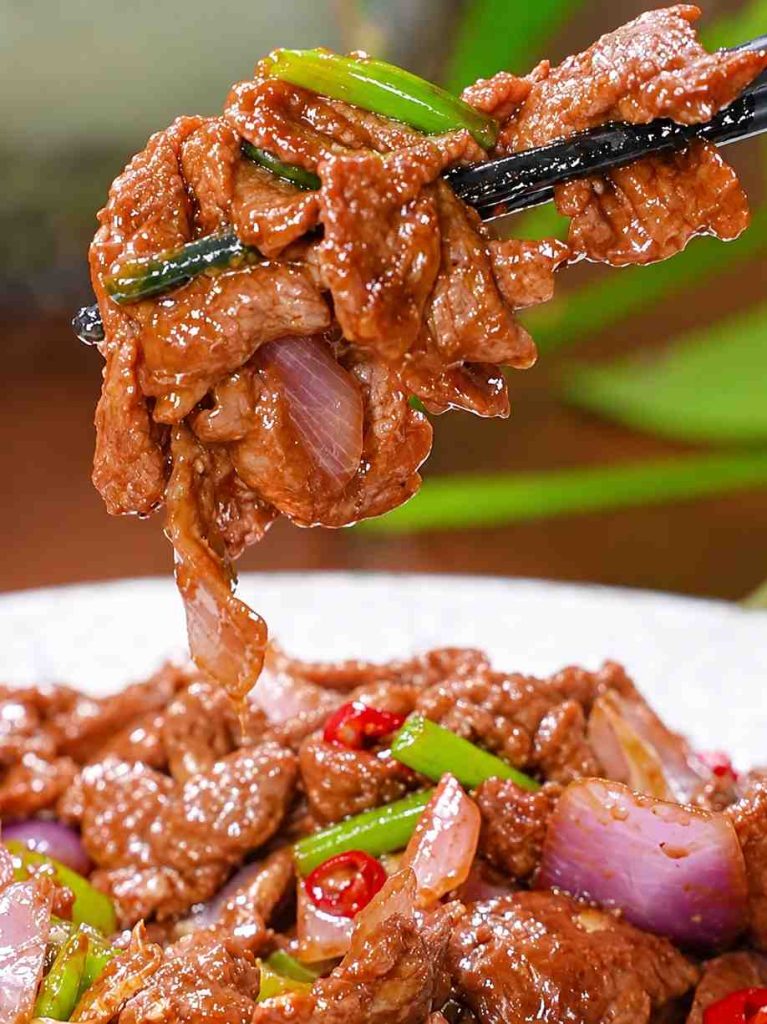
I like making cumin lamb in a wok. I marinate the lamb first, then stir-fry it quickly over relatively high heat. Finally, I add chili powder, whole cumin seeds, and white sesame seeds. The finished dish has a strong cumin aroma, a lightly browned and slightly crispy surface, and tender meat inside. This recipe does not require a barbecue grill. You can make it in a regular home kitchen. If you prefer beef, try our stir-fried beef with onions recipe.

I usually choose boneless lamb leg or lamb shoulder. Both cuts can be cut into small pieces and are suitable for quick stir-frying. Lamb with a small amount of fat also works well in this recipe. As the fat heats up, it releases oil and helps develop the lamb’s aroma. For a slower-cooked beef option, see our braised beef with potatoes recipe.

First, I marinate the lamb with scallion-ginger water, light soy sauce, salt, ground white pepper, ground cumin, egg white, and cornstarch. After stir-frying the lamb until cooked, I add chili powder, whole cumin seeds, and white sesame seeds. Finally, I serve the lamb over fresh cilantro.

The flavor of this cumin lamb recipe mainly comes from cumin, chili powder, and white sesame seeds. Some ingredients can be substituted, but the flavor may change.

Light soy sauce can be replaced with regular soy sauce. However, regular soy sauce may be saltier and darker in color. When I use regular soy sauce, I reduce the salt to 2 grams.

Cornstarch can be replaced with potato starch. Both help the marinade coat the lamb. Regular wheat flour can also form a coating, but it produces a thicker layer on the surface of the meat.

Cilantro mainly adds a fresh, herbal aroma. If cilantro is unavailable at your local supermarket, you can use flat-leaf parsley instead or omit the herb entirely. Cilantro is not a main seasoning, so the dish can still be made without it.

Cumin is different. It is the key spice in this recipe. Without ground cumin and whole cumin seeds, the dish loses its most distinctive flavor. I recommend buying cumin rather than replacing it entirely with other spices.

For home cooking, the most important parts of this recipe are not the number of seasonings used. They are the size of the lamb pieces, the proportions of the marinade, and the amount of space in the wok during cooking. If you control these three factors, you can make cumin lamb with a fragrant cumin aroma and a lightly browned, flavorful surface using an ordinary wok.
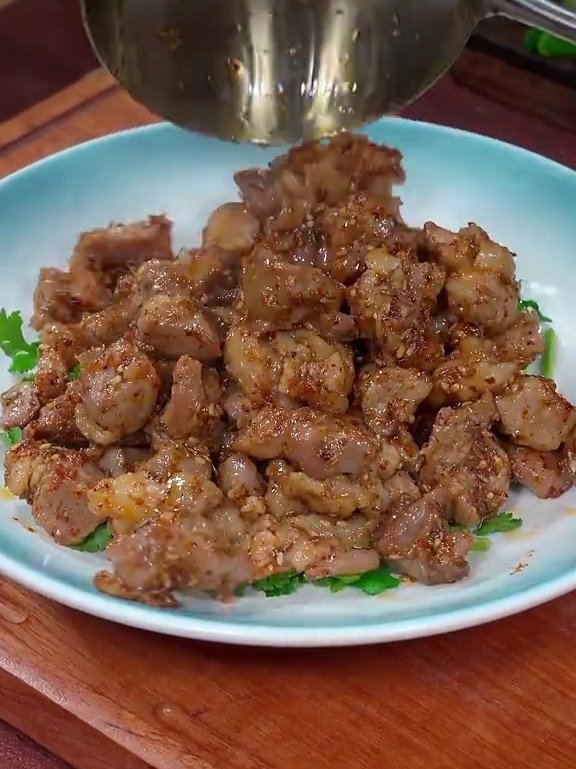
Cumin Lamb (Finished Dish)

Cumin Lamb

This home-style cumin lamb recipe serves 2 to 3 people. Cut 500 g of boneless lamb into approximately 2 cm cubes. Marinate the lamb for 15 minutes with scallion-ginger water, light soy sauce, salt, white pepper, ground cumin, egg white, and cornstarch. Stir-fry the lamb in two batches, then add chili powder, whole cumin seeds, and white sesame seeds. Serve over fresh cilantro. Preparation takes 15 minutes, marinating and resting take a combined 18 minutes, and cooking takes 10 minutes, for a total time of approximately 43 minutes.
Prep Time 15 minutes
Cook Time 10 minutes
Marinating and Resting Time 18 minutes
Total Time 43 minutes
Cuisine: Chinese

Ingredients
  

  • 500 g Boneless Lamb Lamb leg or lamb shoulder is recommended. Leave a small amount of fat on the meat and cut it into approximately 2 cm cubes. If lamb is unavailable, you can substitute the same amount of beef. The dish will become cumin beef, and the distinctive aroma of lamb will be absent.
  • 10 g Scallion Whites Use these with fresh ginger and water to make scallion-ginger water. If scallion whites are unavailable, substitute 10 g of scallion greens. The aroma will be slightly different.
  • 5 g Fresh Ginger Chop the ginger before using it to make scallion-ginger water. If fresh ginger is unavailable, mix 0.5 g of ground ginger into the water. The aroma will be less fresh and bright.
  • 40 ml Water Combine with 10 g of scallion whites and 5 g of fresh ginger. Crush the ingredients, let them stand for 5 minutes, and strain. Use 30 ml of the resulting scallion-ginger water to marinate the lamb.
  • 15 ml Light Soy Sauce Adds a savory, salty flavor. If Chinese light soy sauce is unavailable, substitute 15 ml of regular soy sauce. Regular soy sauce may be saltier and darker, so reduce the salt to 2 g when using this substitute. Do not substitute dark soy sauce in the same amount because dark soy sauce is mainly used to deepen color and may make the lamb too dark.
  • 3 g Salt Use this to season the lamb during marination. If using regular soy sauce that is relatively salty, reduce the salt to 2 g.
  • 1 g Ground White Pepper Adds a mild peppery aroma. If white pepper is unavailable, substitute 1 g of ground black pepper. Black pepper will produce a more pronounced flavor.
  • 4 g Ground Cumin Ground cumin is made by grinding cumin seeds and is one of the main seasonings in this recipe. If ground cumin is unavailable, grind whole cumin seeds into a powder. If whole cumin seeds are unavailable, you can increase the total amount of ground cumin from 4 g to 6 g and add it during the final 30 to 60 seconds of cooking, although the dish will have less texture from whole seeds. If neither form of cumin is available, cumin is essential to the identity of this dish, so it is best to purchase it online.
  • 30 g Egg White Helps the marinade coat the lamb evenly. If you do not want to use egg, omit the egg white and increase the cornstarch from 10 g to 12 g. The coating on the meat will be slightly less cohesive.
  • 10 g Cornstarch Helps form a thin coating on the surface of the lamb. If cornstarch is unavailable, substitute 10 g of potato starch for a similar texture. Regular wheat flour can also be used, but the coating will be thicker.
  • 10 ml Vegetable Oil for Marinating Add this at the end of the marinating process. Use a neutral-flavored vegetable oil, such as sunflower oil or rapeseed oil.
  • 20 ml Vegetable Oil for Stir-Frying Divide into two portions of 10 ml each, using one portion for each 250 g batch of lamb. A neutral-flavored vegetable oil is recommended.
  • 3 g Chili Powder This is made from dried chilies ground into a powder. If chili powder is unavailable, substitute 3 g of dried chili flakes. The heat will be more concentrated, and the finished dish will have more noticeable pieces of chili.
  • 5 g Whole Cumin Seeds Add the whole cumin seeds near the end of cooking to preserve their texture. If whole cumin seeds are unavailable, increase the total amount of ground cumin to 6 g and add it during the final 30 to 60 seconds of cooking. The dish will have less texture from whole seeds.
  • 5 g White Sesame Seeds Add aroma and texture to the surface of the lamb. If white sesame seeds are unavailable, substitute 5 g of black sesame seeds. The finished dish will look darker and have a slightly different aroma.
  • 20 g Fresh Cilantro Use this to line the serving plate and garnish the finished dish. If cilantro is unavailable, substitute 20 g of flat-leaf parsley. The aroma will be milder. You can also omit the herb.

Equipment

  • 1 Wok If you do not have a wok, use a heavy-bottomed frying pan with a diameter of at least 28 cm. Divide the 500 g of lamb into two batches of 250 g each. Cooking in batches helps prevent the pan temperature from dropping too much and reduces excess moisture released by the meat.
  • 1 Deep Bowl Use this bowl to mix the lamb with the marinade. Any clean, food-safe deep bowl will work.
  • 1 Fine-mesh strainer Use this to strain the scallion-ginger water. If you do not have a fine-mesh strainer, use a clean piece of food-safe cloth.
  • 1 Kitchen Knife and Cutting Board Use these to cut the lamb, scallion whites, and fresh ginger. Use a cutting board suitable for raw meat and wash all tools thoroughly after use.
  • 1 Food Thermometer Use this to measure the internal temperature of the largest piece of lamb. If you do not have a thermometer, cut open the largest piece to inspect the center, although visual inspection is less reliable than temperature measurement.

Method
 

Prepare the Scallion-Ginger Water and Lamb
  1. Finely chop 10 g of scallion whites and 5 g of fresh ginger. Add 40 ml of water and crush the ingredients with the back of a spoon. Let the mixture stand for 5 minutes. Strain it through a fine-mesh strainer and reserve 30 ml of scallion-ginger water.
  2. Cut 500 g of boneless lamb into approximately 2 cm cubes. Keep the pieces as similar in size as possible.
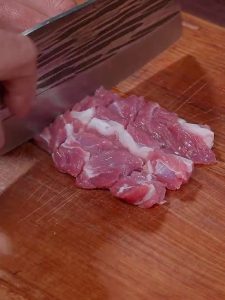
    How to Make Cumin Lamb_Cut the lamb into small pieces
Marinate the Lamb
  1. Place the lamb in a deep bowl. Add 30 ml of scallion-ginger water, 15 ml of light soy sauce, 3 g of salt, 1 g of ground white pepper, 4 g of ground cumin, 30 g of egg white, and 10 g of cornstarch.
  2. Mix and gently massage the ingredients into the lamb with your hands for approximately 1 minute, until every piece is evenly coated with the marinade.
  3. Add 10 ml of vegetable oil and mix for another 20 seconds. Cover the bowl and refrigerate the lamb for 15 minutes.
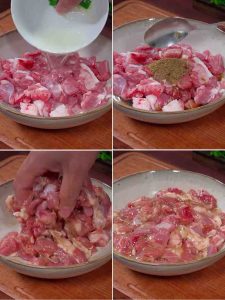
    How to Make Cumin Lamb_Marinating the Lamb
Stir-Fry the Lamb in Batches
  1. Heat the wok for approximately 1 minute, then add 10 ml of vegetable oil for stir-frying. The target oil temperature is approximately 170 degrees Celsius. If you do not have a thermometer, look for small ripples on the surface of the oil. Add the lamb when the oil begins to ripple but has not started smoking.
  2. Divide the lamb into two batches of 250 g each. Spread the first batch in a single layer in the wok. Stir-fry for approximately 1 minute, then turn the pieces and continue cooking for another 2 to 3 minutes, until the surfaces become light brown. Transfer the first batch to a plate.
  3. Add the remaining 10 ml of vegetable oil to the wok and cook the second batch of lamb in the same way.
Add the Spices and Serve
  1. After the second batch of lamb is cooked, return the first batch to the wok.
  2. Add 3 g of chili powder, 5 g of whole cumin seeds, and 5 g of white sesame seeds. Stir-fry quickly for 30 to 60 seconds, until the spices are evenly distributed over the lamb.
  3. Use a food thermometer to check the internal temperature of the largest piece of lamb. It should reach at least 63 degrees Celsius. Remove the lamb from the heat and let it rest for 3 minutes.
  4. Arrange 20 g of fresh cilantro on the serving plate. Transfer the cooked cumin lamb onto the cilantro and serve while hot.

Notes

Keep the lamb refrigerated while it marinates. Use a food thermometer to check that the internal temperature of the largest piece reaches at least 63 degrees Celsius, then let the lamb rest for 3 minutes.
  • Divide the 500 g of lamb into two batches of 250 g each. Use 10 ml of vegetable oil for stir-frying each batch.
  • Add the whole cumin seeds, chili powder, and white sesame seeds at the end. Stir-fry for only 30 to 60 seconds to prevent the spices from burning.
  • If the wok is overcrowded, the lamb is more likely to release excess moisture. Cooking in batches is recommended.
  • Refrigerate leftover lamb within 2 hours of cooking and eat it within 3 to 4 days. Reheat the lamb thoroughly to an internal temperature of 74 degrees Celsius before serving.
  • If neither ground cumin nor whole cumin seeds is available, purchase cumin rather than replacing it entirely with other spices.
Scroll to Top