Chinese Braised Chicken with Chestnuts (Bǎnlì Mèn Jī, 板栗焖鸡) is a comforting Cantonese-style home-cooked dish. What makes it special is the contrast between the two main ingredients. After being seared and braised, the chicken stays tender and juicy, while the chestnuts become soft, floury, and naturally sweet.
The chestnuts absorb the savory sauce and the rich flavor of the chicken as they cook. Meanwhile, the chicken is first seared to develop a delicious aroma before being braised with ginger, garlic, and shallots. A little oyster sauce, rock sugar, and dried red dates add depth and a gentle sweetness without making the dish overly sweet.
One important detail is the order in which the ingredients are cooked. Rather than braising everything together from the beginning, the chicken is seared first and set aside. The chestnuts are then braised separately until tender before the chicken is returned to the pot. This allows the chestnuts enough time to soften without overcooking the chicken.
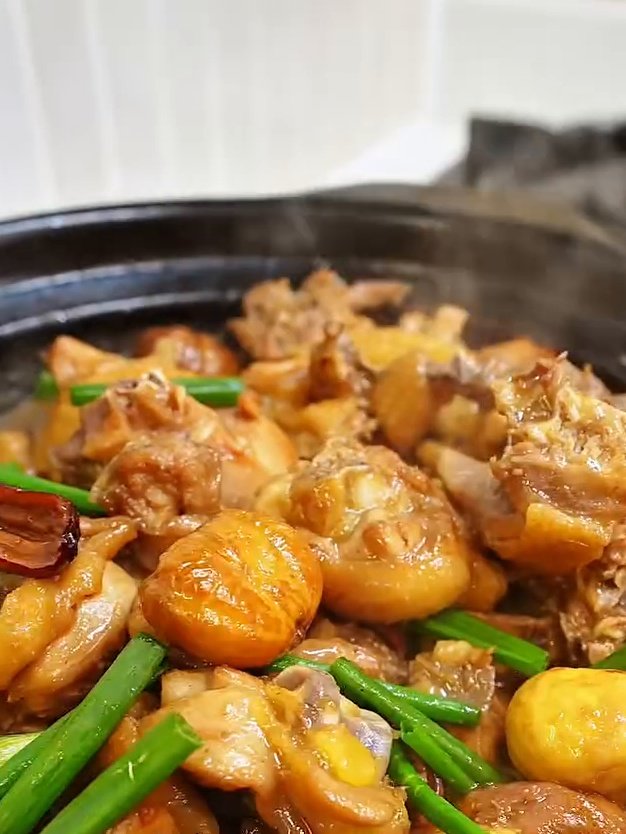
Bǎnlì Mèn Jī (板栗焖鸡) – Chinese Braised Chicken with Chestnuts
Ingredients
Equipment
Method
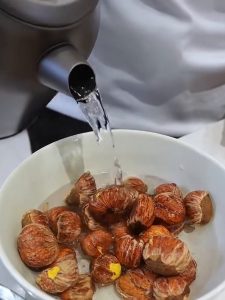
- If using fresh chestnuts in their shells, place them in a heatproof bowl and cover with boiling water. Soak for 10 minutes, then drain and carefully remove the outer shells and inner skins. Measure out 400 g of peeled chestnuts.
- Cut 1000 g of bone-in chicken into small pieces approximately 3-4 cm in size. Keep the skin on and pat the chicken dry with paper towels.
- Julienne 15 g of ginger for the marinade and slice the remaining 20 g for braising. Peel and lightly crush the garlic, halve the shallots, pit and halve the red dates, and cut the scallions into 5 cm segments.
- Place the chicken in a large mixing bowl. Add 15 g of julienned ginger, 5 g of salt, 10 ml of light soy sauce, 2 g of granulated sugar, 5 g of cornstarch, 0.5 g of ground white pepper, and 10 ml of peanut oil.
- Mix thoroughly until all the chicken pieces are evenly coated. Let the chicken marinate for 10 minutes.
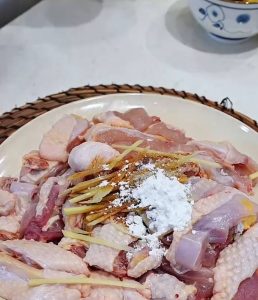
- Heat a wok over high heat until hot. Add 15 ml of peanut oil and swirl to coat the surface, then reduce the heat to medium.
- Add the marinated chicken in a single layer, working in batches if necessary. Let the pieces sear without moving for 2-3 minutes until the undersides develop a light golden-brown color.
- Turn the chicken and continue searing for approximately 4-5 minutes, allowing both sides to brown and some chicken fat to render.
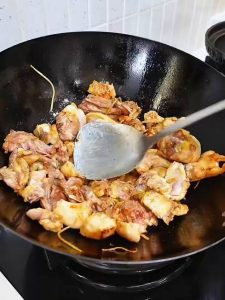
- Increase the heat to high. Pour 15 ml of Chinese baijiu around the edge of the wok and toss the chicken for 20-30 seconds to release its aroma.
- Transfer the chicken to a plate. Reserve the rendered chicken fat in the wok for braising the chestnuts.
- Transfer the reserved chicken fat to a clay pot and heat over medium heat.
- Add 20 g of sliced ginger, 20 g of lightly crushed garlic, and 60 g of halved shallots. Stir-fry for 1-2 minutes until fragrant.
- Add the 400 g of peeled chestnuts and stir-fry gently for 2-3 minutes, allowing them to become coated with the aromatic oil.
- Pour in 400 ml of boiling water. Add 10 g of rock sugar, 15 ml of oyster sauce, and 2.5 g of salt. Stir gently and bring the liquid to a boil.
- Cover the pot, reduce the heat to low, and simmer for 15-20 minutes until the chestnuts become tender and begin to develop a soft, floury texture. If they are still firm, simmer for another 5 minutes.
- Return the seared chicken to the clay pot. Add the 4 halved red dates and the remaining 100 ml of boiling water.
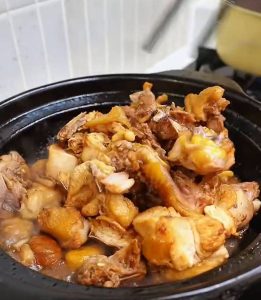
- Bring the liquid back to a gentle boil. Cover the pot and cook over medium-low heat for approximately 8-12 minutes, until the chicken is fully cooked and the chestnuts are soft.
- Check that the thickest chicken pieces reach an internal temperature of 74°C (165°F). Adjust the cooking time according to the size of the chicken pieces and the heat of your stove.
- Remove the lid and simmer for another 2-3 minutes if a thicker sauce is desired. Add 30 g of scallion segments and cook for approximately 1 minute until fragrant.
- Turn off the heat and serve hot with the chestnuts, chicken, and savory braising sauce.
Notes
Why the Chestnuts Go into the Pot Before the Chicken Goes Back In
Although chicken and chestnuts are cooked together in the finished dish, they do not require the same cooking time.
Fresh chestnuts have a relatively firm texture and contain plenty of starch. They need sufficient time to soften and develop their characteristic floury consistency. If they are cooked alongside the chicken from the beginning, the chicken may become overcooked before the chestnuts are completely tender.
That is why I recommend searing the chicken first and braising the chestnuts separately.
Cut the bone-in chicken into moderately sized pieces and marinate it with simple seasonings. Once the chicken hits the hot wok, let it sear until the surface develops a light golden-brown color. This creates a deeper, more appetizing aroma and helps render some of the natural chicken fat.
Avoid turning the chicken too frequently. Allowing each side to make proper contact with the hot wok helps develop better browning and flavor.
Once the chicken is seared, remove it from the wok but keep the rendered chicken fat. Use this flavorful oil to stir-fry the ginger, garlic, and shallots. Add the chestnuts and let them absorb the aromatic oil before pouring in the hot water and seasonings.
When the chestnuts are nearly tender, return the seared chicken to the pot and continue braising until everything is cooked through.
This method also gives the chestnuts more flavor. The natural chicken fat enriches the braising liquid, allowing the chestnuts to absorb a savory chicken aroma rather than simply tasting like sweet, boiled nuts.
If you enjoy slow-braised Chinese comfort food, you may also like our Chinese Braised Beef with Potatoes.
How to Prepare Fresh Chestnuts and Find Substitutes Overseas
The quality of the chestnuts makes a noticeable difference to the finished dish.
Fresh chestnuts have a naturally mild sweetness and develop a soft, floury texture when braised. Fully cooked, packaged chestnuts, on the other hand, are already quite tender. If they are added at the beginning and cooked for too long, they can easily split apart or become mushy.
To prepare fresh chestnuts, place them in a heatproof bowl and cover them with boiling water. Let them soak for about 10 minutes before peeling. This makes it easier to remove both the hard outer shell and the thin inner skin.
There is also something worth knowing about freshly peeled chestnuts. Their surface may gradually darken when exposed to air. This is usually a normal oxidation process and does not necessarily mean the chestnuts have spoiled. For the best results, cook them soon after peeling. If you need to set them aside, keep them submerged in water temporarily.
If fresh chestnuts are difficult to find where you live, there are several alternatives:
- Fresh Chestnuts: Whole, fresh chestnuts are ideal if you want their natural sweetness and soft, floury texture.
- Frozen Peeled Chestnuts: These are convenient and save considerable preparation time. If they are raw rather than pre-cooked, they can be braised in the same way as fresh chestnuts.
- Vacuum-Packed Cooked Chestnuts: These are a convenient alternative, but add them toward the end of cooking, once the chicken is nearly done. This helps prevent them from becoming too soft or falling apart.
For a result closest to the original dish, I recommend using fresh chestnuts or raw frozen peeled chestnuts.
How Light Soy Sauce, Oyster Sauce, and Chinese Baijiu Build the Flavor
This braised chicken recipe does not require a long list of complicated sauces. The key is balancing a few seasonings that each play a different role.
First-Draw Light Soy Sauce (Tou Chou) is mainly used in the chicken marinade. It is a type of light soy sauce with a fresh, savory flavor that seasons the chicken without making it overly dark. If you cannot find Tou Chou at your local Asian grocery store, a good-quality light soy sauce works perfectly well.
Oyster Sauce is added during the chestnut braising stage. It brings savory depth and richness to the cooking liquid, helping the chestnuts develop a glossy coating of flavorful sauce.
Rock Sugar and Dried Red Dates contribute a mild, natural sweetness that complements the chestnuts. You do not need much sugar here. The goal is to round out the savory flavors rather than turn the dish into something distinctly sweet.
A small amount of Chinese Baijiu, a high-proof Chinese distilled spirit, is also added while searing the chicken. It helps reduce unwanted meat odors and adds another layer of aroma.
If Chinese baijiu is difficult to find, you can use a little Shaoxing wine instead. Shaoxing wine has a milder aroma, so the finished dish will have a slightly different flavor.
One thing worth noting is that this recipe relies mainly on light soy sauce, oyster sauce, and the natural richness of the rendered chicken fat for its flavor and color. There is no need to use a large amount of dark soy sauce. This allows the chestnuts to retain their natural golden color without letting the soy sauce overpower their sweetness.
Tips for Tender Chicken and Soft, Floury Chestnuts
A few small details can make a noticeable difference when preparing this dish.
1. Cut the chicken into moderately sized pieces.
Bone-in chicken should be cut into reasonably small, even pieces. Large pieces take longer to cook through, which can mean longer braising times and a greater risk of dry chicken.
If you do not want to cut up a whole chicken yourself, bone-in chicken thighs are a convenient alternative. You can also ask your butcher to cut them into smaller pieces.
2. Avoid moving the chicken too much while searing.
The chicken needs enough contact with the hot wok to develop a nicely browned surface. Adding too much chicken at once lowers the temperature of the wok and causes the meat to release moisture, making it harder to achieve good browning.
If your wok is not large enough, sear the chicken in batches.
3. Braise the chestnuts over low heat.
Chestnuts need time to absorb the cooking liquid and gradually soften. Keeping the pot at a vigorous boil for too long can cause the liquid to evaporate too quickly and some of the chestnuts to break apart.
Once the liquid comes to a boil, reduce the heat and let the chestnuts simmer gently until tender.
4. Use boiling water when adding more liquid.
If the braising liquid becomes too low, add a little boiling water rather than cold water. This helps maintain a more consistent cooking temperature and makes it easier to control the braising process.
5. Make sure the chicken is fully cooked.
Cooking time can vary depending on the size of the chicken pieces, the amount of bone, and the heat of your stove. Rather than relying on time alone, use a food thermometer to check the thickest part of the chicken. It should reach an internal temperature of 74°C (165°F).
No Clay Pot? You Can Still Make Delicious Braised Chicken with Chestnuts
A traditional Chinese clay pot works particularly well for this recipe. It retains heat effectively and helps maintain a steady temperature during braising. It also makes an attractive serving vessel, keeping the dish warm at the table.
However, you do not need a clay pot to make this dish at home. A Dutch oven or a regular heavy-bottomed saucepan with a lid will work just as well.
Keep in mind that different pots retain heat and evaporate moisture at different rates. A wider pot, for example, may allow more liquid to evaporate during cooking, so you might need to adjust the amount of hot water.
The braising liquid does not need to evaporate completely. In fact, I recommend keeping some flavorful sauce in the pot so the chestnuts can continue absorbing the chicken juices and seasonings.
If you prefer a thicker sauce, remove the lid toward the end and let it reduce gently over medium-low heat. If you prefer a more generous amount of sauce for serving with rice, simply leave more liquid in the pot.
What to Serve with Chinese Braised Chicken with Chestnuts
This dish already combines chicken, chestnuts, and a rich braising sauce, so it does not need an elaborate selection of side dishes.
I especially recommend serving it with a bowl of steamed rice. The soft, floury chestnuts pair beautifully with the rice, while the savory sauce is delicious spooned over the top.
For something lighter alongside it, prepare a simple vegetable dish. Stir-fried bok choy, Chinese broccoli (gai lan), or steamed broccoli are all good choices.
Finish the chicken with fresh scallion segments. They add a touch of green color and bring a fresh onion aroma that balances the richness of the sauce.
If you have leftovers, transfer the chicken and chestnuts to an airtight container and refrigerate them promptly. When reheating, add a small splash of water and warm everything gently over low heat until thoroughly hot. Keep in mind that the chestnuts will continue absorbing the sauce during storage and reheating, so they may become even softer than when freshly cooked.
What makes this dish worth preparing is the combination of properly seared chicken and chestnuts that have been slowly braised until soft and floury. Cooking the two ingredients separately at first, then bringing them together in the same flavorful sauce, creates a comforting Cantonese-style meal that is perfect for sharing with family.
Another colorful vegetable side is our Stir-Fried Yardlong Beans with Garlic and Red Bell Pepper.