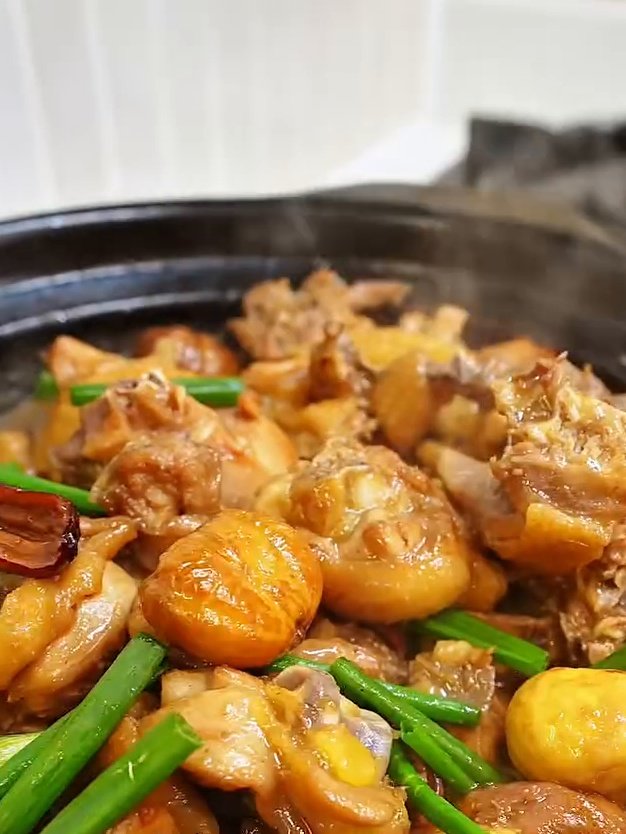
Ingredients
Equipment
Method
Prepare the Chestnuts and Ingredients
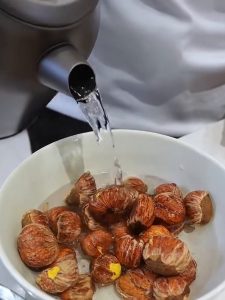
- If using fresh chestnuts in their shells, place them in a heatproof bowl and cover with boiling water. Soak for 10 minutes, then drain and carefully remove the outer shells and inner skins. Measure out 400 g of peeled chestnuts.
- Cut 1000 g of bone-in chicken into small pieces approximately 3-4 cm in size. Keep the skin on and pat the chicken dry with paper towels.
- Julienne 15 g of ginger for the marinade and slice the remaining 20 g for braising. Peel and lightly crush the garlic, halve the shallots, pit and halve the red dates, and cut the scallions into 5 cm segments.
Marinate the Chicken
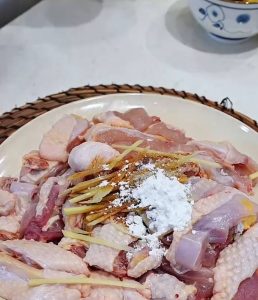
- Place the chicken in a large mixing bowl. Add 15 g of julienned ginger, 5 g of salt, 10 ml of light soy sauce, 2 g of granulated sugar, 5 g of cornstarch, 0.5 g of ground white pepper, and 10 ml of peanut oil.
- Mix thoroughly until all the chicken pieces are evenly coated. Let the chicken marinate for 10 minutes.
Sear the Chicken
- Heat a wok over high heat until hot. Add 15 ml of peanut oil and swirl to coat the surface, then reduce the heat to medium.
- Add the marinated chicken in a single layer, working in batches if necessary. Let the pieces sear without moving for 2-3 minutes until the undersides develop a light golden-brown color.
- Turn the chicken and continue searing for approximately 4-5 minutes, allowing both sides to brown and some chicken fat to render.
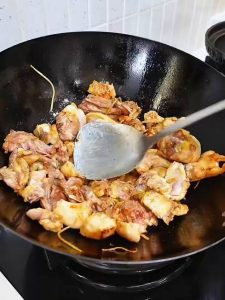
- Increase the heat to high. Pour 15 ml of Chinese baijiu around the edge of the wok and toss the chicken for 20-30 seconds to release its aroma.
- Transfer the chicken to a plate. Reserve the rendered chicken fat in the wok for braising the chestnuts.
Braise the Chestnuts
- Transfer the reserved chicken fat to a clay pot and heat over medium heat.
- Add 20 g of sliced ginger, 20 g of lightly crushed garlic, and 60 g of halved shallots. Stir-fry for 1-2 minutes until fragrant.
- Add the 400 g of peeled chestnuts and stir-fry gently for 2-3 minutes, allowing them to become coated with the aromatic oil.
- Pour in 400 ml of boiling water. Add 10 g of rock sugar, 15 ml of oyster sauce, and 2.5 g of salt. Stir gently and bring the liquid to a boil.
- Cover the pot, reduce the heat to low, and simmer for 15-20 minutes until the chestnuts become tender and begin to develop a soft, floury texture. If they are still firm, simmer for another 5 minutes.
Return the Chicken and Finish
- Return the seared chicken to the clay pot. Add the 4 halved red dates and the remaining 100 ml of boiling water.
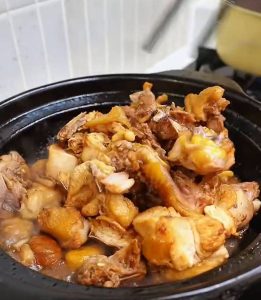
- Bring the liquid back to a gentle boil. Cover the pot and cook over medium-low heat for approximately 8-12 minutes, until the chicken is fully cooked and the chestnuts are soft.
- Check that the thickest chicken pieces reach an internal temperature of 74°C (165°F). Adjust the cooking time according to the size of the chicken pieces and the heat of your stove.
- Remove the lid and simmer for another 2-3 minutes if a thicker sauce is desired. Add 30 g of scallion segments and cook for approximately 1 minute until fragrant.
- Turn off the heat and serve hot with the chestnuts, chicken, and savory braising sauce.
Notes
For the best texture, use fresh chestnuts or raw peeled frozen chestnuts. Soaking fresh chestnuts in boiling water for about 10 minutes makes peeling easier. A slight darkening after peeling is usually normal oxidation.
If using vacuum-packed cooked chestnuts, add them during the final 5-8 minutes of braising to prevent them from becoming too soft or breaking apart.
Chicken should be seared in batches if necessary. Avoid overcrowding the wok so the chicken can brown properly and release its natural fat.
Chinese baijiu can be replaced with Shaoxing wine for a milder aroma. The flavor will be slightly different.
A clay pot can be replaced with a Dutch oven or another heavy pot with a lid. Adjust the amount of boiling water according to the pot size and desired sauce consistency.
Refrigerate leftovers promptly in an airtight container. Reheat gently with a small splash of water until thoroughly hot. The chestnuts may become softer as they continue to absorb the sauce.