
The main challenge when making sweet and sour pineapple pork is keeping the pork slightly crispy after coating it in the sauce. The pork is first marinated, then coated in a batter made with egg and potato starch. It is deep-fried twice before being stir-fried with pineapple and bell peppers. The sweet and sour sauce should also be prepared in advance and heated until it becomes slightly thickened.
This dish is seasoned with ketchup, rice vinegar, and sugar. Pineapple adds a fruity, sweet-and-sour flavor, while green and red bell peppers provide color and texture. This recipe uses 500 g of pork and serves approximately 3–4 people. Preparation takes about 20 minutes, cooking takes about 20 minutes, and the total time is approximately 40 minutes. The pork needs to marinate for 10 minutes, which provides enough time to prepare the vegetables and sweet and sour sauce. For another Chinese pork recipe, try our homemade Dongpo pork.

Homemade Sweet and Sour Pineapple Pork
Ingredients
Equipment
Method
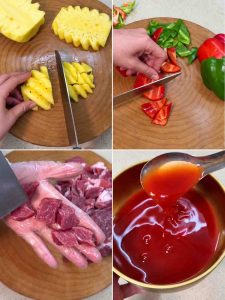
- Peel the pineapple, remove the firm core, and measure out 250 g of flesh. Cut it into pieces approximately 2 cm in size. Remove the seeds from 70 g of green bell pepper and 80 g of red bell pepper, then cut both into pieces. Prepare the produce before handling the raw pork.
- Cut 500 g of pork shoulder into pieces approximately 2–3 cm in size. Do not rinse raw pork under running water. Pat the surface dry with paper towels and keep the raw meat separate from the produce.
- Place the pork in a mixing bowl. Add 1 g of salt, 1 g of ground white pepper, and 1 egg. Mix thoroughly, then marinate for 10 minutes.
- While the pork marinates, combine 60 g of ketchup, 70 g of rice vinegar, 45 g of white sugar, 2 g of salt, and 90 ml of water in a small bowl. Stir until evenly mixed.
- Add 150 g of potato starch and 15 ml of water to the marinated pork. Mix until the batter coats the pieces evenly. If the batter is too dry, add another 5 ml of water at a time, up to a total of 30 ml. Finally, add 15 g of cooking oil and mix thoroughly.
- Pour approximately 1000 ml of cooking oil into a deep pot. Do not fill the pot more than halfway. Heat the oil to 175–180°C for the first frying.
- Carefully add the pork pieces one at a time, working in batches. Each batch should take approximately 2 minutes. Do not stir immediately after adding the pork. After about 1 minute, gently separate any pieces that have stuck together. Continue frying until the coating sets and turns pale golden.
- Remove the pork and let the excess oil drain. Increase the oil temperature to 185–190°C, then return the pork to the oil for a second fry of approximately 1 minute, until the coating becomes more golden and crisp. Do not let the oil start smoking.
- Check the internal temperature of the largest pork piece using a food thermometer. For whole cuts of pork, the recommended food safety standard is an internal temperature of 63°C, followed by a rest of at least 3 minutes. If the pork has not reached a safe temperature, continue cooking.
- Pour the prepared sweet and sour sauce into a separate wok or large skillet. Heat over medium heat, stirring continuously, until the sauce begins to boil and becomes slightly thickened enough to coat the spatula.
- Add the 250 g of pineapple pieces and stir-fry over high heat for approximately 1 minute, allowing the pineapple to become evenly coated with the sauce.
- Add the fried pork, 70 g of green bell pepper, and 80 g of red bell pepper. Stir-fry quickly for approximately 30–60 seconds, until all the ingredients are evenly coated with the sauce.
- Remove the dish from the heat as soon as the sauce coats the ingredients evenly. Avoid prolonged simmering, which can soften the fried coating.
Notes
- Handling the pork: Avoid rinsing raw pork under running water, as splashing can spread bacteria to nearby surfaces. Wash your hands, knife, and cutting board after handling raw meat.
- Starch batter: Start with 15 ml of water, then add another 5 ml at a time as needed, up to a maximum of 30 ml.
- Oil temperature: Use 175–180°C for the first fry and 185–190°C for the second fry. Do not allow the oil to smoke, and keep the oil level below halfway up the pot.
- Pork doneness: Use a food thermometer to check the largest piece. Whole cuts of pork should reach an internal temperature of 63°C and rest for at least 3 minutes.
- Starch substitution: An equal amount of cornstarch can replace potato starch, although the texture of the fried coating may differ.
- Vinegar substitution: You can start with 60 g of apple cider vinegar instead of 70 g of rice vinegar. The acidity and aroma will be somewhat different.
- Pineapple substitution: Drain canned pineapple before use. Because it is often sweeter than fresh pineapple, start by reducing the sugar to 35 g.
- Keeping the coating crisp: Thicken the sweet and sour sauce before adding the fried pork. Add the pork near the end and serve promptly after tossing it in the sauce.