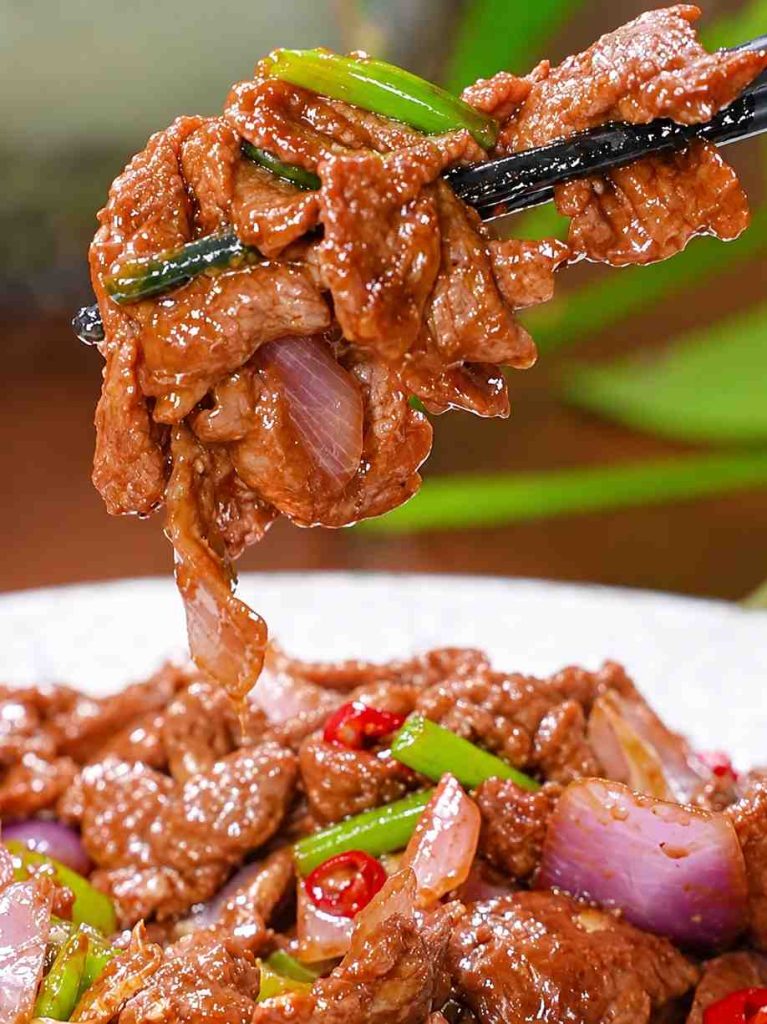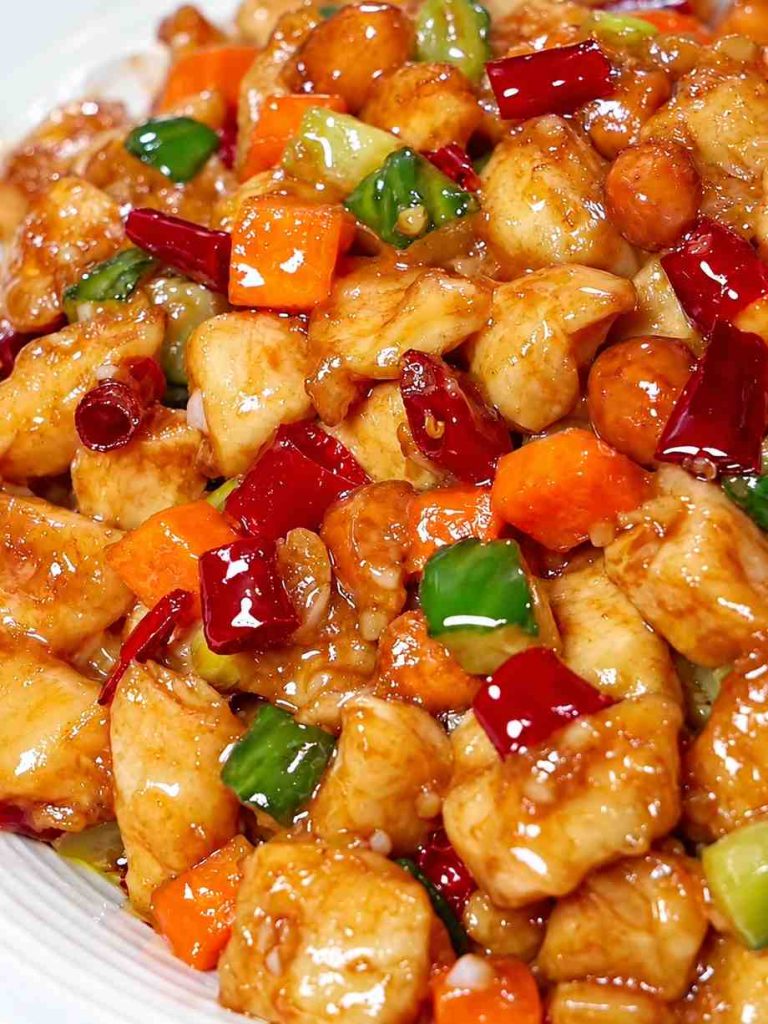
Ginger and scallion chicken is a chicken dish that is easy to prepare at home. I like to fry the ginger slices in hot oil until fragrant, then sear the chicken before adding the sauce and scallions. The chicken develops a golden-brown surface, while the sauce has a rich fermented soybean flavor. The ginger and scallions add a fresh aroma. For another home-style chicken recipe, try our homestyle Kung Pao chicken.
This recipe uses 1200 g of bone-in chicken and serves 3–4 people. The main seasoning is Chu Hou sauce, a Cantonese condiment made primarily from fermented soybeans. It has a savory flavor, a distinctive fermented soybean aroma, and a slight sweetness.
I divide the cooking process into several stages. First, I prepare the chicken. Next, I fry the ginger slices to flavor the oil, then sear the chicken. Finally, I add the sauce and scallions. Following this order makes it easier to control the color of the chicken, ensure that it is fully cooked, and achieve the desired sauce consistency. For a soup option using chicken and aromatics, see our silkie chicken soup with Chinese yam and red dates.
If Chu Hou sauce is unavailable, you can substitute a mixture of hoisin sauce and yellow soybean paste. However, the flavor of the finished dish will not be exactly the same.
Hoisin sauce is usually sweeter, while yellow soybean paste has a different fermented soybean aroma. If you want to make ginger and scallion chicken with a flavor closer to the original version, I recommend ordering Chu Hou sauce online.
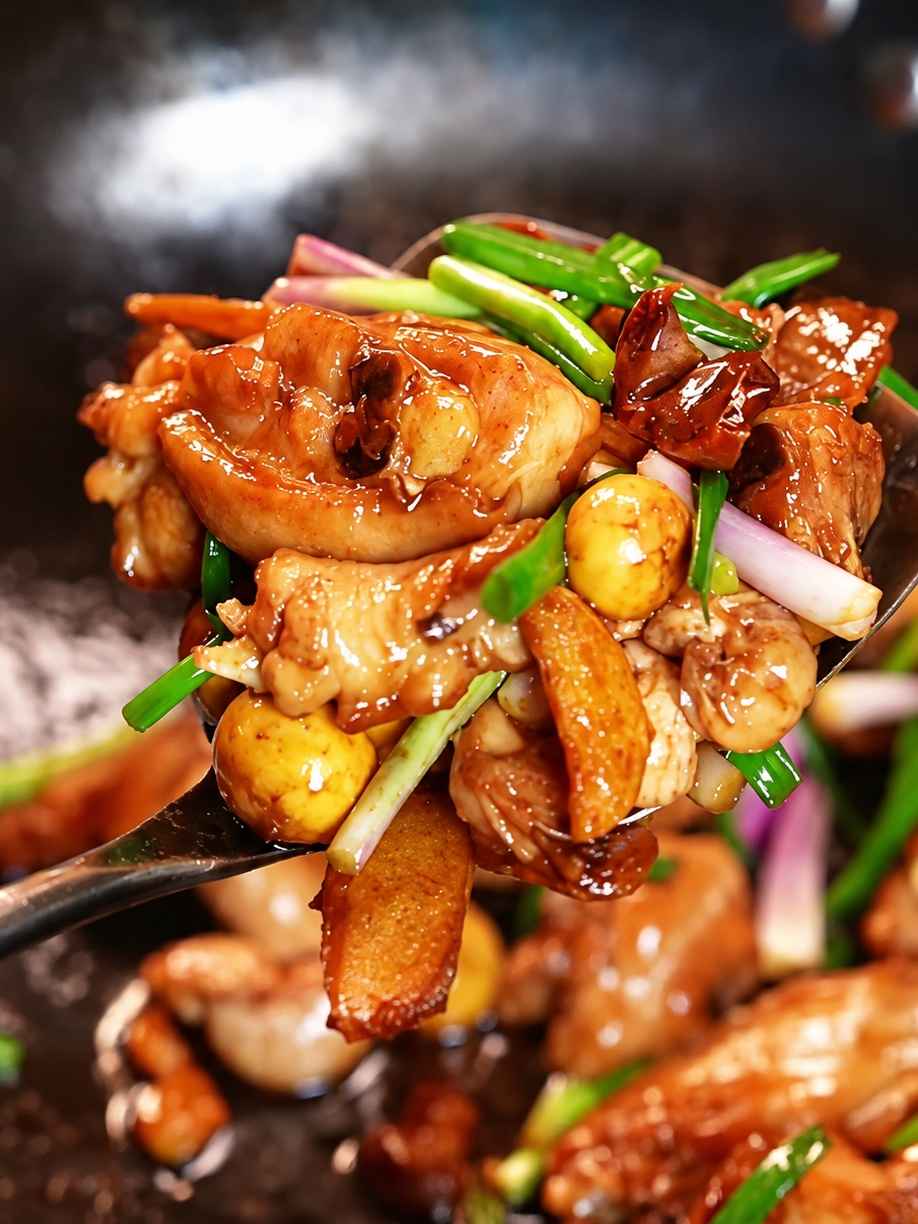
Ginger and Scallion Chicken with Chu Hou Sauce
Ingredients
Equipment
Method
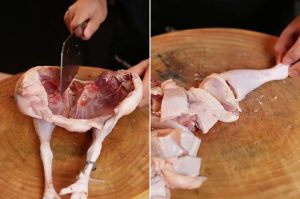
- Prepare 1200 g of bone-in chicken and cut it into pieces approximately 3–4 cm in size. If buying a whole chicken, ask your butcher to cut it into pieces.
- Pat the surface of the chicken dry with paper towels. Do not rinse raw chicken under running water because splashing can spread raw poultry juices around the sink and kitchen. After handling raw chicken, clean your hands, knives, cutting board, and kitchen surfaces.
- If using 150 g of chicken giblets, clean them, pat them dry with paper towels, and cut them into pieces approximately 2 cm in size. Omit this ingredient if you do not want to use giblets.
- Cut 50 g of fresh ginger into slices approximately 3 mm thick. Peel and slice 50 g of shallots. Cut 100 g of scallions into pieces approximately 5 cm long.
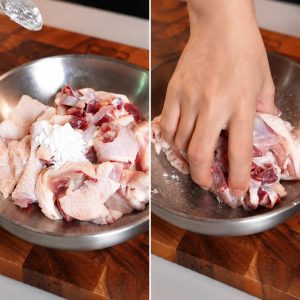
- Place the chicken in a large bowl. Add 4 g of salt and 15 g of cornstarch.
- Mix by hand for 60 seconds until the salt and cornstarch are evenly distributed over the chicken pieces.
- Cover the bowl and refrigerate the chicken for 10 minutes. During marinating, keep the raw chicken separate from the prepared scallions and shallots.
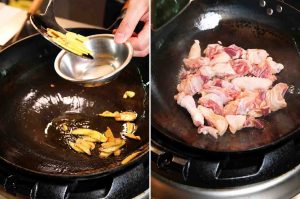
- Pour 30 ml of cooking oil into a wok with a diameter of at least 30 cm. Heat over medium heat for approximately 1 minute.
- Add all 50 g of ginger slices and stir-fry for 45 seconds. Once the ginger releases a noticeable aroma, remove the slices and set them aside. Leave the flavored oil in the wok.
- Arrange the chicken pieces in a single layer in the wok. Sear over medium-high heat for 4 minutes, avoiding frequent movement during the first 3 minutes. Turn the pieces over and sear for another 3 minutes, until both sides are golden brown.
- If the wok cannot hold all the chicken in a single layer, sear the chicken in two batches. Remove the first batch before cooking the second. If the pan becomes too dry, use the reserved 10 ml of cooking oil.
- Once both sides of the chicken are golden brown, pour 15 ml of Shaoxing cooking wine around the side of the wok. Stir-fry for 30 seconds.
- Add 150 g of chicken giblets if using them. Return the reserved ginger slices to the wok and stir-fry for another 2 minutes. If you are not using giblets, simply return the ginger slices to the wok.
- Add 30 g of Chu Hou sauce, 15 ml of light soy sauce, and 60 ml of water. Stir-fry for 60 seconds until the sauce coats the chicken evenly.
- Keep the remaining 15 ml of water nearby for later use. Cover the wok and simmer over medium-low heat for 10 minutes. After 5 minutes, remove the lid and turn the chicken pieces over once. Cover the wok again and continue cooking.
- If the chicken is not fully cooked but the sauce has already dried out, add the reserved 15 ml of water to prevent the sauce from burning.
- After simmering for 10 minutes, use a food thermometer to measure the internal temperature of the thickest chicken piece. Insert the thermometer into the meat without touching the bone. Both the chicken and giblets must reach an internal temperature of 74°C.
- If the internal temperature is below 74°C, cover the wok and cook for another 2–3 minutes. Measure the temperature again and continue cooking as needed until the chicken and giblets reach 74°C.
- Once the chicken and giblets are fully cooked, remove the lid. Stir-fry over medium-high heat for 2 minutes to evaporate excess liquid and thicken the sauce.
- Add 50 g of sliced shallots and 100 g of scallion pieces. Stir-fry for another 60 seconds until the vegetables are evenly mixed with the chicken. Serve immediately.
Notes
Important Notes
- Do not rinse raw chicken under running water. Pat it dry with paper towels, then clean your hands, knives, cutting board, and kitchen surfaces after handling it.
- Golden-brown chicken on the outside is not necessarily fully cooked inside. Both the chicken and giblets must reach an internal temperature of 74°C.
- Chu Hou sauce and light soy sauce already contain salt. Use 4 g of salt, 30 g of Chu Hou sauce, and 15 ml of light soy sauce as specified in the recipe.
- If using a heavy-bottomed frying pan instead of a wok, sear the chicken in two batches when necessary. Avoid overcrowding the pan.
Helpful Tips
- If Chu Hou sauce is unavailable, substitute 30 g of sauce made from 20 g of hoisin sauce and 10 g of yellow soybean paste. The substitute will be sweeter and have a different fermented soybean aroma.
- If Shaoxing cooking wine is unavailable, use 15 ml of dry sherry instead. The resulting aroma will be more fruity.
- If shallots are unavailable, substitute 50 g of regular yellow onion. The finished dish will have a more pronounced sweetness.
- Add the shallots and scallions during the final 60 seconds of cooking to help preserve their aroma.
- If the sauce dries out before the chicken is fully cooked, add the reserved 15 ml of water to prevent burning.
The main flavors of this ginger and scallion chicken come from ginger slices, Chu Hou sauce, shallots, and scallions. The recipe does not require many seasonings, but the order in which they are added is important.
If you are making this dish for the first time, I recommend following the ingredient quantities in the recipe. Once you become familiar with the size of the chicken pieces, how your cookware distributes heat, and how thick the sauce should be, you can adjust the recipe to suit your taste.
If Chu Hou sauce is unavailable in your area, you can use a mixture of hoisin sauce and yellow soybean paste as a substitute. However, if you want to preserve the distinctive fermented soybean flavor of Chu Hou sauce, ordering it online is a better option.
For me, the most important part of this dish is to sear the chicken until fragrant, allow the sauce to coat the chicken pieces gradually, and add the scallions near the end of cooking. As long as you control the searing process and make sure the chicken is fully cooked, you can prepare ginger and scallion chicken with a noticeable ginger aroma and a rich, flavorful sauce in your own kitchen.