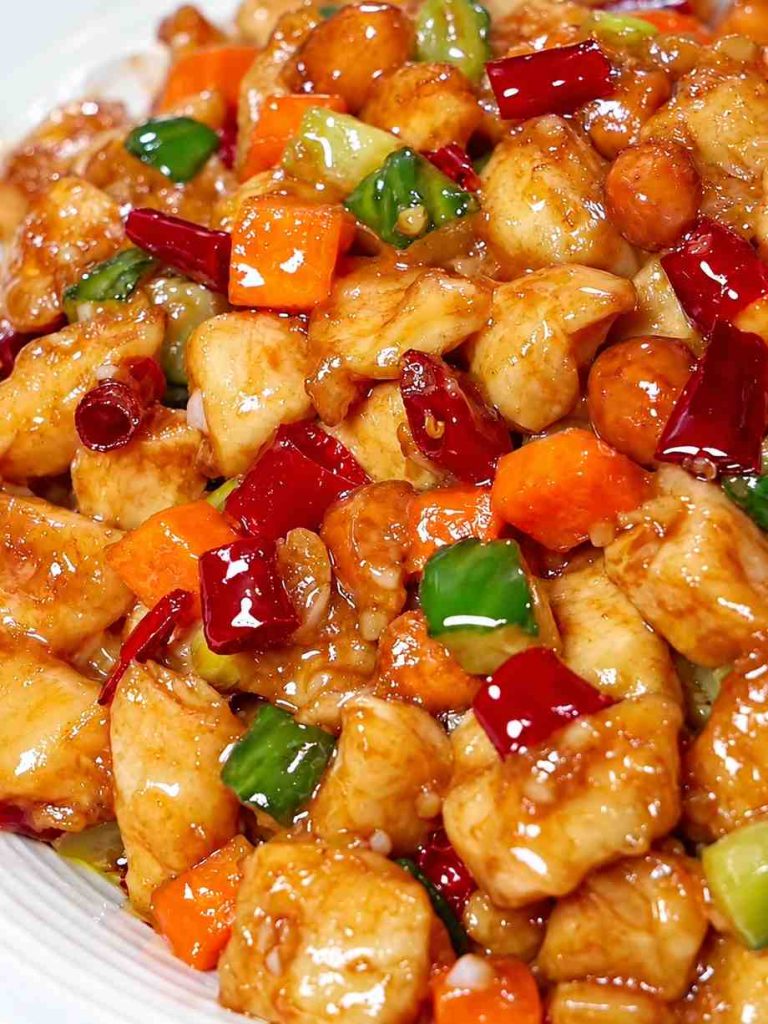
Napa Cabbage and Tofu Stew with Fried Eggs

Rate this post

When the weather gets cooler, I like to make a pot of napa cabbage and tofu stew at home. This dish is simple to prepare and makes me feel warm and comfortable. It only requires napa cabbage, tofu, eggs, and shiitake mushrooms. The ingredients are easy to find, and the cooking process is straightforward. For another tofu-based Chinese dish with a richer sauce, see our homemade Mapo tofu recipe.

I usually serve the stew as part of dinner, along with rice and other homemade dishes.

When making this dish, I pay special attention to the flavor of the broth. First, I fry the eggs until both sides are golden brown. Then, I add boiling water and let the broth simmer for a few minutes until it gradually turns a light, milky white. Next, I add the shiitake mushrooms and tofu, followed by the napa cabbage. Finally, I season the stew with just salt and white pepper, then add chopped scallions and goji berries before serving. If you enjoy simple egg dishes, try our steamed egg custard recipe.

Napa cabbage has pale green leaves and thick, white stems. Tofu is a food made from coagulated soy milk and is usually sold in blocks. For this recipe, I recommend using firm tofu because it holds its shape better during simmering and is less likely to break apart.

If you prefer a stronger pepper flavor, you can add black pepper directly to your serving. However, this will change the stew’s original mild flavor.

For me, the three most important steps in making napa cabbage and tofu stew are frying the eggs until fragrant, using boiling water to create a light, milky-white broth, and simmering the tofu and cabbage until tender. As long as you prepare these common ingredients and follow the steps in order, you can easily make this simple homemade dish in your own kitchen.
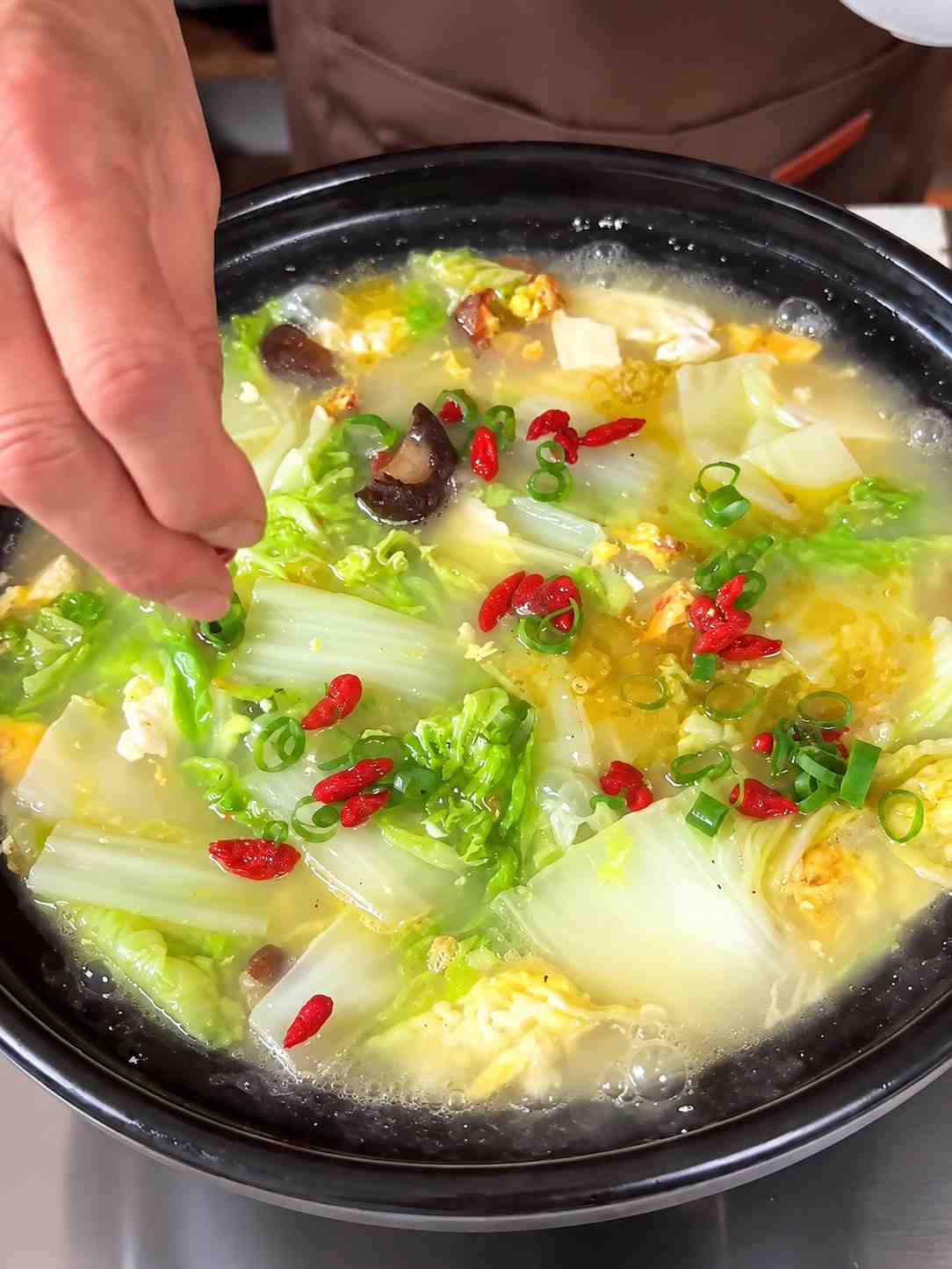
Photo of the finished braised Chinese cabbage and tofu dish

Napa Cabbage and Tofu Stew

This homemade napa cabbage and tofu stew serves 2 to 3 people. First, fry the eggs until golden brown, then add 1000 ml of boiling water to create a light, milky-white broth. Add shiitake mushrooms, tofu, and napa cabbage, and simmer until tender. Finally, season with salt and white pepper, then garnish with chopped scallions and goji berries. Preparation time: 15 minutes. Cooking time: 25 minutes.
Prep Time 15 minutes
Cook Time 25 minutes
Total Time 40 minutes
Cuisine: Chinese

Ingredients
  

  • 500 g Napa Cabbage Napa cabbage has pale green leaves and thick, white stems. If it is unavailable, substitute 500 g of regular green cabbage. Green cabbage has firmer leaves and a less pronounced sweetness, so it needs an additional 5 to 8 minutes of cooking.
  • 300 g Firm Tofu Choose medium-firm or firm tofu because it holds its shape better during simmering. Soft tofu breaks apart more easily. If firm tofu is unavailable locally, purchase it from an Asian grocery store or online because tofu is one of the main ingredients in this dish.
  • 100 g Eggs This is approximately 2 medium eggs without their shells. Crack the eggs directly into the pan without beating them first.
  • 100 g Fresh Shiitake Mushrooms Clean the mushrooms and slice them into pieces approximately 5 mm thick. If shiitake mushrooms are unavailable, substitute 100 g of ordinary white mushrooms. The broth will have a milder mushroom aroma. If no mushrooms are available, they can be omitted, but the broth will have a less pronounced savory flavor.
  • 1000 ml Boiling Water Bring the water to a boil before adding it to the pan. Pour it in slowly to reduce the risk of hot oil splashing.
  • 10 ml Cooking Oil Approximately 2 teaspoons. Canola oil, sunflower oil, or corn oil can be used. Choose a vegetable oil with a mild aroma.
  • 4 g Salt Add the salt during the final seasoning stage. Start with 4 g to keep the dish mildly seasoned.
  • 1 g White Pepper If white pepper is unavailable, substitute 0.5 g of black pepper. Black pepper has a stronger aroma and creates visible dark specks in the broth.
  • 10 g Scallions Finely chop the scallions and add them shortly before serving. If scallions are unavailable, substitute 10 g of chives. The aroma will be milder.
  • 5 g Goji Berries Rinse the berries under running water and drain them. Goji berries add red color and a slight sweetness. If unavailable, substitute 5 g of dried cranberries for a more tart and sweet flavor, or omit them.

Equipment

  • 1 Lidded Cooking Pot Use a pot with a capacity of at least 3 liters and a wide base for frying the eggs and simmering the ingredients. If you do not have a cooking pot, use a heavy-bottomed frying pan or a lidded cast-iron pot with a capacity of at least 3 liters and a depth of at least 8 cm. Shallower cookware allows liquid to evaporate more quickly, so monitor the broth level.
  • 1 Heat-Resistant Spatula Use it to flip the eggs, divide the fried eggs into pieces, and gently move the tofu. A heat-resistant silicone spatula or wooden spatula can be used instead.
  • 1 Kitchen Knife and Cutting Board Use a regular kitchen knife and a stable cutting board to cut the napa cabbage, shiitake mushrooms, and scallions.

Method
 

Step 1: Prepare the Ingredients
  1. Wash 500 g of napa cabbage and drain it. Cut the thick white stems, commonly called the cabbage ribs, into pieces approximately 3 cm wide. Cut the pale green leaves into pieces approximately 4 to 5 cm wide. Keep the stems and leaves separate.
  2. Clean 100 g of fresh shiitake mushrooms and slice them into pieces approximately 5 mm thick.
  3. Break 300 g of firm tofu into pieces approximately 3 cm across. If the tofu is too firm to break easily by hand, cut it into cubes with a knife.
  4. Finely chop 10 g of scallions into pieces approximately 2 mm wide.
  5. Rinse 5 g of goji berries under running water and drain them.
  6. This preparation step takes approximately 15 minutes.
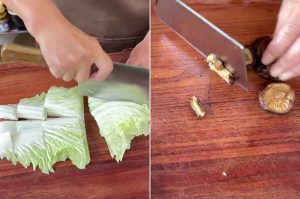
    Braised Chinese Cabbage with Tofu_Preparing the Ingredients
Step 2: Fry the Eggs
  1. Add 10 ml of cooking oil to a lidded cooking pot and heat it over medium heat to approximately 160–180°C. If you do not have a thermometer, watch for the oil to begin moving slightly across the pan. Do not allow the oil to smoke.
  2. Crack 100 g of eggs directly into the pot. Do not beat the eggs beforehand.
  3. Fry for approximately 2 minutes, until the bottom has set and turned golden brown. Flip the eggs and fry the other side for another 2 minutes.
  4. Use a spatula to divide the fried eggs into 3 to 4 pieces. The surface should be lightly golden, not burnt.
  5. This step takes approximately 4 minutes.
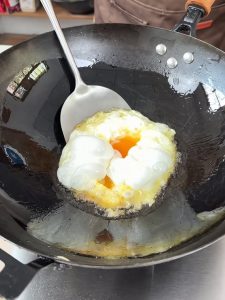
    Braised Chinese Cabbage with Tofu_Fried Eggs
Step 3: Add Boiling Water and Prepare the Broth
  1. Bring 1000 ml of water to a boil before adding it to the pot.
  2. Slowly pour the boiling water into the pot containing the fried eggs. Keep your face and body away from the pot opening to avoid splashes of hot oil and burns from steam.
  3. Increase the heat until the broth reaches a vigorous boil. Continue boiling for approximately 4 minutes, until the broth gradually becomes light and milky white.
  4. The final broth color depends on how thoroughly the eggs are fried, the amount of oil used, and the intensity of the boil. Do not add milk or starch.
  5. This step takes approximately 4 minutes.
Step 4: Add the Mushrooms and Tofu
  1. Add 100 g of sliced fresh shiitake mushrooms to the light, milky-white broth.
  2. Add 300 g of tofu pieces. Gently move the ingredients with a spatula so the tofu and mushrooms come into contact with the broth.
  3. Reduce the heat to medium-low. Maintain a gentle simmer at approximately 90–95°C, with small bubbles continuously appearing on the surface. Continue cooking for 8 minutes.
  4. Do not stir the tofu frequently because it may break apart. If the tofu begins sticking to the bottom of the pot, gently move it with a spatula.
  5. This step takes approximately 8 minutes.
Step 5: Cook the Cabbage Stems Before the Leaves
  1. Add the chopped white cabbage stems and cook for another 4 minutes, allowing the thicker pieces to begin softening.
  2. Add the pale green cabbage leaves and continue cooking for another 4 minutes.
  3. Check the texture of the cabbage. The stems should be easy to bite through, and the leaves should be noticeably soft.
  4. If you substitute 500 g of regular green cabbage for napa cabbage, cook it for an additional 5 to 8 minutes. If the cabbage is still firm, extend the cooking time in 1-minute increments until it reaches the desired tenderness.
  5. When using napa cabbage, this step takes approximately 8 minutes.
Step 6: Season and Serve
  1. Add 4 g of salt and 1 g of white pepper. Stir gently to distribute the seasonings.
  2. Add 10 g of chopped scallions and 5 g of goji berries. Cook for another minute.
  3. Turn off the heat, ladle the stew into serving bowls, and serve while hot.
  4. This step takes approximately 1 minute.
Notes

Broth Tip: Fry the eggs until golden brown on both sides, then add 1000 ml of boiling water. Maintain a vigorous boil for approximately 4 minutes. Do not substitute cold water for boiling water, as the broth may become less milky in appearance.
Handling Tofu: Choose firm tofu and move the ingredients gently with a spatula. Avoid frequent stirring to prevent the tofu from breaking apart.
Preparing the Cabbage: Cook the thick white cabbage stems for 4 minutes before adding the leaves. Cook the leaves for another 4 minutes. If using regular green cabbage, add an additional 5 to 8 minutes of cooking time.
Ingredient Substitutions: White pepper can be replaced with 0.5 g of black pepper, but the aroma will be stronger. Goji berries can be replaced with 5 g of dried cranberries for a more tart and sweet flavor, or omitted. Fresh shiitake mushrooms can be replaced with the same amount of ordinary white mushrooms, although the mushroom aroma will be milder.
Cookware Substitutions: If you do not have a clay pot, use a lidded cooking pot with a capacity of at least 3 liters. A heavy-bottomed frying pan or lidded cast-iron pot with a capacity of at least 3 liters and a depth of at least 8 cm will also work. Shallow cookware allows liquid to evaporate more quickly, so monitor the broth level.
Checking Doneness: The cabbage stems should be easy to bite through, and the leaves should be noticeably soft. Do not fry the eggs until burnt in an attempt to make the broth whiter.
Timing: Preparation takes approximately 15 minutes, cooking takes approximately 25 minutes, and the total time is approximately 40 minutes. Cooking times may change when substitute ingredients are used.
Scroll to Top