Equipment
Method
Prepare the beef
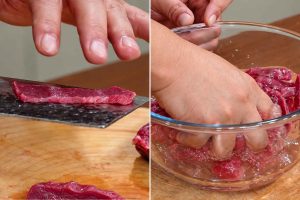
- Slice 400 grams of beef tenderloin into thin slices about 3 millimeters thick. Examine the muscle grain of the beef and slice perpendicular to the grain.
- Rinse the beef briefly under cold water, then drain it thoroughly. You can also use paper towels to pat the surface of the beef dry.
Marinated Beef
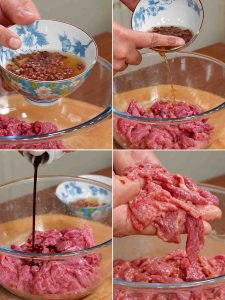
- Prepare 50 milliliters of Sichuan pepper water, then divide it into two portions of 25 milliliters each.
- Add the first 25-milliliter portion of Sichuan pepper water to the beef and mix with your hands for about 1 minute, allowing the liquid to be gradually absorbed by the beef.
- Add the second 25-milliliter portion of Sichuan pepper water and continue tossing for about 1 minute.
- Add 10 milliliters of light soy sauce, 2 grams of salt, and 0.5 grams of white pepper, then toss to combine.
- Add 1 egg white and 10 grams of cornstarch, and continue to toss until each slice of beef is coated with a thin layer of marinade.
- Add 10 milliliters of cooking oil and stir gently to combine.
- Place the beef in the refrigerator and let it marinate for 15 minutes.
Prepare the vegetables and sauce
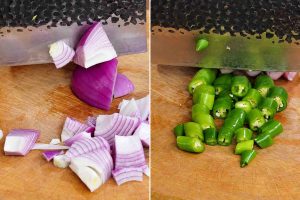
- Peel 1 purple onion and cut it into chunks about 2 centimeters wide; the edible portion should weigh about 200 grams.
- Cut 100 grams of green bell peppers or Hangzhou chili peppers into small pieces about 3 centimeters long. If you prefer a milder flavor, you can use regular green bell peppers.
- Slice 10 grams of garlic, 10 grams of ginger, and cut 5 grams of chili peppers into segments.
- Place 20 milliliters of light soy sauce, 10 milliliters of dark soy sauce, and 2 grams of white sugar in a small bowl, stir until well combined, and set aside as the finishing sauce.
Stir-fry the beef in batches
- Preheat a wok and add 15 milliliters of cooking oil. When the oil begins to move and slight ripples appear on the surface, add the beef.
- Divide the beef into two batches, about 200 grams each. Once in the pan, quickly spread the meat out so that the slices are as evenly distributed as possible across the bottom of the pan.
- Stir-fry each batch for about 1 to 2 minutes; the exact time depends on the thickness of the beef slices and the heat of the stove. Once most of the beef has changed color, remove it from the pan and make sure it is thoroughly cooked.
- If a large amount of liquid accumulates in the pan, use less beef for the next batch and wait for the pan to heat up again before stir-frying.
Stir-fry the spices and vegetables
- Scrape any remaining bits from the pan and add the remaining 15 milliliters of cooking oil.
- Add 10 grams of sliced ginger, 10 grams of sliced garlic, and 5 grams of bird's eye chili, and stir-fry for about 30 seconds until you can smell a distinct aroma.
- Add 100 grams of green bell peppers or Hangzhou chili peppers and continue stir-frying for about 1 to 2 minutes, until the peppers begin to wrinkle.
- Add about 200 grams of diced onions and 1 gram of salt, and continue stir-frying for about 2 to 3 minutes, until the onions gradually soften but still retain some of their shape.
- If the bottom of the pan gets too dry, add 15 milliliters of water to prevent the onions and garlic slices from sticking to the pan.
Return the beef to the pan and season it
- Return the previously stir-fried beef to the pan.
- Add the sauce you prepared earlier, which includes 20 milliliters of light soy sauce, 10 milliliters of dark soy sauce, and 2 grams of white sugar.
- Cook over medium-high heat, stirring rapidly for about 30 to 60 seconds, until the beef, onion, and green pepper are evenly coated with the sauce.
- Add 0.5 grams of white pepper powder, stir-fry until well mixed, then turn off the heat.
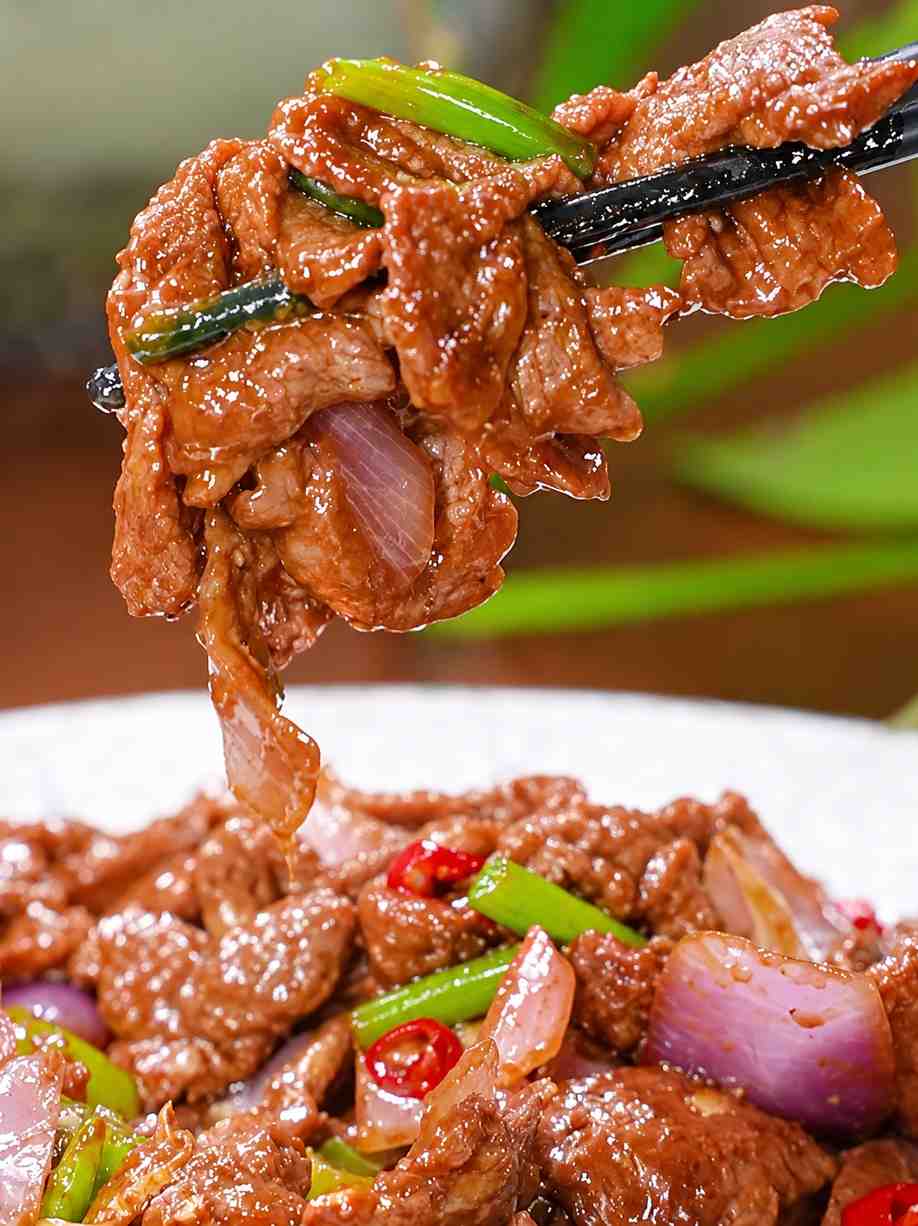
- Plate the stir-fried beef with onions and serve it hot with rice.
Notes
Slicing Beef: Cut the beef into thin slices about 3 millimeters thick, slicing against the grain to make it easier to chew.
Sichuan Pepper Water: We recommend adding 2 grams of Sichuan peppercorns to 100 milliliters of hot water, letting it steep for 10 minutes, then straining it. Use 50 milliliters of this liquid for marinating the beef. Sichuan peppercorns have a citrusy aroma and a slight numbing sensation. If you substitute black pepper water, the final dish will have a different aroma and spiciness.
Marinating the Beef: Add the Sichuan pepper water in two batches, 25 milliliters each time. Allow the beef to absorb the Sichuan pepper water first, then add the other marinade ingredients. Finally, add 10 milliliters of cooking oil.
Beef Quantity: The total amount of beef is 400 grams, to be stir-fried in two batches of approximately 200 grams each. This minimizes a drop in pan temperature and prevents the beef from releasing too much liquid.
Difference Between Soy Sauces: Light soy sauce is primarily used to enhance saltiness and umami, while dark soy sauce is mainly used to add color. If using regular soy sauce as a substitute for light soy sauce, adjust the amount based on the soy sauce’s saltiness.
Vegetable Substitutions: Hangzhou chili peppers can be replaced with regular green bell peppers, though the spiciness will be reduced. Bird’s eye chili peppers can be replaced with locally available red chili peppers, though the level of spiciness may vary.
Starch Substitutes: Cornstarch can be replaced with potato starch, though the coating on the beef may differ slightly.
Cooking Time: Stir-fry the beef for about 1 to 2 minutes per batch, the onions for about 2 to 3 minutes, and finally, after returning the beef to the pan, stir-fry for about 30 to 60 seconds. Actual cooking times should be adjusted based on the thickness of the beef slices, the type of cookware, and the heat of the stove.
Food Safety: Do not marinate or thaw raw beef at room temperature for extended periods. Do not rely solely on surface color to determine if the beef is safely cooked through. Follow the appropriate food safety temperature guidelines for different cuts of beef.
Ingredient Quantities: The weights listed for onions, green bell peppers, ginger, garlic, and chili peppers are recommendations for home cooking, intended to make the recipe easier to follow. Prepare the beef and main seasonings according to the quantities listed in this article.