Ingredients
Equipment
Method
Prepare the eggs and the steamer
- Crack 3 large eggs into a heat-resistant shallow dish; the total weight of the shelled eggs should be about 150 grams. Do not beat the yolks and whites together just yet.
- Pour 1,250 milliliters of water into a deep pot with a lid that is at least 24 centimeters in diameter, and place the steaming rack inside. Make sure the steaming rack is at least 3 centimeters above the bottom of the pot.
- Turn on the heat and bring the water to a rolling boil. Measure out 250 milliliters of boiling water using a heat-resistant measuring cup; leave about 1,000 milliliters of water in the pot for steaming.
Add boiling water and stir quickly
- Slowly pour 250 milliliters of boiling water into a heat-resistant shallow dish containing the eggs.
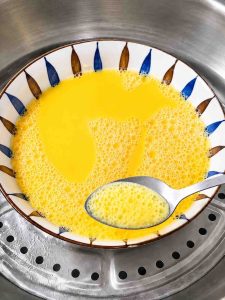
- Immediately add 1 gram of salt and stir quickly with chopsticks for about 30 seconds. Break up the egg yolks so that the whites and yolks are thoroughly mixed until the entire bowl of egg mixture turns a uniform yellow color.
- When boiling water comes into contact with the eggs, some of the egg whites may turn white immediately. Therefore, you must stir immediately after pouring in the water to prevent large clumps from forming in certain areas.
- Use a heat-resistant tray when operating the device, and be careful of hot water and steam to avoid burns.
Remove surface foam
- After stirring quickly, use a small spoon to gently skim off the foam from the surface of the egg mixture.
- After skimming off the foam, there’s no need to stir vigorously again. Keep the surface of the egg mixture smooth.
Steamed Egg Custard
- Place the shallow dish containing the beaten eggs on the steaming rack. The water in the pot must remain below the dish and must not touch the bottom of the dish.
- Cover the pot. Once the water in the pot returns to a boil, start timing and steam over medium-low heat for 8 to 10 minutes; usually, start by steaming for 10 minutes.
- Try not to open the lid too often while steaming to prevent the steam from escaping.
- After 10 minutes, carefully lift the lid and check the egg custard. The center should be set, with no visible traces of runny, uncooked egg.
- If the center is still liquid, continue steaming for 1 to 2 minutes, then check again. If you have a food thermometer, make sure the center of the egg custard reaches 71 degrees Celsius.
Add the seasonings
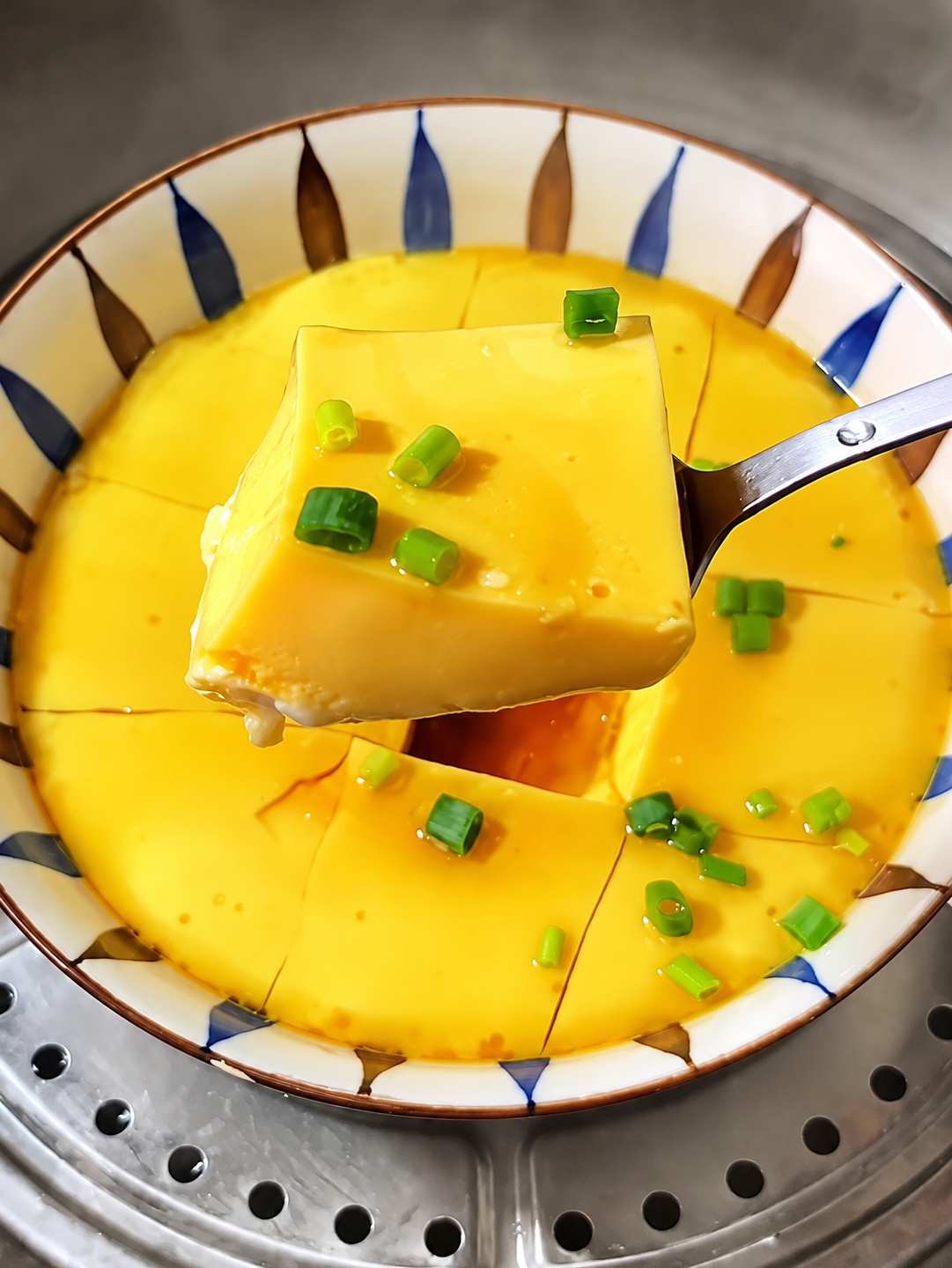
- Once the egg custard is steamed, first add 5 milliliters of aged vinegar, then 5 milliliters of sesame oil, and finally sprinkle with 5 grams of chopped scallions.
- Use a knife to gently cut the egg custard into several pieces so that the seasoning on the surface can more easily penetrate the inside of the custard.
- Once done, it is ready to eat. The egg custard should hold its shape well while having a soft texture. When scooped up with a spoon, there should be no uncooked egg inside.
Notes
This recipe calls for 150 grams of shelled eggs and 250 milliliters of boiling water; the amount of water in the egg mixture is about 1.7 times the weight of the eggs.
- After adding the boiling water to the eggs, stir immediately and vigorously to prevent large clumps from forming.
- The steaming rack should be at least 3 centimeters above the bottom of the pot. When steaming, the water level must be lower than the dish containing the egg mixture and must not come into direct contact with the bottom of the dish.
- Steaming time depends on the depth of the dish and the heat of the stove. After steaming for 10 minutes, check to see if the center has set; if there is still runny, uncooked egg mixture, continue steaming for 1 to 2 minutes at a time.
- If you have a food thermometer, ensure the center of the egg custard reaches 71 degrees Celsius.
- Aged vinegar can be substituted with apple cider vinegar, but apple cider vinegar has a more pronounced fruity aroma and a more direct sour taste.
- Sesame oil can be substituted with regular vegetable oil, but the finished dish will have a less pronounced sesame aroma.
- Chopped scallions can be replaced with fine chives, which have a milder aroma.
- The egg custard should be eaten immediately after steaming. If you need to store it, refrigerate it within 2 hours of cooking and reheat thoroughly before serving.