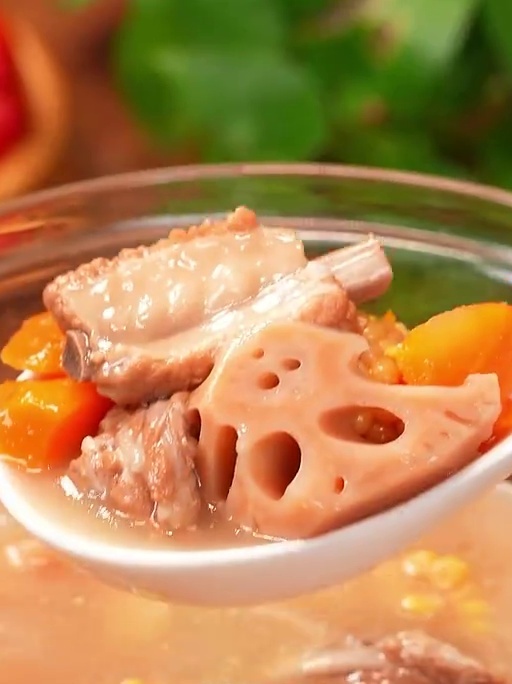
Ingredients
Equipment
Method
Prepare the Ingredients
- Prepare 600 g of pork ribs, 500 g of peeled lotus root, 150 g of carrots, 250 g of corn, 20 g of fresh ginger, 1 g of whole Sichuan peppercorns, 15 ml of Huadiao wine, 5 g of salt, 1800 ml of water for blanching the pork ribs, and 2500 ml of hot water for the soup.
- Check the pork ribs for visible bone fragments. Do not rinse raw pork ribs under running water because splashing juices can spread from the sink to countertops and other ingredients. Keep the knives, cutting boards, and work surfaces used for raw meat separate from those used for ready-to-eat foods.
- Wash the lotus root, carrots, and corn. Wash the lotus root before peeling it, then cut it into rolling-cut chunks about 4 cm across. Cut the carrots into rolling-cut chunks and the corn into segments 3 to 4 cm long.
- Cut 20 g of fresh ginger into thick slices or large pieces. Measure 1 g of whole Sichuan peppercorns, 15 ml of Huadiao wine, and 5 g of salt.
Blanch the Pork Ribs
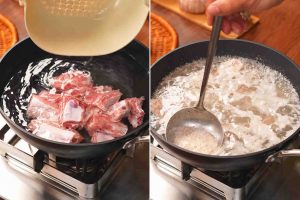
- Place 600 g of pork ribs in a pot and add 1800 ml of cold water. Heat over medium-high heat until the water boils.
- Once the water boils, continue cooking for 3 to 5 minutes. Use a soup spoon to skim off the grayish-white foam that rises to the surface. Blanching is a preliminary cooking method in which meat is briefly heated in water and then removed. It helps bring some of the impurities and foam to the surface, making them easier to remove.
- Remove the pork ribs and drain them. Discard the blanching water and clean any pots and utensils that came into contact with the raw pork. Use a clean pot for preparing the soup.
Assemble the Soup
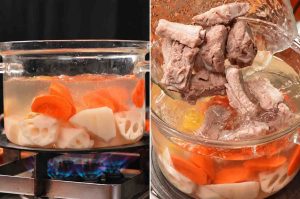
- In a clean lidded soup pot with a capacity of at least 5 liters, place the lotus root, carrots, and corn at the bottom. Add the blanched pork ribs on top.
- Add 20 g of fresh ginger, 1 g of whole Sichuan peppercorns, 15 ml of Huadiao wine, and 2500 ml of hot water.
- Check the water level and make sure the water covers most of the ingredients. If more water is needed, add 100 ml of boiling water at a time, up to a maximum of 300 ml extra.
Simmer and Season
- Bring the soup to a boil over medium-high heat. Use a soup spoon to skim off any foam that forms on the surface.
- Cover the pot and reduce the heat to low. Maintain a gentle simmer with small bubbles rather than a vigorous boil. Simmer for approximately 60 minutes.
- After 50 minutes of simmering, check the lotus root with chopsticks. If the chopsticks slide easily into the center, the lotus root is becoming tender. If the center is still firm, continue simmering for another 10 to 20 minutes, until the lotus root is soft and the pork ribs are fully cooked.
- Once the ingredients are cooked through, add 5 g of salt and stir well. Continue cooking for 2 minutes. Taste the soup. If it tastes too mild, add 1 g of salt at a time, up to a maximum total of 8 g of salt for the entire pot.
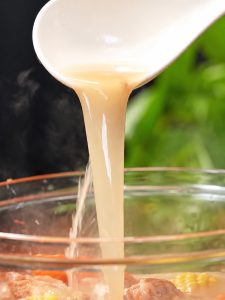
- If there is a noticeable layer of oil on the surface, use a soup spoon to skim off some of the surface fat before serving.
Serve the Soup
- Turn off the heat. Divide the pork ribs, lotus root, carrots, and corn among serving bowls, then ladle the soup over the ingredients.
- Check that the pork ribs are fully cooked, the lotus root is tender, and the soup has the right level of saltiness. Serve hot.
Notes
Choosing Lotus Root: Choose a variety that becomes soft and starchy when cooked. Different varieties soften at different rates. Check doneness by inserting chopsticks into the center of a piece of lotus root. The chopsticks should slide in easily.
Ingredient Substitutions: If fresh lotus root is unavailable, use 500 g of frozen lotus root. Huadiao wine can be replaced with 15 ml of dry sherry, and whole Sichuan peppercorns can be replaced with 1 g of whole black peppercorns. Both substitutions will change the original aroma. Potatoes are not recommended as a substitute for lotus root.
Handling Pork Ribs: Do not rinse raw pork ribs under running water. Raw meat juices can spread bacteria to the sink, knives, cutting boards, and countertops. After handling raw meat, clean your hands, knives, cutting boards, and any contaminated surfaces with detergent and hot water.
Water for Simmering: Add the full 2500 ml of hot water at the beginning whenever possible. If additional water is needed, add boiling water in 100 ml increments, up to a maximum of 300 ml extra.
Salt: Start with 5 g of salt. If the soup tastes too mild, add 1 g at a time, up to a maximum total of 8 g of salt for the entire pot.
Cooking Time: The main cooking time is approximately 75 minutes. If the center of the lotus root is still firm, continue simmering for another 10 to 20 minutes.