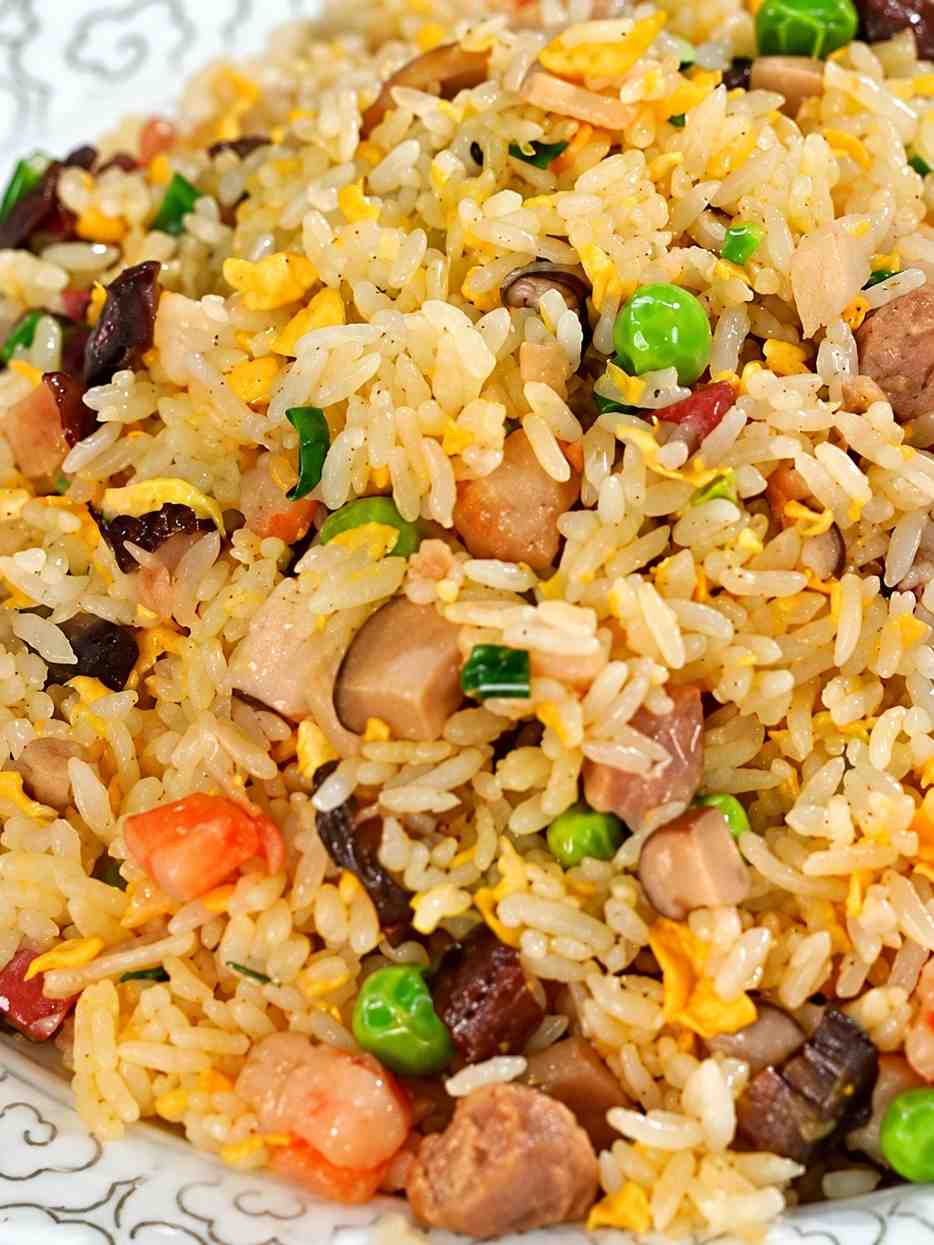
Yangzhou fried rice is a main dish made by stir-frying rice, eggs, and various ingredients cut into small cubes. When I prepare this dish, I divide the process into three stages: preparing the ingredients, making the stock, and cooking the fried rice. This approach allows me to focus on the rice during the final cooking stage without having to chop ingredients while watching the pan. For another quick noodle dish, try our scallion oil noodles recipe.
For this recipe, I make a homemade version of Yangzhou fried rice with a generous selection of ingredients. In addition to rice and eggs, I use chicken thigh, duck gizzard, ham, shrimp, sea cucumber, dried scallops, shiitake mushrooms, bamboo shoots, and green peas. Duck gizzard is a muscular part of a duck’s digestive system. It has a firm texture when cooked. Sea cucumber is an edible marine animal with a soft texture after rehydration. Dried scallops, also known as dried scallop meat, are the dried adductor muscles of shellfish. They add a naturally sweet, savory flavor to the stock. Shrimp roe is a seasoning made from processed shrimp eggs. Only a small amount is usually needed.
Yangzhou fried rice does not necessarily require day-old rice. Freshly cooked rice can also be used, provided that the amount of water used during cooking is controlled and some steam is allowed to escape before frying. When preparing the fried rice, I add the rice while the beaten eggs are still partially liquid. This allows the egg to coat the rice grains. Finally, I add the stock to the pan in several portions. This allows the rice to absorb the savory flavor while helping prevent the grains from clumping together. Serve this fried rice with a main such as our homestyle Kung Pao chicken.
Published descriptions of Yangzhou fried rice also list ingredients such as indica rice, eggs, sea cucumber, chicken thigh, ham, dried scallops, shrimp, shiitake mushrooms, fresh bamboo shoots, green peas, chopped scallions, shrimp roe, Shaoxing wine, and chicken stock. Recipes can vary in their ingredient combinations. For my homemade version, I retain the combination of commonly used ingredients and add duck gizzard and homemade stock.
- 300 g Long-Grain White Rice (Uncooked) Use ordinary long-grain white rice. Indica rice is a type of rice with relatively long grains and generally produces a loose texture after cooking. Basmati rice can also be used, but it has a more pronounced aroma and a drier texture. Sushi rice is stickier and is not the first choice for this recipe.
- 330 ml Water Use this water to cook the rice in the rice cooker.
- 150 g Eggs Approximately 3 medium eggs, weighed without their shells. Beat the eggs before using.
- 50 g Raw Chicken Thigh Cut into small cubes approximately 5 mm in size. You can also use 50 g of chicken breast, but chicken breast contains less fat and is more likely to become dry if overcooked.
- 30 g Raw Duck Gizzard A duck gizzard is a muscular part of a duck's digestive system. It has a firm texture when cooked. If unavailable, replace it with an additional 30 g of chicken thigh. The finished dish will have less of the gizzard's firm texture.
- 30 g Cooked Ham Cut into small cubes approximately 5 mm in size. If only cured, air-dried ham is available, use 20 g instead and reduce the total salt to 1.5 g.
- 30 g Rehydrated Sea Cucumber Use sea cucumber that has already been rehydrated until soft, then cut it into small cubes. If unavailable, substitute 30 g of squid or add an extra 30 g of shrimp. The distinctive soft, slightly springy texture of sea cucumber will be reduced.
- 60 g Peeled Shrimp Cut into small cubes. Frozen shrimp can be used, but thaw it first and pat the surface dry.
- 15 g Dried Scallops Dried scallops are the dried adductor muscles of shellfish. Soak them in 50 ml of warm water for 20 minutes and reserve the soaking liquid. If unavailable, substitute 10 g of dried shrimp. This substitution will produce a saltier seafood flavor with less natural sweetness.
- 50 ml Warm Water for Soaking Dried Scallops Use water at approximately 40–50°C to soak 15 g of dried scallops for 20 minutes. Add the soaking liquid to the stock instead of discarding it.
- 40 g Fresh Shiitake Mushrooms Cut into small cubes. If fresh shiitake mushrooms are unavailable, use 10 g of dried shiitake mushrooms. Rehydrate them and squeeze out excess water before use. Dried mushrooms will produce a stronger aroma.
- 40 g Bamboo Shoots Fresh or canned bamboo shoots can be used. If using canned bamboo shoots, rinse and drain them before weighing. Canned bamboo shoots are usually softer and may have a slightly sour taste.
- 30 g Frozen Green Peas Green peas add a mild sweetness and a green color to the dish. Thaw them and pat dry before adding them to the fried rice.
- 5 g Fresh Ginger Finely mince the ginger and use it to flavor the stock ingredients during frying.
- 15 g Scallions Slice into small pieces and divide into 3 equal portions of 5 g each. Add them before the eggs, after adding the solid ingredients, and during the final seasoning stage.
- 1 g Dried Shrimp Roe Dried shrimp roe consists of processed shrimp eggs and adds a seafood aroma. If unavailable, use 1 g of dried shrimp powder for a more direct seafood aroma. You can also omit it, but the seafood flavor will be slightly less pronounced.
- 10 ml Huadiao Wine Huadiao wine is a Chinese yellow rice wine made through grain fermentation. It is used to add aroma during cooking. If unavailable, substitute 10 ml of dry sherry. The substitute will have a more fruit-forward aroma and less of the characteristic rice-wine fragrance.
- 300 ml Unsalted Chicken Stock Use this stock to prepare the cooking liquid. Unsalted stock is preferred because it makes it easier to control the final salt level. If unavailable, use 300 ml of water, although the stock will have a less pronounced savory flavor.
- 45 ml Cooking Oil Use a neutral-flavored vegetable oil, such as canola oil or sunflower oil. Use 15 ml to fry the stock ingredients and the remaining 30 ml to cook the eggs and rice.
- 3 g Salt Use 3 g of salt with unsalted chicken stock and regular cooked ham. If using strongly cured ham or salted chicken stock, reduce the total salt to 1.5 g.
1 Rice Cooker If you do not have a rice cooker, use a heavy-bottomed pot with a lid. Bring 300 g of long-grain white rice and 330 ml of water to a boil, cover, and cook over low heat for 12 minutes. Turn off the heat and let the rice rest, covered, for another 10 minutes.
1 Wok If you do not have a wok, use a heavy-bottomed frying pan with a diameter of 28–30 cm. If the pan is smaller, fry the rice in two batches to prevent the rice from piling up too deeply.
1 Chef's Knife Use a standard kitchen knife to cut the meat, seafood, and vegetables into small cubes approximately 5 mm in size.
1 Cutting Board A standard wooden or food-grade plastic cutting board is suitable for preparing all the ingredients.
1 Fine-mesh strainer Use it to separate the solid ingredients from the stock. If you do not have a fine-mesh strainer, line a metal colander with a clean piece of cotton cloth.
1 Spatula Use it to break up the rice, stir the eggs, and combine the ingredients. A cooking spoon can also be used, but avoid pressing too hard and crushing the rice grains.
1 Wide Plate or Baking Tray Use it to spread out the freshly cooked rice and allow steam to escape. If you do not have a baking tray, use a large, flat plate.
3 Small Bowls Use the bowls to soak the dried scallops, beat the eggs, and separate the prepared ingredients. Standard kitchen bowls are suitable.
Soak the Dried Scallops and Prepare the Ingredients
Place 15 g of dried scallops in a small bowl. Add 50 ml of warm water at approximately 40–50°C and soak for 20 minutes. Reserve the soaking liquid for the stock.
Cut 50 g of chicken thigh, 30 g of duck gizzard, 30 g of cooked ham, 30 g of rehydrated sea cucumber, 60 g of shrimp, 40 g of shiitake mushrooms, and 40 g of bamboo shoots into small cubes approximately 5 mm in size.
Finely mince 5 g of fresh ginger. Slice 15 g of scallions into small pieces and divide them into 3 equal portions of 5 g each.
Thaw 30 g of frozen green peas and pat them dry. Beat 150 g of eggs until the yolks and whites are fully combined, then set aside.
Cook the Fresh Rice
Rinse 300 g of long-grain white rice 2–3 times and drain thoroughly. Transfer the rice to a rice cooker and add 330 ml of water.
Cook using the standard rice-cooking program. A typical rice cooker takes approximately 25 minutes, although the actual time depends on the appliance and rice variety.
If using a heavy-bottomed pot with a lid, bring the rice and water to a boil. Cover the pot and cook over low heat for 12 minutes. Turn off the heat and let the rice rest, covered, for another 10 minutes.
Fluff the cooked rice with a rice paddle and spread it on a wide plate or baking tray for 5 minutes to release steam. Keep the rice warm for frying. Do not refrigerate it before cooking the fried rice.
Fry the Ingredients and Prepare the Stock
Heat the wok to approximately 160°C and add 15 ml of cooking oil.
Add 50 g of chicken thigh and 30 g of duck gizzard. Stir-fry for 3 minutes, until the surface of the meat changes color.
Add 5 g of minced ginger and 30 g of diced cooked ham. Continue stir-frying for 1 minute.
Add 60 g of shrimp, 40 g of shiitake mushrooms, 40 g of bamboo shoots, 30 g of rehydrated sea cucumber, 15 g of soaked dried scallops, and 1 g of dried shrimp roe. Stir-fry for 2 minutes.
Add 10 ml of Huadiao wine and continue stir-frying for approximately 30 seconds.
Pour in 300 ml of unsalted chicken stock and the reserved 50 ml of dried scallop soaking liquid. Heat the liquid to 98–100°C and bring it to a boil.
Once the stock boils, reduce the heat and maintain a temperature of approximately 90–95°C. Simmer for 20 minutes to allow the flavors of the chicken, duck gizzard, ham, seafood, and mushrooms to infuse the stock.
Strain the Stock and Separate the Ingredients
Pour the cooked stock through a fine-mesh strainer to separate the liquid from the solid ingredients. Reserve all the solid ingredients for the fried rice.
Measure out 90 ml of the strained stock for the fried rice. The remaining stock can be stored separately and used for soup or other dishes.
Allow the solid ingredients to drain thoroughly. Excess liquid clinging to the ingredients can make the fried rice too wet.
Cook the Eggs and Fresh Rice
Wipe the wok dry. Heat it to approximately 160°C and add the remaining 30 ml of cooking oil.
Add the first 5 g portion of scallions and stir-fry for 5 seconds to release their aroma into the oil.
Pour in the 150 g of beaten eggs. While the eggs are still runny, immediately add the freshly cooked rice that has been spread out to release steam. Do not wait until the eggs are fully set.
Continuously stir and turn the rice with a spatula. If large clumps form, gently break them apart without crushing the rice grains.
Increase the heat to medium-high and maintain a pan surface temperature of approximately 180–200°C. Continue stir-frying for 4–6 minutes, allowing the egg to coat the rice grains evenly.
Add the Ingredients and Chicken Stock
Add all the reserved solid ingredients to the wok, followed by 30 g of green peas and the second 5 g portion of scallions.
Continue stir-frying for 2 minutes, distributing the chicken, duck gizzard, shrimp, ham, sea cucumber, dried scallops, mushrooms, and bamboo shoots evenly throughout the rice.
Divide the reserved 90 ml of stock into 3 portions of 30 ml each. Add the stock one portion at a time while continuously stir-frying. Wait until most of the liquid from the previous addition has evaporated before adding the next portion.
Add the final 5 g portion of scallions and 3 g of salt. Stir-fry for another minute. If using strongly cured ham or salted chicken stock, reduce the total salt to 1.5 g.
Check the Texture and Serve
Check that the rice grains are separated, the surface has a slight sheen, and there is no obvious pool of liquid at the bottom of the wok.
If liquid remains in the wok, continue stir-frying until most of it has evaporated. If the rice has already become dry, avoid prolonged cooking.
Transfer the fried rice to a serving plate while hot and serve immediately.
Rice Preparation: Cook 300 g of long-grain white rice with 330 ml of water. Spread the cooked rice out for 5 minutes to release steam, then stir-fry it while still warm. Rice that contains too much moisture is more likely to clump.
Egg Preparation: After adding 150 g of beaten eggs, do not wait until the eggs are fully set. Immediately add the hot rice and continue stir-frying so that the egg coats the rice grains.
Stock Preparation: Bring the chicken stock to 98–100°C, then reduce the heat and simmer at approximately 90–95°C for 20 minutes. Strain the stock and measure out 90 ml for the fried rice. The remaining stock can be stored separately.
Adding the Stock Gradually: Divide 90 ml of stock into 3 portions of 30 ml each. Stir-fry after each addition and wait until most of the liquid has evaporated before adding the next portion.
Adjusting the Salt: Use 3 g of salt with unsalted chicken stock and regular cooked ham. If using strongly cured ham or salted chicken stock, reduce the total salt to 1.5 g.
Ingredient Substitutions: If sea cucumber is unavailable, use 30 g of squid or add an extra 30 g of shrimp. If dried scallops are unavailable, use 10 g of dried shrimp. If dried shrimp roe is unavailable, use 1 g of dried shrimp powder or omit it.
Equipment Substitutions: If you do not have a wok, use a heavy-bottomed frying pan with a diameter of 28–30 cm. If you do not have a rice cooker, use a heavy-bottomed pot with a lid. Bring the rice and water to a boil, cook over low heat for 12 minutes, then turn off the heat and let the rice rest, covered, for another 10 minutes.
Serving Tip: Serve the fried rice as soon as it is ready. The main signs of a successful result are separated rice grains, no obvious excess liquid, and a light yellow color from the egg.