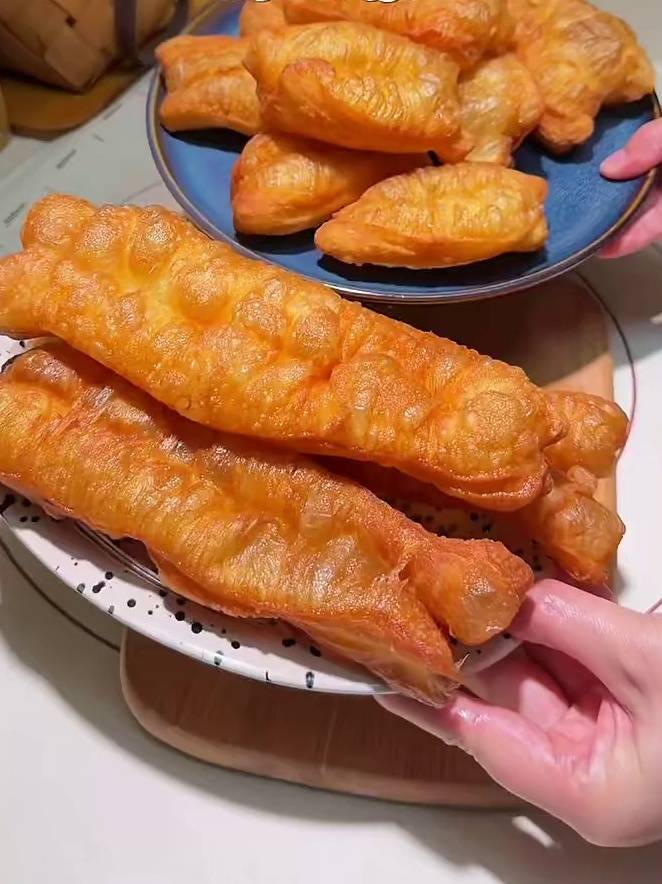
When I make scallion pancakes at home, I pay close attention to the firmness of the dough, the distribution of the oil paste, and the way the dough is rolled and folded. These three factors affect the layers inside the pancakes and their final texture. For another Chinese breakfast recipe, try our homemade youtiao.
For this recipe, I divide the dough into two parts: hot-water dough and cold-water dough. Hot-water dough is made by adding boiling water to some of the flour and mixing it together, allowing part of the flour to be heated first. Cold-water dough is made by mixing flour with room-temperature water. Preparing the two doughs separately and then kneading them together helps achieve both a soft texture and a satisfying chew.
When making the pancakes, I spread the oil paste evenly over the rolled-out dough, then add chopped scallions and seasonings. After the dough is rolled, folded, rested, and rolled out again, multiple layers form inside. Finally, I cook the pancakes over medium-low heat with a lid on the pan. This allows the surfaces to gradually turn golden brown while the centers cook through. For a noodle dish with a similar scallion aroma, see our scallion oil noodles recipe.
This recipe uses 1,000 grams of medium-gluten flour and makes approximately 6 large pancakes. Preparation takes about 50 minutes, the total dough resting time is 8 minutes, and cooking takes approximately 24 minutes. The total time is about 82 minutes. Actual preparation time may vary depending on how quickly I work and the size of the pan.
Important Tips for Making Scallion Pancakes
1. Combine the Two Types of Dough
Hot-water dough and cold-water dough are prepared differently. The hot-water dough is treated with boiling water, while the cold-water dough retains a different dough structure because it is mixed with room-temperature water. Kneading the two together helps create a soft texture while maintaining some chewiness.
2. Spread the Oil Paste Evenly
The oil paste sits between the layers of dough. If some areas are left uncovered or too much oil paste collects in one spot, the layers may form unevenly during cooking.
3. Let the Dough Rest Twice
The first resting period lasts 5 minutes. Its main purpose is to relax the divided portions of dough, making them easier to roll out.
The second resting period lasts 3 minutes and takes place after the dough has been rolled and folded into layers. This short rest makes the folded dough easier to stretch and coil.
4. Cover the Pan While Cooking
A lid reduces the amount of steam escaping from the pan and helps the inside of the pancakes retain moisture. Cooking over medium-low heat with the lid on also reduces the risk of the surfaces browning too quickly.
5. Do Not Add Extra Oil to the Pan
This recipe already uses oil in the oil paste and on the surface of the dough. When using a nonstick pan, there is no need to pour additional oil into the pan. This reduces the amount of extra oil used while preserving the texture of the cooked pancake surface.
If I use a regular frying pan and the dough tends to stick, I take a small amount of the 50 grams of soybean oil specified in the recipe and spread a thin layer over the pan with a pastry brush. This makes the surface slightly oilier but also helps prevent sticking.
Golden Thread Scallion Pancakes
Ingredients
Equipment
Method
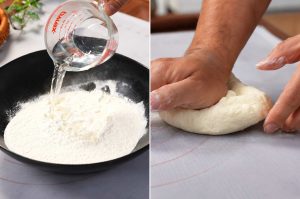
- Place 250 g of medium-gluten flour in a large mixing bowl. Gradually pour in 150 g of freshly boiled water while stirring continuously with chopsticks, until irregular clumps of dough form.
- Allow the hot-water dough to cool until it is comfortable to handle. Knead it by hand until it forms a rough dough.
- In a separate bowl, combine 750 g of medium-gluten flour, 450 g of room-temperature water, and 3 g of salt. Stir with chopsticks first, then knead by hand until a dough forms.
- Combine the hot-water dough and cold-water dough. Knead for approximately 8–10 minutes, until both doughs are evenly incorporated.
- Place 75 g of medium-gluten flour, 2 g of white sugar, and 10 g of toasted white sesame seeds in a heat-resistant bowl.
- Heat 100 g of cooking oil to approximately 170–180°C. Turn off the heat, then slowly pour the hot oil into the flour mixture while stirring continuously with chopsticks, until no obvious dry flour remains.
- Set the oil paste aside to cool slightly while preparing the scallions and seasonings.
- Wash and dry 100 g of scallions thoroughly, then chop them finely.
- Prepare 100 g of chia seed and sesame seasoning salt. If it is unavailable, substitute a mixture of 92 g of toasted white sesame seeds and 8 g of salt.
- Divide the chia seed and sesame seasoning into 6 portions of approximately 16.7 g each. Divide the 100 g of chopped scallions into 6 portions of approximately 16.7 g each.
- Lightly coat the bottom of a tray with soybean oil. Divide the combined dough into 6 portions, each weighing approximately 250–270 g.
- Place the dough portions on the tray and gently turn each portion so that its surface is covered with a thin film of oil.
- Use the remaining soybean oil to coat the dough surfaces and work surface as needed. The total amount is 50 g, and it does not need to be used all at once.
- Let the dough rest for 5 minutes to relax the dough and make it easier to roll out.
- Take one portion of dough and place it on the oiled work surface. Use a rolling pin to roll it into a rectangular sheet approximately 2 mm thick.
- Divide the oil paste evenly into 6 portions of approximately 31 g each. Use a pastry brush to spread the oil paste evenly over the dough sheet.
- Sprinkle approximately 16.7 g of chia seed and sesame seasoning and 16.7 g of chopped scallions over each dough sheet. Distribute the seasonings as evenly as possible.
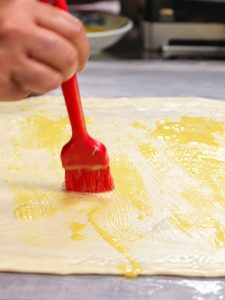
- Starting from one of the long edges of the rectangular dough sheet, roll the sheet slowly into a long strip.
- Fold the strip into a narrower stack of multiple layers, allowing the different sections of dough to overlap. Work gently and avoid pressing the dough too tightly.
- Gently press or guide trapped air outward so that the layers remain relatively flat.
- Let the folded dough rest for 3 minutes.
- Gently stretch the long strip of dough. Starting from one end, roll it inward to form a round spiral, then press the loose end against the bottom to secure it.
- Place the rolling pin at the center of the spiral and gently roll outward in different directions to form a round pancake approximately 22–24 cm in diameter and 5 mm thick.
- Place a nonstick frying pan at least 28 cm in diameter on the stove. Preheat over medium-low heat for approximately 2 minutes. A pan surface temperature of around 150–170°C can be used as a reference.
- Place the round pancake in the pan. The dough has already been coated with oil, so there is no need to pour additional oil into the pan.
- Cover the pan with a lid and cook for approximately 2 minutes per side, until both sides gradually turn golden brown.
- If the pancake remains pale after 2 minutes per side, extend the cooking time in 30-second increments while checking the surface color and the doneness of the center.
- At approximately 2 minutes per side, the basic cooking time for 6 pancakes is about 24 minutes in total.
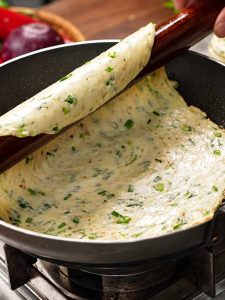
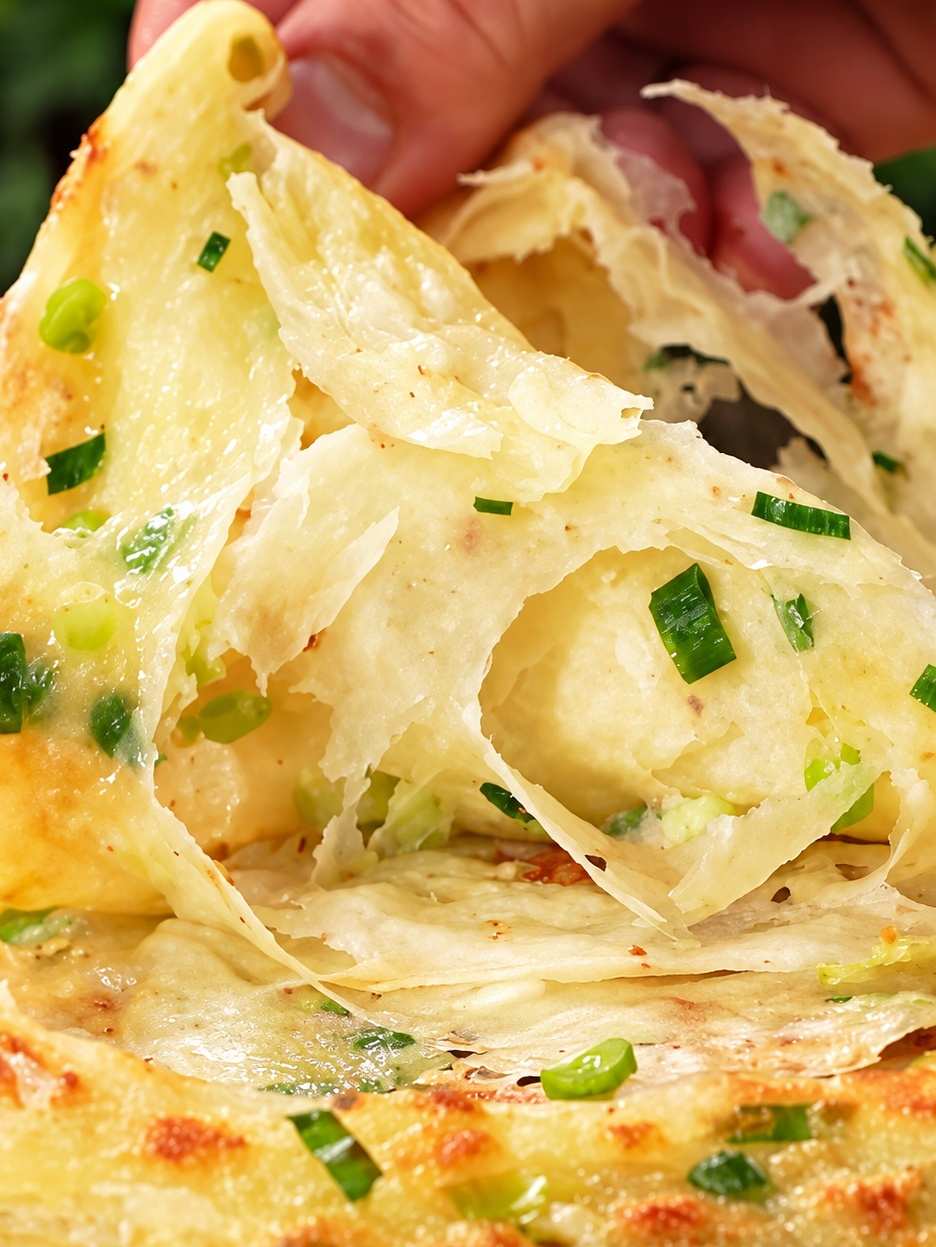
- Remove the cooked scallion pancake from the pan. Allow it to cool slightly, then tear it open near the edge to check whether distinct, thin layers have formed inside.
- Serve the pancake while it is still warm to preserve the crispy surface and soft interior.
- If the pancake has cooled completely, reheat it in a dry frying pan over medium-low heat for 30–60 seconds per side. No additional oil is necessary.
Notes
- Allow the hot-water dough to cool until it is comfortable to handle before combining it with the cold-water dough.
- Pour the hot oil slowly into the heat-resistant bowl while stirring continuously. Aim for approximately 170–180°C and do not allow the oil to smoke visibly.
- Wash and thoroughly dry the scallions before chopping them. Excess moisture can affect the structure of the dough layers.
- Handle the dough gently while rolling and folding. Excessive pressure can compress the layers.
- The pan does not need additional oil because the dough has already been coated with oil. If using a pan that tends to stick, lightly coat the pan with a small amount of the 50 g of soybean oil specified in the recipe. This may make the finished pancakes slightly oilier.
- If chia seed and sesame seasoning is unavailable, use 92 g of toasted white sesame seeds and 8 g of salt as a substitute. The resulting flavor will be more directly sesame-forward.
- If the pancakes have cooled, reheat them in a dry frying pan over medium-low heat for 30–60 seconds per side.