The flavor of chicken thighs comes partly from the golden-brown crust that develops during pan-searing. What makes this Salt Scallion Chicken especially interesting, however, is the fresh, savory sauce made with scallions, red onion, and garlic.
The chicken thighs are lightly marinated before being pan-seared, starting skin-side down to render the fat and develop a beautifully browned surface. Once both sides are cooked, the chicken is topped with a fragrant salt-scallion sauce enriched with sesame oil. The result is tender, juicy chicken with a lightly crisp exterior, complemented by fresh scallion aroma, savory garlic, and a balanced saltiness. Together, these flavors create a satisfying Chinese home-style dish without the need for a complicated or heavy sauce.
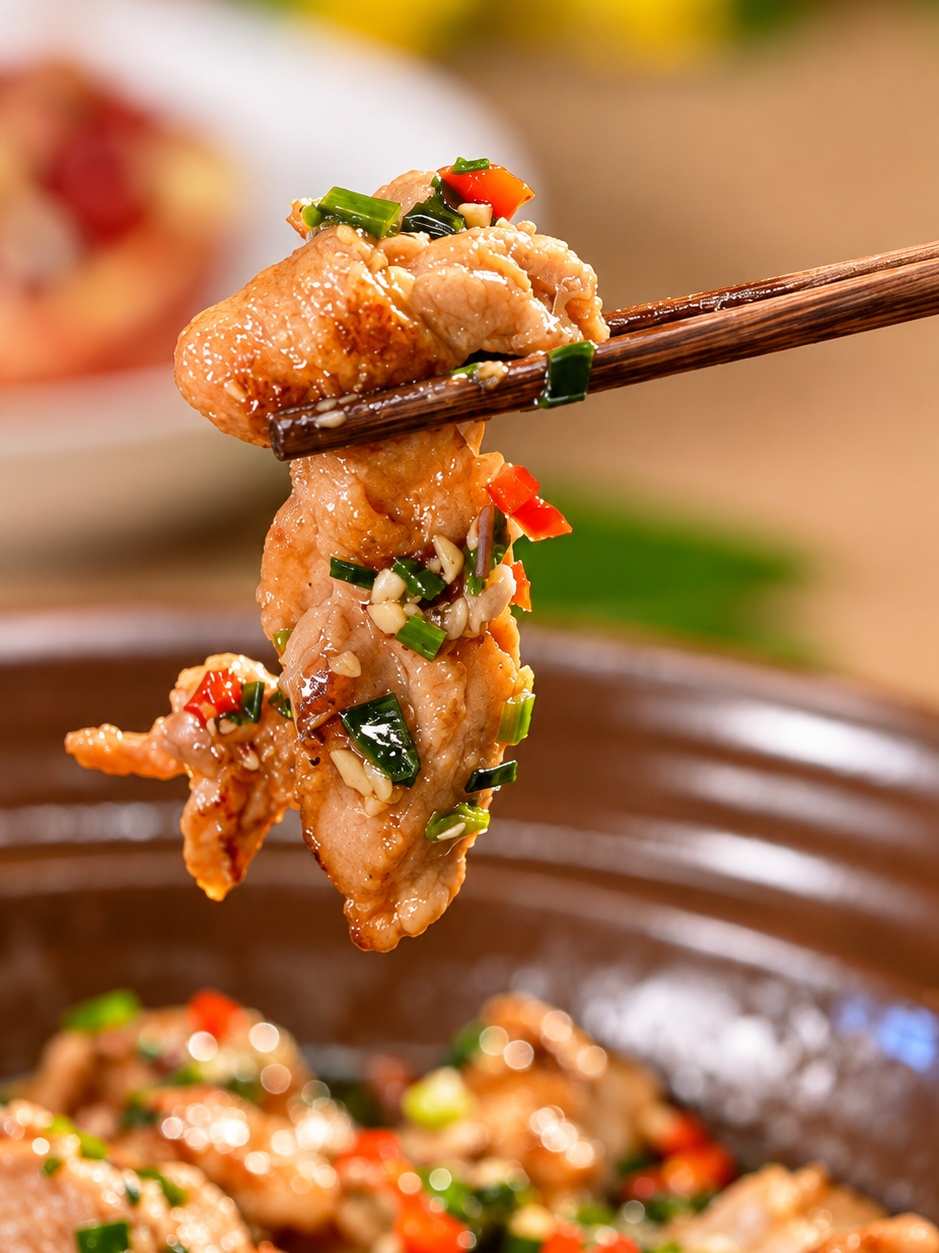
盐葱鸡腿 (Yán Cōng Jītuǐ, Pan-Seared Chicken Thighs with Salt-Scallion Sauce)
Ingredients
Equipment
Method
- If using bone-in chicken thighs, cut along the inside of each thigh with kitchen shears and carefully remove the bone while keeping the skin intact.
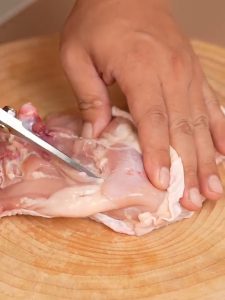
- Trim away excess fat and connective tissue. Pat the chicken thoroughly dry with paper towels.
- Open up any particularly thick sections of meat so the thighs have a more even thickness and cook evenly.
- Place the 500g of prepared boneless, skin-on chicken thighs in a mixing bowl.
- Add 10ml Shaoxing rice wine, 12ml light soy sauce, 1g ground pepper, and 3ml toasted sesame oil.
- Mix and massage the seasonings into the chicken until all the pieces are evenly coated.
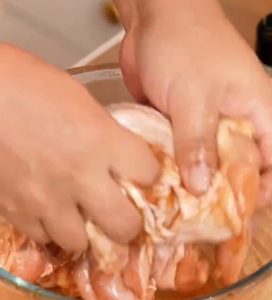
- Cover and refrigerate for 10 minutes to allow the chicken to absorb the flavors.
- Finely chop 60g scallion greens, dice 30g red onion, and mince 30g garlic.
- Place the scallions, red onion, and garlic in a clean mixing bowl.
- Add 6g salt, 1g ground black pepper, and 5g toasted white sesame seeds.
- Pour in 15ml neutral vegetable oil and 15ml toasted sesame oil, keeping the two oils in a 1:1 ratio.
- Mix thoroughly until the scallions, onion, and garlic are evenly coated and the sauce looks moist and well combined.
- Set the sauce aside. There is no need to cook it in advance.
- Heat a wide frying pan over medium-high to high heat. Do not add extra cooking oil.
- Place the marinated chicken thighs in the pan skin-side down, arranging them in a single layer without overlapping.
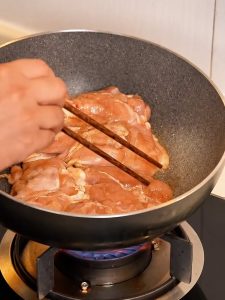
- Once the chicken is in the pan, avoid moving it too frequently. Let the skin make good contact with the pan and sear over relatively high heat for about 2 minutes, allowing the fat to render and the skin to turn golden.
- Once the skin side is nicely browned, flip the chicken and sear the other side for approximately 3 to 4 minutes, adjusting the cooking time according to the thickness of the thighs.
- If the chicken is particularly thick, reduce the heat to medium and continue cooking until the thickest part reaches an internal temperature of 74°C (165°F).
- Transfer the cooked chicken thighs to a clean plate and let them rest for about 2 minutes.
- Slice the chicken into bite-sized strips or pieces, depending on your preference, and arrange them on a serving plate.
- Spoon the prepared salt-scallion sauce evenly over the chicken.
- Drizzle a little of the seasoned oil from the sauce over the top. The residual heat from the chicken will release the fragrance of the scallions, garlic, and sesame oil.
- Serve immediately with steamed rice and fresh vegetables.
Notes
The Crispy Skin Is Another Highlight of This Dish
The salt-scallion sauce is not simply a mixture of chopped scallions and seasonings. It combines scallions, red onion, and garlic, with each ingredient contributing something different to the overall flavor.
Scallions provide a fresh, green aroma, while red onion adds mild sweetness and a little crunch. Garlic brings a deeper savory flavor that makes the sauce more aromatic. Using these three ingredients in an approximate 2:1:1 ratio keeps the scallion flavor at the center without allowing the onion or garlic to overpower it.
For seasoning, salt provides the basic savory taste, while black pepper adds a gentle peppery note. Toasted white sesame seeds contribute a subtle nutty aroma. Finally, neutral vegetable oil and toasted sesame oil are combined in equal amounts.
The combination of vegetable oil and sesame oil is particularly important. Pure sesame oil has a strong aroma that can easily overpower the fresh flavors of the scallions and garlic. Blending it with neutral vegetable oil creates a lighter, more balanced sauce while preserving the distinctive fragrance of sesame oil.
I recommend adding this sauce at the end rather than cooking it in the pan for an extended period. The residual heat from the freshly cooked chicken gently releases the aromas of the scallions, garlic, and sesame oil without taking away their fresh character.
Getting a Golden, Fragrant Sear on Chicken Skin
Chicken thighs are particularly well suited to pan-searing because they contain more fat than chicken breasts. This helps keep the meat juicy during cooking. Keeping the skin on also adds another layer of flavor and texture.
There are three details worth paying attention to:
- Keep the chicken skin intact. When deboning the thighs, try not to damage or remove the skin. As it cooks, the skin gradually releases fat, which helps the chicken develop a beautifully browned surface.
- Make the thickness as even as possible. Open up thicker sections of meat or make a few shallow cuts where necessary. This helps the chicken cook more evenly and prevents the outside from becoming too dark before the center is done.
- Start with the skin side down. Place the chicken skin-side down in the hot pan and leave it undisturbed initially. This allows the skin to make good contact with the pan, render its fat, and develop an even golden-brown crust.
You do not need to add a large amount of cooking oil. The fat released from the chicken skin is usually enough to help the meat sear. In the cooking demonstration, the pan is heated first without adding extra oil. The chicken is placed skin-side down over relatively high heat and seared for about two minutes before being turned over. Continue cooking until both sides are nicely browned.
However, color alone does not guarantee that the chicken is fully cooked. For food safety, use an instant-read thermometer to check the thickest part of the meat. It should reach an internal temperature of 74°C (165°F).
One more important tip: Do not rinse raw chicken under running water. Simply pat it dry with paper towels. Rinsing can spread raw chicken juices around the sink and nearby kitchen surfaces.
What Chinese Seasonings Do You Need for This Recipe?
The ingredient list is relatively simple, and most of the ingredients are available at regular supermarkets. A few Chinese seasonings are worth understanding before you start.
Light Soy Sauce
Light soy sauce is mainly used to season the chicken during marination. It provides saltiness and savory depth. Dark soy sauce is unnecessary here because the golden-brown color comes primarily from searing the chicken skin rather than from soy sauce.
Shaoxing Wine
Shaoxing wine is a Chinese rice wine commonly used in savory cooking. A small amount adds aroma and depth to the chicken marinade. It is usually available at Asian grocery stores. If you cannot find it, a little dry sherry can be used as a substitute, although the flavor will be slightly different.
Toasted Sesame Oil
This is one of the key ingredients responsible for the distinctive aroma of the salt-scallion sauce. Look for toasted sesame oil at Asian grocery stores rather than using regular neutral vegetable oil.
Scallions and Red Onion
Scallions are commonly sold as green onions or spring onions in Western supermarkets. For this sauce, use mainly the green parts and chop them finely so they mix easily with the other ingredients.
Red onion is also easy to find at regular supermarkets. Its mild sweetness and slightly sharp flavor make it a good match for the fresh scallion sauce.
How Is Salt Scallion Chicken Different from Scallion-Braised Chicken?
Although both dishes use chicken and scallions, their cooking methods and flavor profiles are quite different.
Salt Scallion Chicken focuses on developing a golden, savory crust on the chicken before adding a fresh scallion, onion, and garlic sauce. The finished dish highlights the aroma of pan-seared chicken, juicy meat, and the fragrant combination of scallions, garlic, and sesame oil.
Scallion-braised chicken, on the other hand, relies more on a braising method. The chicken is cooked with liquid and seasonings, allowing it to absorb the flavors of the cooking sauce. For a home-style example of this approach, see our ginger and scallion chicken with Chu Hou sauce.
That is why this Salt Scallion Chicken does not need a thick sauce or a long braising process. The key is to preserve the rich flavor of the pan-seared chicken and let the fresh salt-scallion sauce provide the finishing touch.
What to Serve with Salt Scallion Chicken
I recommend serving this dish with freshly steamed rice.
The vegetable oil and sesame oil in the salt-scallion sauce combine with the natural fat released during cooking, creating a fragrant dressing with plenty of scallion and garlic flavor. Served over rice alongside the chicken, it makes excellent use of all those delicious flavors.
For a lighter meal, add a simple vegetable side dish such as stir-fried broccoli, steamed greens, or cucumber salad.
One final detail worth remembering: It is best to prepare the salt-scallion sauce shortly before serving. If salt is added too far in advance, the scallions and onion gradually release moisture, making the sauce wetter and softer. Their fresh aroma can also become less pronounced.
Frequently Asked Questions
Can I use boneless, skinless chicken thighs?
Yes, but the result will be slightly different. Without the skin, you will not get the same golden, fragrant crust or the natural chicken fat released during searing. If using skinless thighs, add a small amount of neutral vegetable oil to the pan to help the chicken brown. If you prefer a recipe built around boneless, skinless chicken thighs, try our Chinese green pepper chicken stir-fry.
Does the salt-scallion sauce need to be cooked?
No. The sauce gets its flavor from fresh scallions, garlic, red onion, salt, pepper, and sesame oil. Spoon it directly over the freshly cooked chicken. The residual heat is enough to release its aroma without fully cooking the fresh ingredients.
Can I prepare this dish ahead of time?
You can debone, trim, and marinate the chicken ahead of time, then keep it refrigerated until you are ready to cook. However, I recommend mixing the salt-scallion sauce closer to serving time. This helps preserve the fresh aroma and texture of the scallions, garlic, and onion.