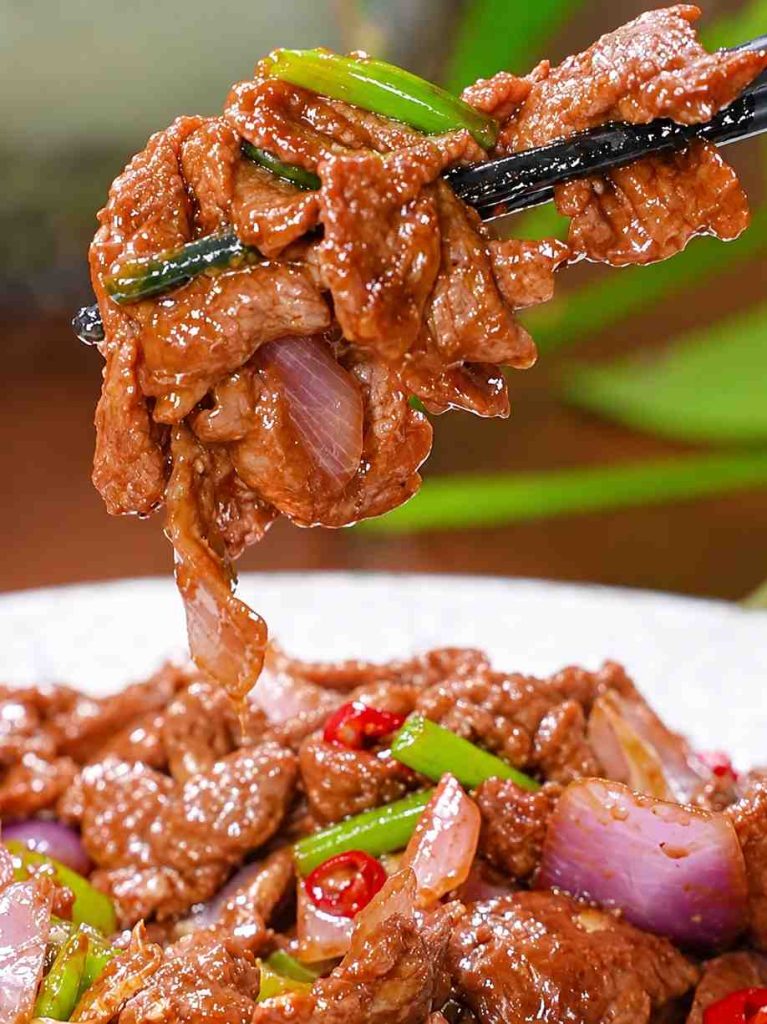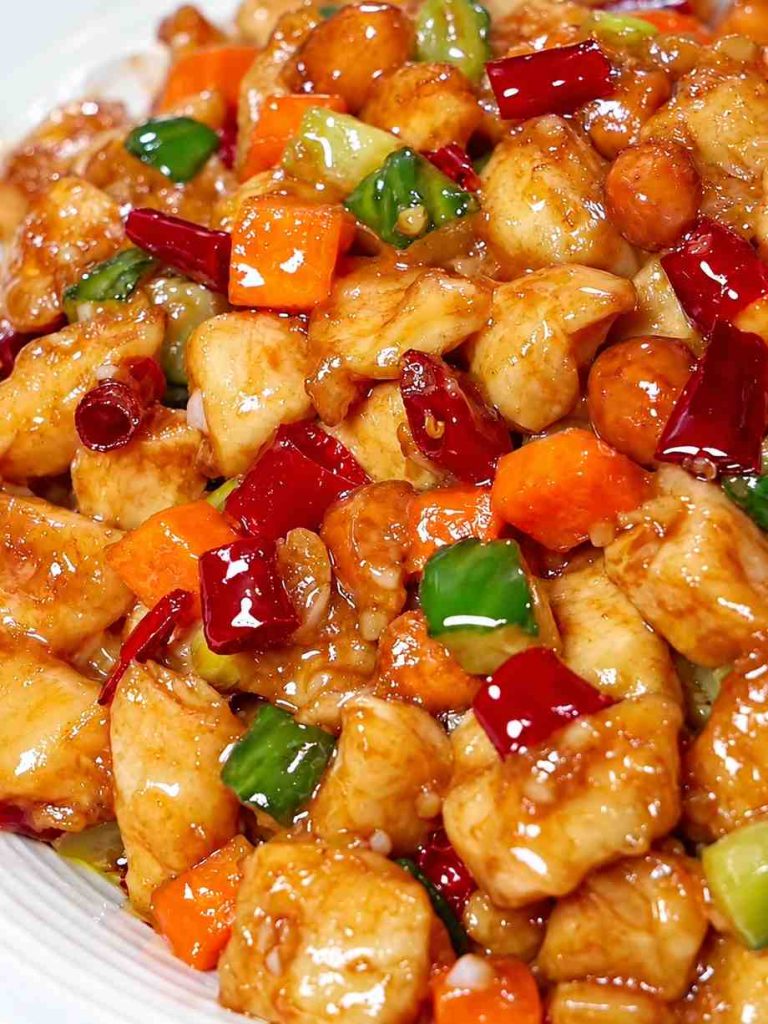
The aroma of Ginger and Scallion Chicken comes from the way its simple ingredients release their flavors in a hot wok. Fresh ginger adds a distinctive warmth and gentle spice, shallots develop a mild sweetness as they cook, and scallions bring a fresh, aromatic finish to the dish.
This Chinese chicken stir-fry uses bone-in, skin-on chicken pieces. They are first stir-fried in a hot wok to develop a rich, savory aroma, then seasoned with Chinese rice wine and soy sauce before being briefly braised with a little hot water. The chicken absorbs the flavors of the ginger, scallions, and soy sauce, resulting in tender, juicy meat with a glossy, savory coating. It is especially delicious served with steamed rice.
Unlike some chicken dishes that use ginger and scallions mainly as a dipping sauce or infused oil, this version cooks the aromatics directly with the chicken. There is no need for a complicated sauce or a long list of seasonings. The key is to develop flavor during the initial stir-frying stage and add the scallions at just the right time.
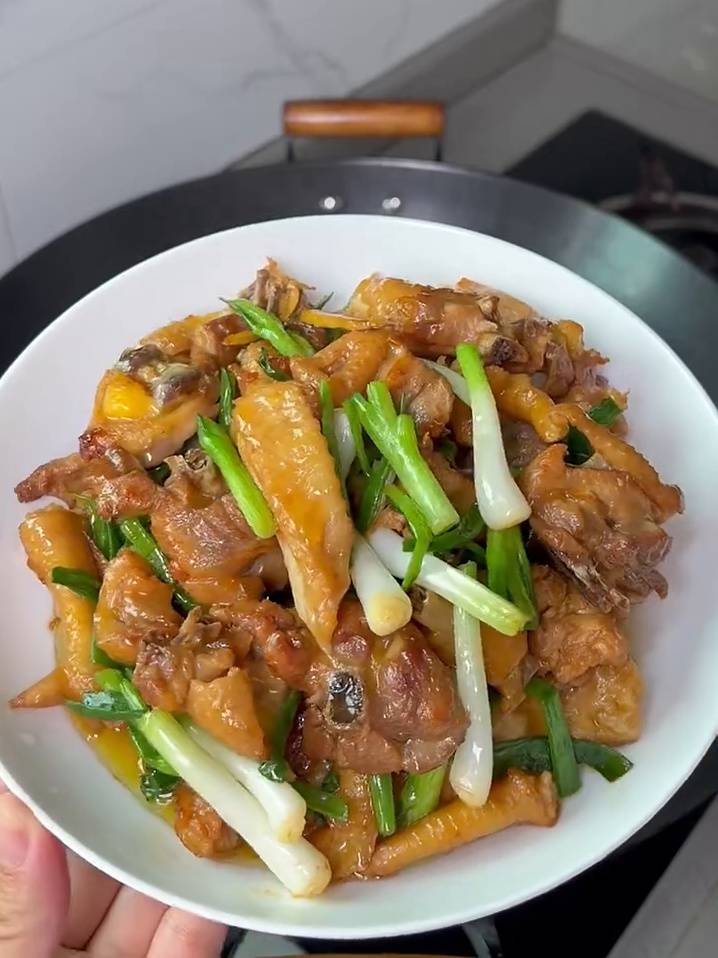
Ginger and Scallion Chicken Stir-Fry
Ingredients
Equipment
Method
- Chop 750 g of bone-in, skin-on chicken into evenly sized pieces approximately 3–4 cm wide. Pat dry with paper towels.
- Place the chicken in a mixing bowl. Add 8 g of cornstarch and 15 ml of peanut oil. Toss until lightly coated and marinate for 5 minutes.

- Peel and cut the ginger into thin matchsticks. Peel and halve or quarter the shallots. Cut the scallions into approximately 5 cm segments.
- Heat a large wok over medium-high heat. Add the remaining 15 ml of peanut oil. Add the ginger and shallots and stir-fry for 30–45 seconds until fragrant.
- Add the marinated chicken. Spread the pieces out and stir-fry for approximately 7–9 minutes, turning frequently, until the surfaces are no longer raw and most excess moisture has evaporated. Cook in batches if necessary.
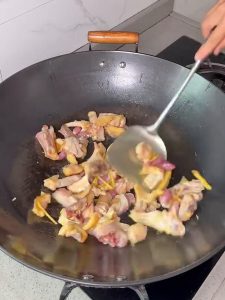
- Pour in 20 ml of Chinese rice wine around the edge of the wok. Stir-fry for 20–30 seconds.
- Add 25 ml of light soy sauce. Toss for another 30–60 seconds until the chicken is evenly coated and fragrant.
- Pour 60 ml of boiling water into the wok. Stir briefly, cover with a lid, and simmer for 3 minutes.
- Check that the thickest chicken pieces have reached an internal temperature of 74°C (165°F). If necessary, cover and continue cooking in 1–2 minute intervals until fully cooked.
- Add the scallion segments and stir-fry over high heat for 30–60 seconds until slightly softened and fragrant.
- Turn off the heat and transfer the ginger and scallion chicken to a serving plate. Serve immediately with steamed rice.
Notes
Stir-Fry First, Then Briefly Braise for Deeper Flavor
One of the defining features of this Ginger and Scallion Chicken recipe is its two-stage cooking method. Instead of simmering the chicken in liquid from the beginning, the pieces are first stir-fried in a hot wok and then briefly braised.
Before cooking, the chicken is lightly coated with cornstarch and peanut oil and left to marinate for just five minutes. The cornstarch creates a thin coating on the surface of the meat, while the oil helps prevent the pieces from sticking together. There is no need for a long marinating time or a large amount of seasoning at this stage.
Once the chicken goes into the wok, keep stirring until most of the excess moisture has evaporated. This helps release the fat from the chicken skin and allows the meat to develop a more concentrated, savory aroma as it cooks with the ginger and shallots.
Next, add the Chinese rice wine and soy sauce. The rice wine enhances the aroma, while the soy sauce provides the main savory seasoning. Once the chicken is evenly coated, add a small amount of boiling water and cover the wok for a short braising period.
Keep the amount of water relatively small. The goal is to create enough steam to finish cooking the chicken and help it absorb the seasonings, not to turn the dish into a broth-based chicken stew.
Ginger, Shallots, and Scallions: Three Layers of Aroma
Although this dish uses only a few main aromatics, the timing of each ingredient makes a noticeable difference to the final flavor.
Fresh Ginger provides the foundation of the dish’s aroma. Thin strips of ginger release their fragrance quickly when added to hot oil. As they cook, their sharpness becomes milder, leaving a warm, fresh aroma that complements the chicken. Cutting the ginger into thin strips rather than mincing it also allows its flavor to remain noticeable in the finished dish.
Shallots are added during the initial stir-frying stage. They have a more concentrated aroma than regular onions and develop a gentle sweetness when cooked in hot oil. Combined with ginger, they give the chicken a deeper and more rounded flavor. If shallots are difficult to find at your local supermarket, try looking for them at an Asian grocery store.
Scallions are added toward the end of cooking. Both the white and green parts can be used, cut into manageable lengths. Since scallions do not need much cooking time, adding them at the final stage helps preserve their fresh aroma and a little of their bright green color.
These ingredients are not simply added to the wok at the same time. Each has a different role: ginger builds the aromatic base, shallots add sweetness and depth, and scallions provide a fresh finishing note.
Tips for Making Better Ginger and Scallion Chicken
Choose the right chicken cuts.
Bone-in, skin-on chicken pieces work particularly well for this recipe. The skin releases flavorful fat as it cooks, while the meat around the bones contributes a rich, savory taste. You can buy a whole chicken and ask your butcher to cut it into pieces, or use bone-in chicken thighs and wings.
Try to keep the chicken pieces similar in size. If some pieces are too large, their surfaces may become nicely browned before the centers are fully cooked. Pieces that are too small may lose moisture during the extended stir-frying and braising process.
Avoid letting the chicken sit in too much liquid.
Chicken naturally releases moisture as it cooks. Keep the wok hot enough to allow excess moisture to evaporate gradually. If the wok is too small and the chicken pieces are overcrowded, cook them in batches. This helps the chicken develop a more concentrated stir-fried flavor instead of becoming steamed or boiled in its own juices.
Use boiling water rather than a large amount of cold water.
A small amount of boiling water creates steam quickly and helps the chicken finish cooking during the brief braising stage. Adding too much liquid can dilute the soy sauce and make the finished dish less flavorful.
Add the scallions at the end.
If scallions are added at the beginning, they will become overly soft and lose much of their fresh aroma. Add them during the final stage and toss briefly until just softened. Make sure the chicken is fully cooked, with the thickest part reaching an internal temperature of 74°C (165°F).
Finding the Ingredients Outside China
Ginger and Scallion Chicken does not require an extensive collection of Chinese seasonings. Most of the ingredients can be found at regular supermarkets or Asian grocery stores.
For the chicken, choose bone-in, skin-on thighs or other suitable cuts that can be chopped into smaller pieces. Chinese rice wine is mainly used to enhance the aroma during cooking. Look for an unsweetened Chinese cooking rice wine. If it is unavailable, a small amount of dry sherry can be used instead, although the flavor will be slightly different.
For the soy sauce, I recommend Chinese light soy sauce. It provides the savory seasoning rather than simply adding color. There is no need to add a large amount of dark soy sauce, which could make the chicken much darker than necessary.
Peanut oil is a good choice for Chinese stir-frying because it works well at high temperatures. If you have a peanut allergy, use canola oil or sunflower oil instead. Neither will significantly change the overall flavor of the dish.
Cornstarch can be used in place of Chinese starch commonly labeled as shengfen. When shopping, choose plain cornstarch rather than a seasoned coating mix.
What to Serve with Ginger and Scallion Chicken
Steamed rice is the natural companion to Ginger and Scallion Chicken. The savory soy-based coating and aromatic ginger and scallions pair particularly well with plain rice. Spoon a little of the flavorful sauce over the rice to enjoy the rich flavors left in the wok.
To make the meal more balanced, serve the chicken with simple vegetable dishes such as stir-fried broccoli, garlic greens, or a refreshing cucumber salad. Their lighter flavors provide a pleasant contrast to the savory chicken.
This dish is best served hot, when the fragrance of the ginger and scallions is at its strongest. If you have leftovers, transfer them to an airtight container and refrigerate promptly. They are best consumed within three days. To reheat, add a small splash of water and warm the chicken in a pan until heated thoroughly.